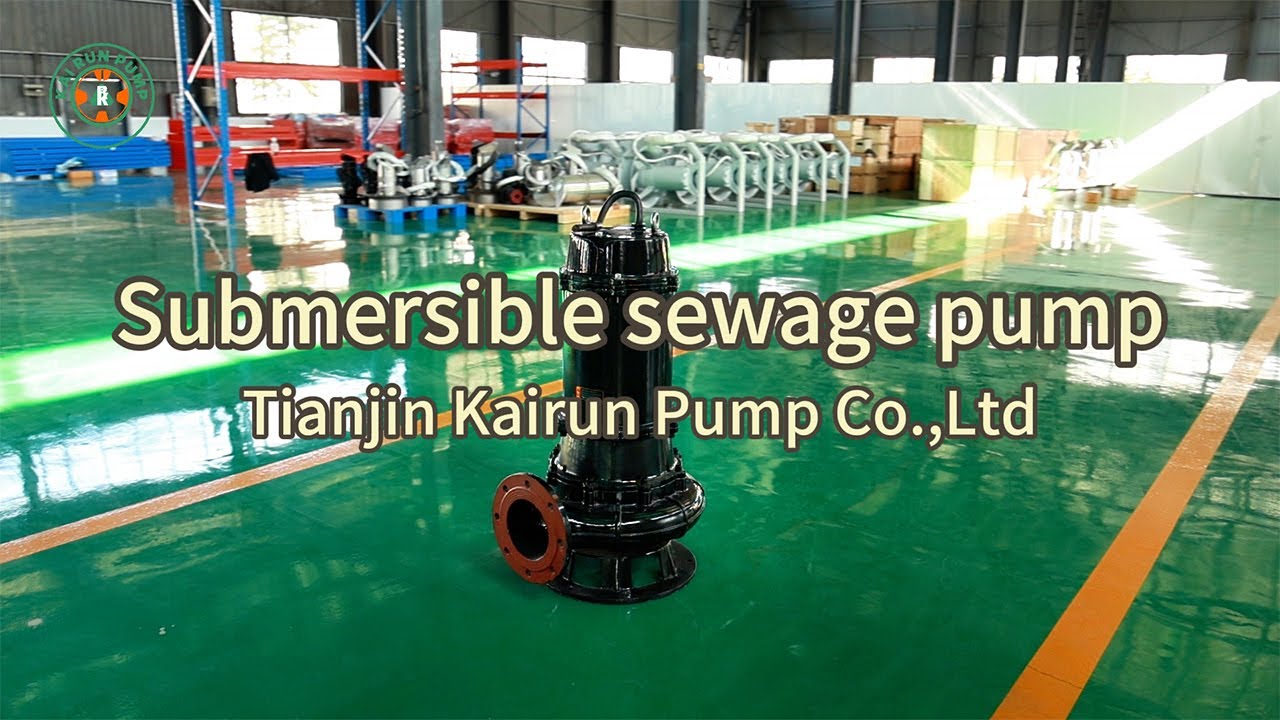
Submersible Sewage Pump
Submersible sewage pumps are ideal for pumping sewage and waste. They can be customized in various materials, and feature a simple structure and easy maintenance.
Submersible Sewage Pump
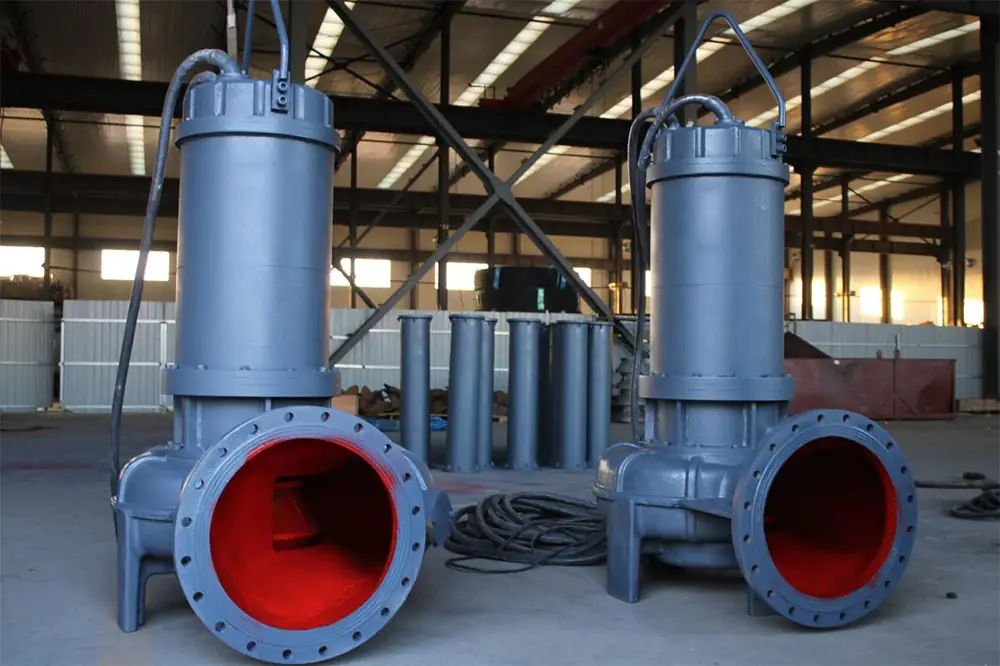
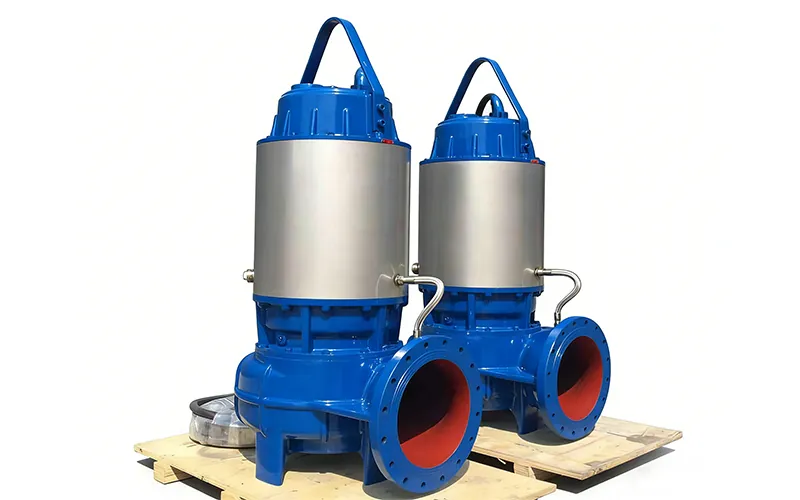
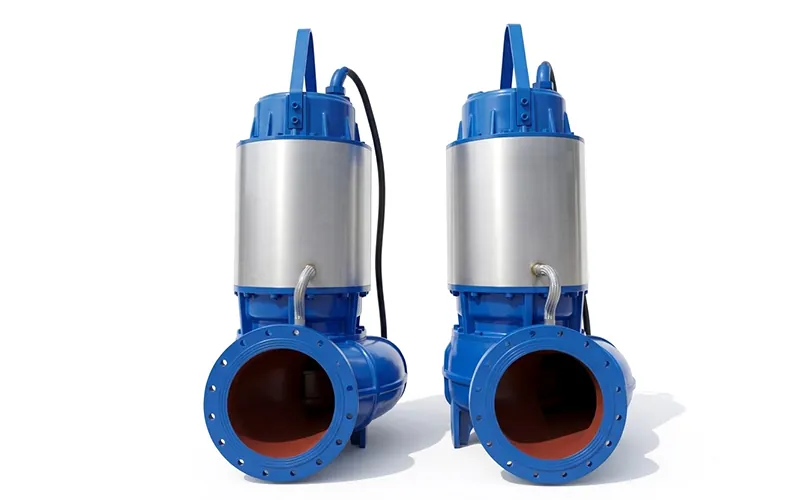
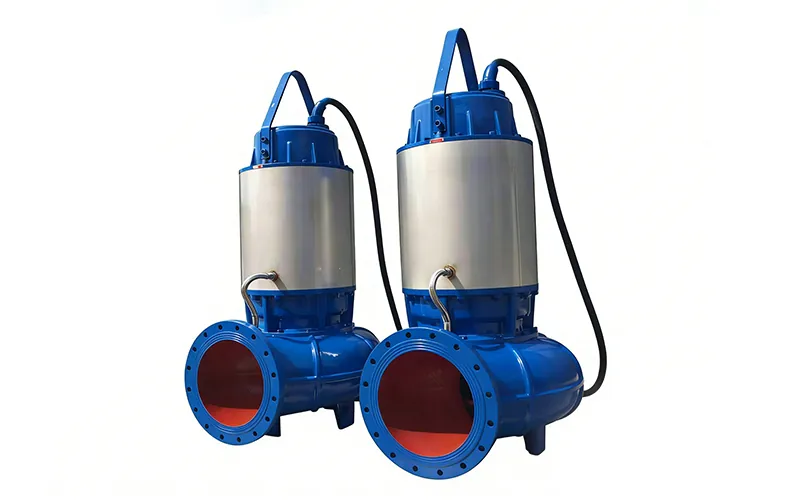
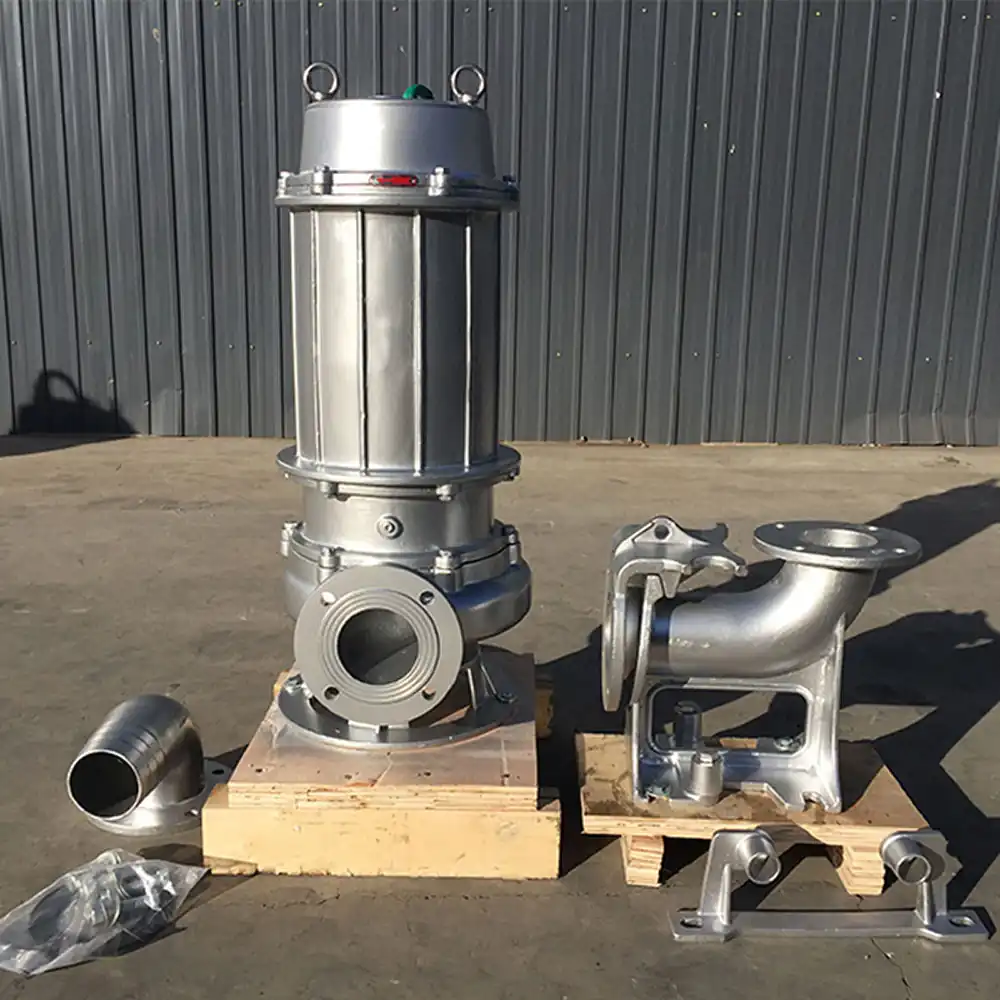
The WQ series sewage and waste water submersible pumps (hereinafter referred to as the electric pumps) consist of a pump, a seal, and an electric motor. They are suitable for the discharge of sewage and waste water in municipal sewage treatment, construction projects, hotels, miners, ponds, dyeing, papermaking, textile and other places. They are ideal equipment for pumping slurry, cement slurry, domestic wastewater, sewage, feces and urine, and solid particles containing fibers and paper debris.
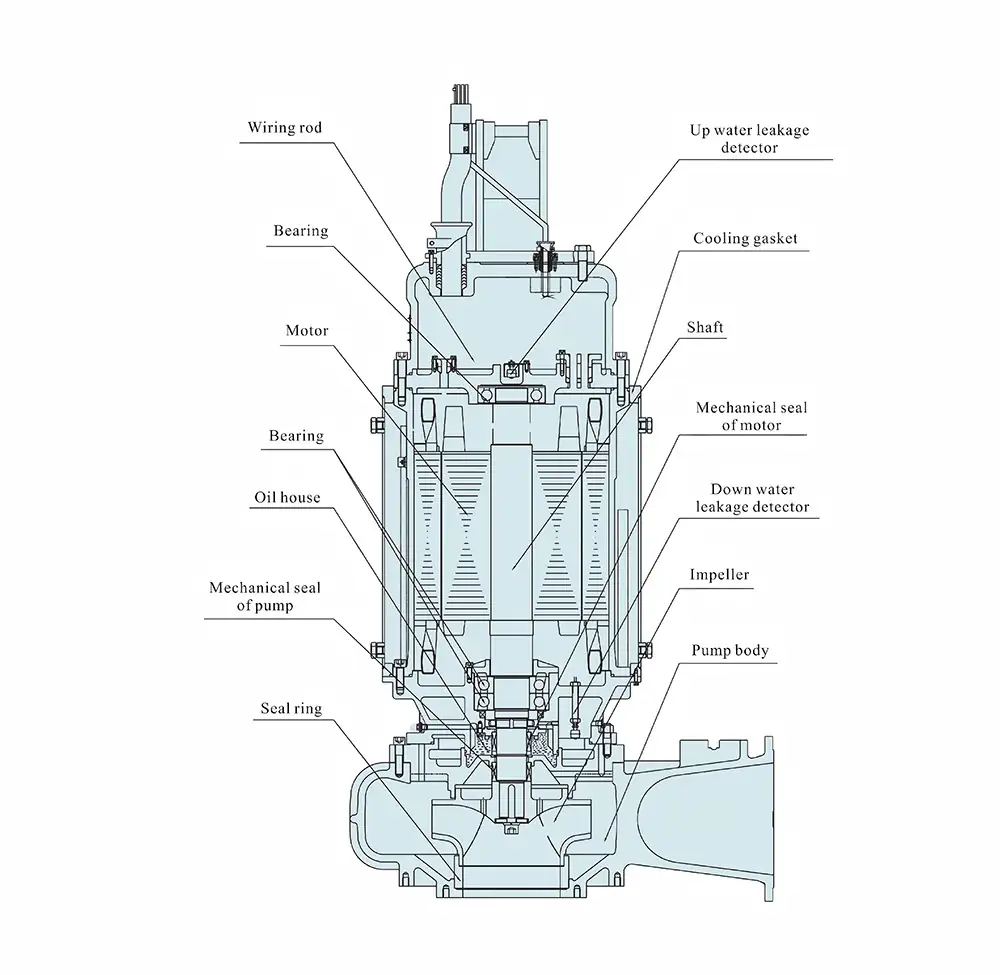
The electric motor is located at the top of the electric pump, and it is divided into single-phase and three-phase asynchronous motors. A double-end face mechanical seal is adopted between the pump and the electric motor, and an “O” type oil-resistant rubber sealing ring is used for static sealing at each fixed stopper sealing point.
This series of electric pumps have the characteristics of compact structure, large flow rate, high efficiency, and convenient use. The mechanical seals at key parts are made of hard alloy and high-quality silicon carbide, and the rotor shaft of the electric pump is made of 45# steel through quenching treatment. Corrosive media can be selected from stainless steel materials to ensure the reliable mechanical strength of the shaft and effectively improve the wear resistance and corrosion resistance of the shaft. It is also convenient for the maintenance and disassembly of the impeller.
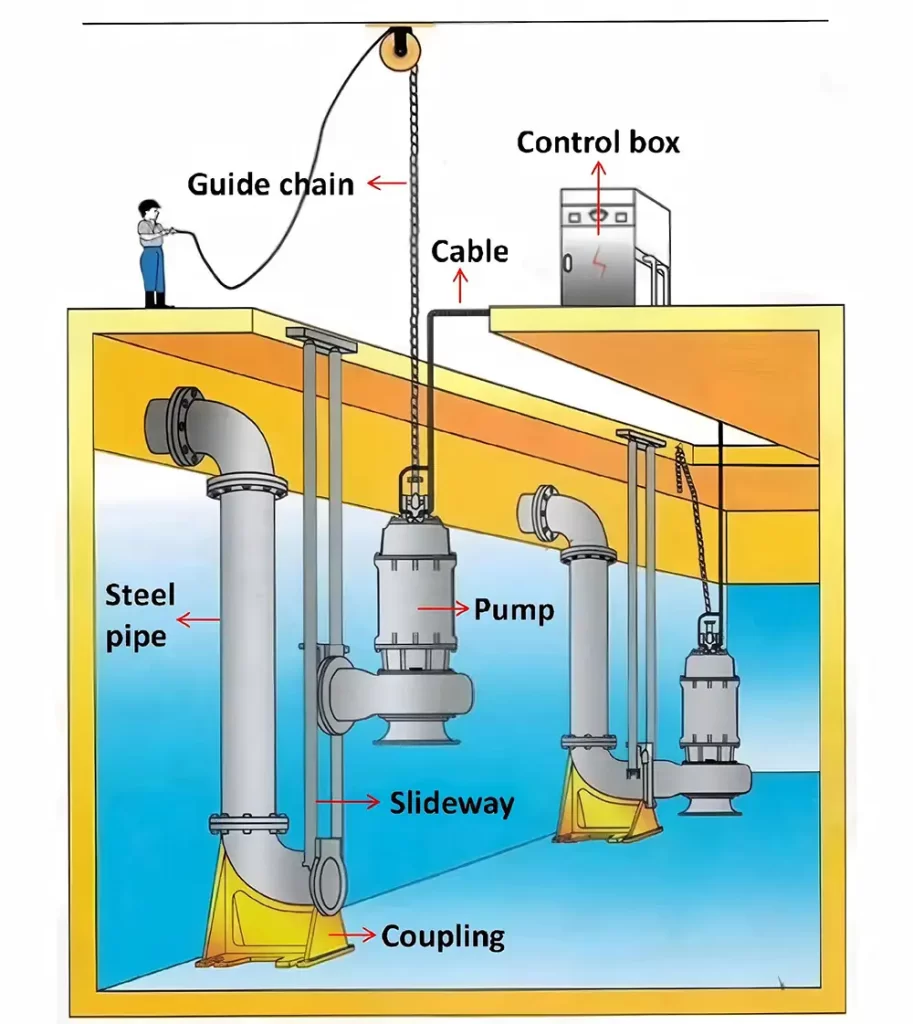
The entire series can be optionally equipped with an automatic coupling device. When the pump needs maintenance or repair, it can be easily lifted, disengaged, and engaged by the chain screw. Engineering personnel do not need to enter the water to disassemble, effectively improving the convenience and safety of the operation.
Model Meaning
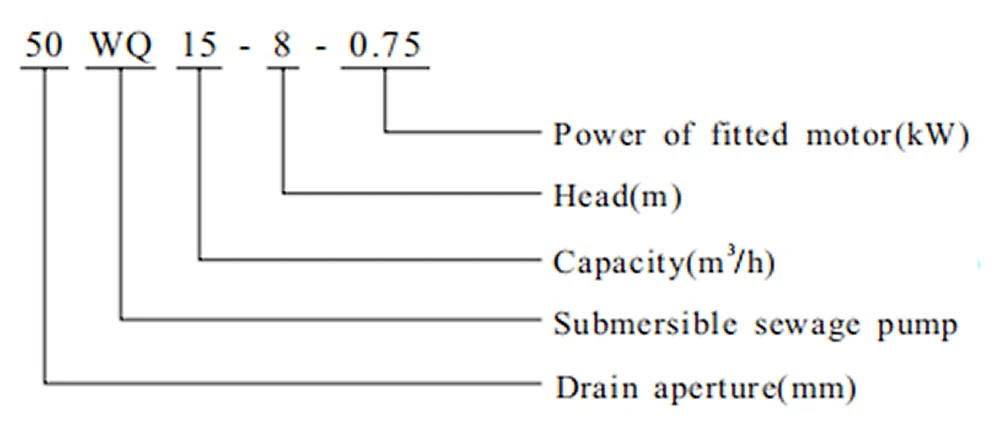
WQ type pump performance
| No. | Type | Outlet diameter (mm) | Capacity (m³/h) | Head (m) | Power (kW) | Speed (r/min) | Voltage (v) |
| 1 | 50WQ10-10-0.75 | 50 | 10 | 10 | 0.75 | 2900 | 380 |
| 2 | 65WQ15-9-1.1 | 65 | 15 | 9 | 1.1 | 2900 | 380 |
| 3 | 80WQ40-7-1.5 | 80 | 40 | 7 | 1.5 | 2900 | 380 |
| 4 | 100WQ50-7-2.2 | 100 | 50 | 7 | 2.2 | 2900 | 380 |
| 5 | 80WQ45-12-3 | 80 | 45 | 12 | 3 | 2900 | 380 |
| 6 | 100WQ60-12-4 | 100 | 60 | 12 | 4 | 2900 | 380 |
| 7 | 100WQ60-18-5.5 | 100 | 60 | 18 | 5.5 | 2900 | 380 |
| 8 | 150WQ100-10-7.5 | 150 | 100 | 10 | 7.5 | 2900 | 380 |
| 9 | 150WQ130-15-11 | 150 | 130 | 15 | 11 | 2900 | 380 |
| 10 | 200WQ180-15-15 | 200 | 180 | 15 | 15 | 2900 | 380 |
| 11 | 80WQ80-13-5.5 | 80 | 80 | 13 | 5.5 | 1450 | 380 |
| 12 | 100WQ100-15-7.5 | 100 | 100 | 15 | 7.5 | 1450 | 380 |
| 13 | 150WQ180-11-11 | 150 | 180 | 11 | 11 | 1450 | 380 |
| 14 | 100WQ100-30-15 | 100 | 100 | 30 | 15 | 1450 | 380 |
| 15 | 150WQ180-20-18.5 | 150 | 180 | 20 | 18.5 | 1450 | 380 |
| 16 | 150WQ200-22-22 | 150 | 200 | 22 | 22 | 1450 | 380 |
| 17 | 200WQ250-22-30 | 200 | 250 | 22 | 30 | 1450 | 380 |
| 18 | 250WQ350-25-37 | 250 | 350 | 25 | 37 | 1450 | 380 |
| 19 | 300WQ800-12-45 | 300 | 800 | 12 | 45 | 1450 | 380 |
| 20 | 350WQ1000-10-55 | 350 | 1000 | 10 | 55 | 1450 | 380 |
| 21 | 150WQ200-57-75 | 150 | 200 | 57 | 75 | 1450 | 380 |
| 22 | 200WQ300-55-90 | 200 | 300 | 55 | 90 | 1450 | 380 |
| 23 | 300WQ1000-6-30 | 300 | 1000 | 6 | 30 | 980 | 380 |
| 24 | 350WQ1500-12-75 | 350 | 1500 | 12 | 75 | 980 | 380 |
| 25 | 400WQ2000-15-132 | 400 | 2000 | 15 | 132 | 980 | 380 |
| 26 | 500WQ3000-15-200 | 500 | 3000 | 15 | 200 | 980 | 380 |
| 27 | 600WQ3600-22-315 | 600 | 3600 | 22 | 315 | 980 | 380 |
| 28 | 500WQ2700-6-75 | 500 | 2700 | 6 | 75 | 740 | 380 |
| 29 | 500WQ3000-13-160 | 500 | 3000 | 13 | 160 | 740 | 380 |
| 30 | 600WQ4000-11-200 | 600 | 4000 | 11 | 200 | 740 | 380 |
* Offer customized services
Features
Application
1. Municipal engineering
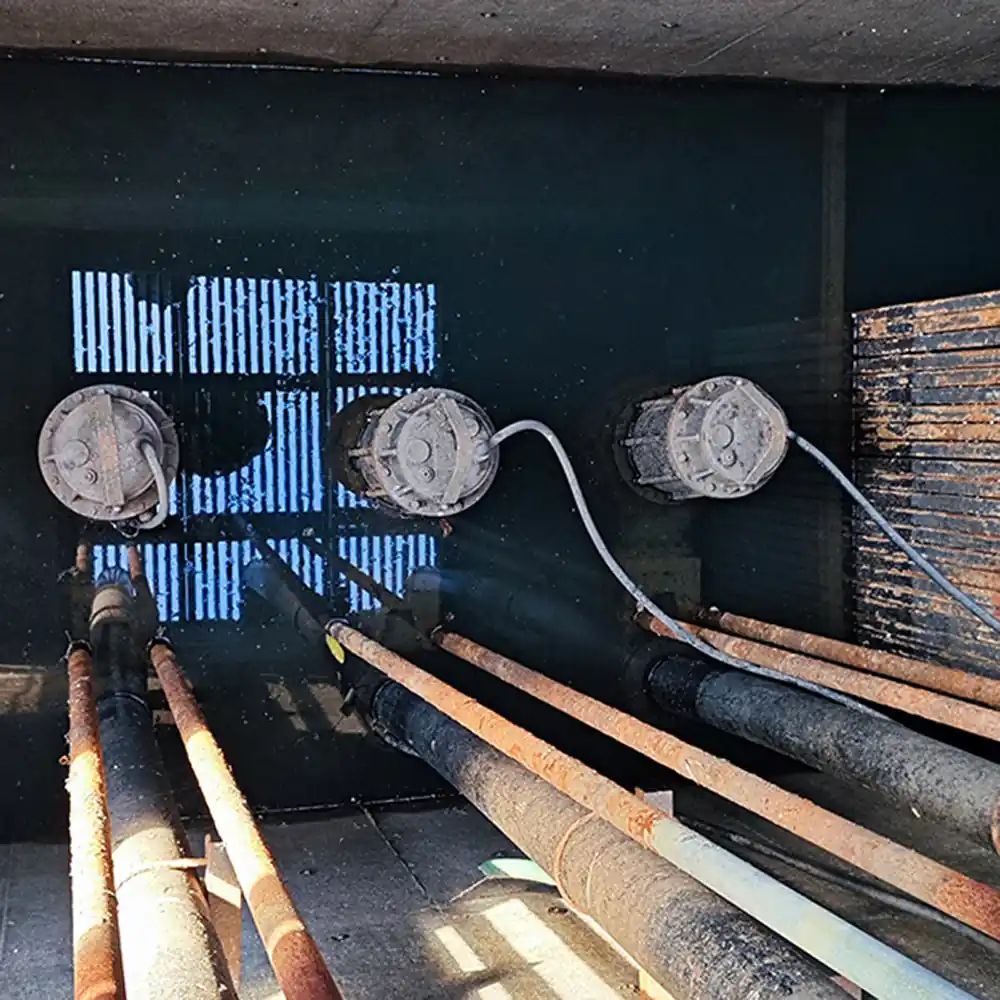
Urban Wastewater Treatment: Used in the lifting, aeration, and recirculation processes of urban wastewater treatment plants, it can efficiently transport wastewater containing suspended solids and sediments, adapting to the media transport requirements of different operating conditions in wastewater treatment processes.
Municipal Drainage and Flood Control: Installed in low-lying urban areas, underground garages, stormwater pumping stations, etc., mainly used for rainwater collection and discharge during the rainy season, as well as emergency drainage during the flood season.
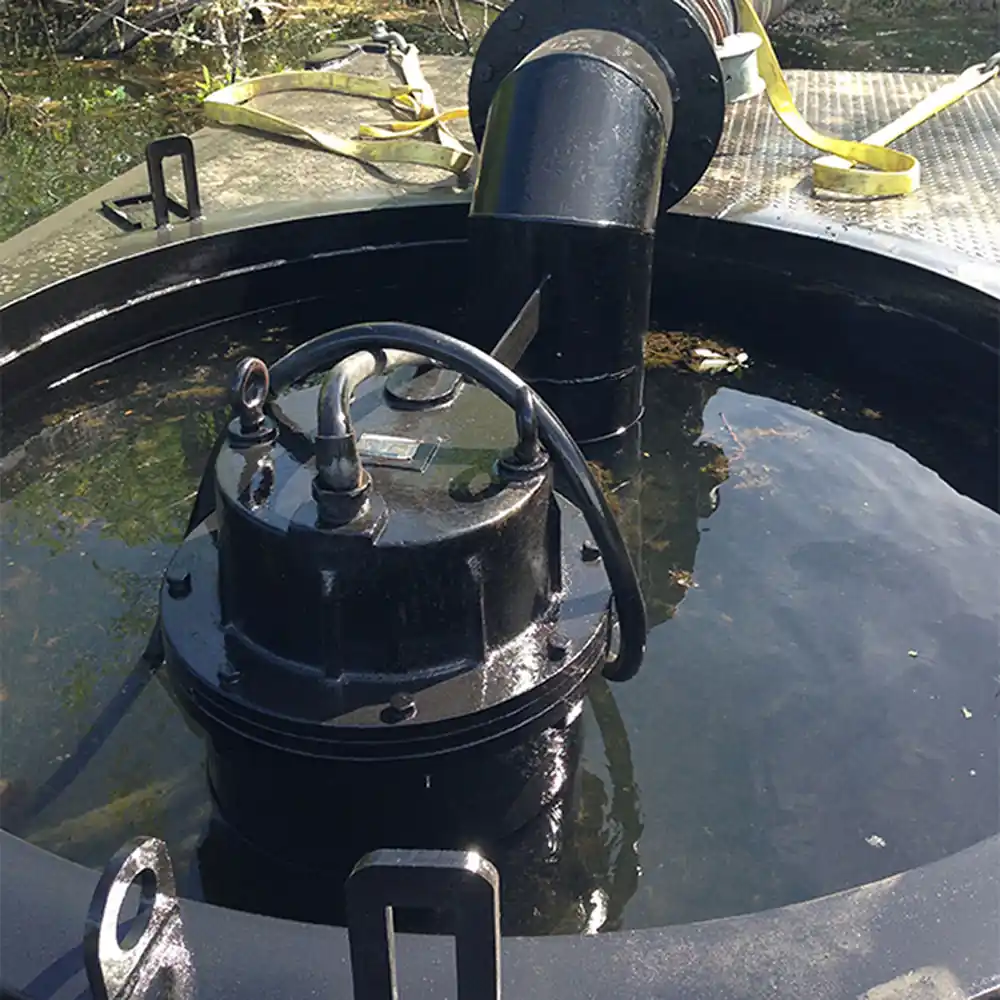
2. Industrial production
Wastewater Discharge in Manufacturing: Suitable for various manufacturing industries such as chemical, textile, papermaking, food, and metallurgy, used for discharging industrial wastewater generated during production processes. It can withstand wastewater media containing corrosive and viscous impurities.
Workshop Wastewater Recycling and Lifting: Used for wastewater recovery and recycling within industrial workshops, as well as lifting wastewater from low-lying areas of the workshop to treatment equipment.
3. Construction
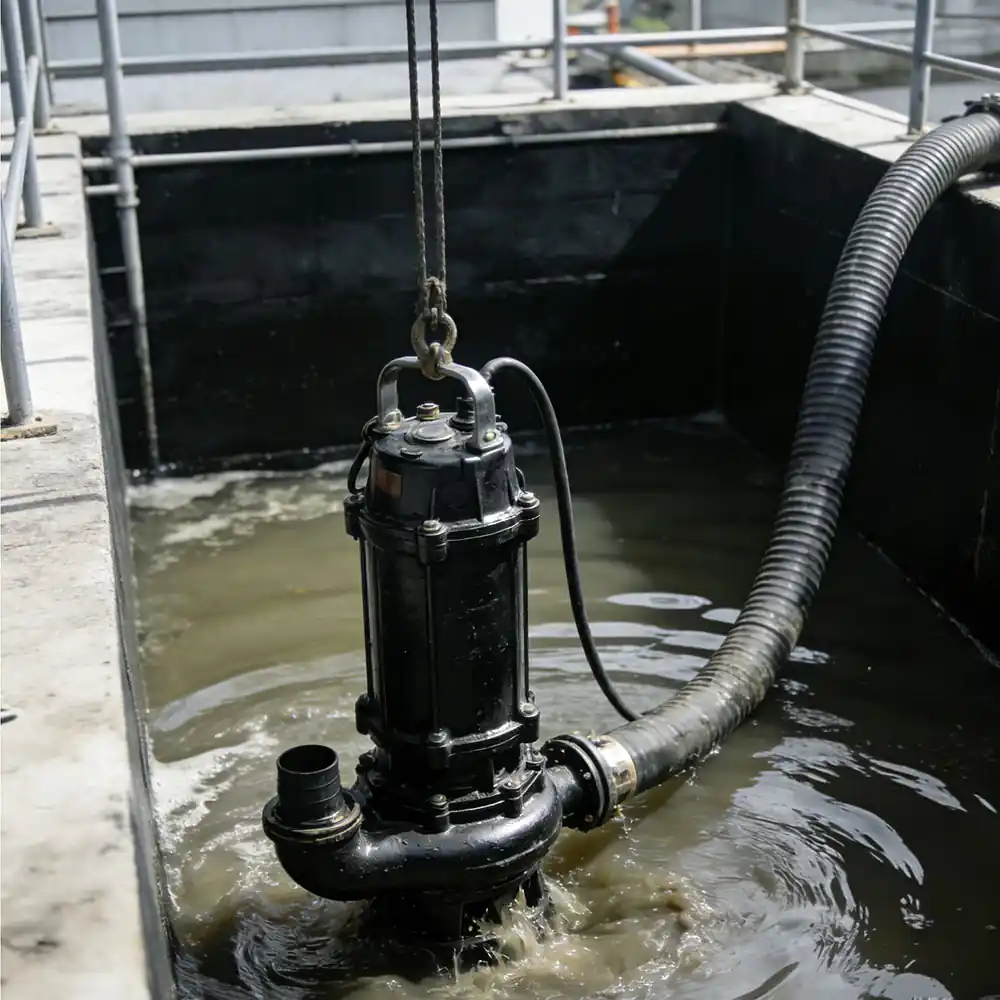
Excavation pit drainage: Used to drain groundwater, rainwater, and construction wastewater from the excavation pit during construction, thereby lowering the water level within the pit.
Construction wastewater discharge: Used for discharging wastewater from living areas on construction sites (such as canteen and dormitory wastewater), as well as transporting mud and flushing wastewater generated during construction.
4. Environmental protection and water conservancy
River and Lake Dredging: Used for dredging operations in rivers, lakes, reservoirs, and other water bodies. It can extract turbid water containing silt and sand and transport it to designated dredging areas.
Environmental Treatment Engineering: Applied to environmental projects such as landfill leachate treatment, livestock farm wastewater treatment, and mine wastewater treatment. It can efficiently transport high-concentration, highly polluting wastewater media.
Installation method
Working principle
video
Related Products