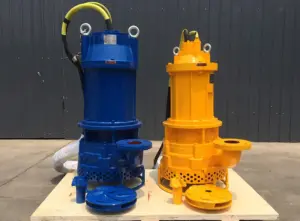
In heavy industrial operations, processing plants do not simply move clean water; they often handle dense, abrasive, and sometimes corrosive mixtures of solids and liquids. Materials such as mineral concentrates, coarse tailings, and industrial sludge can cause rapid wear in conventional centrifugal pumps, leading to frequent maintenance and reduced service life. To operate reliably under these conditions, many facilities rely on horizontal slurry pumps specifically designed for abrasive and high-solids applications.
What is a Horizontal Slurry Pump?
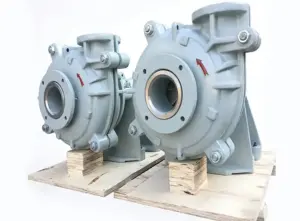
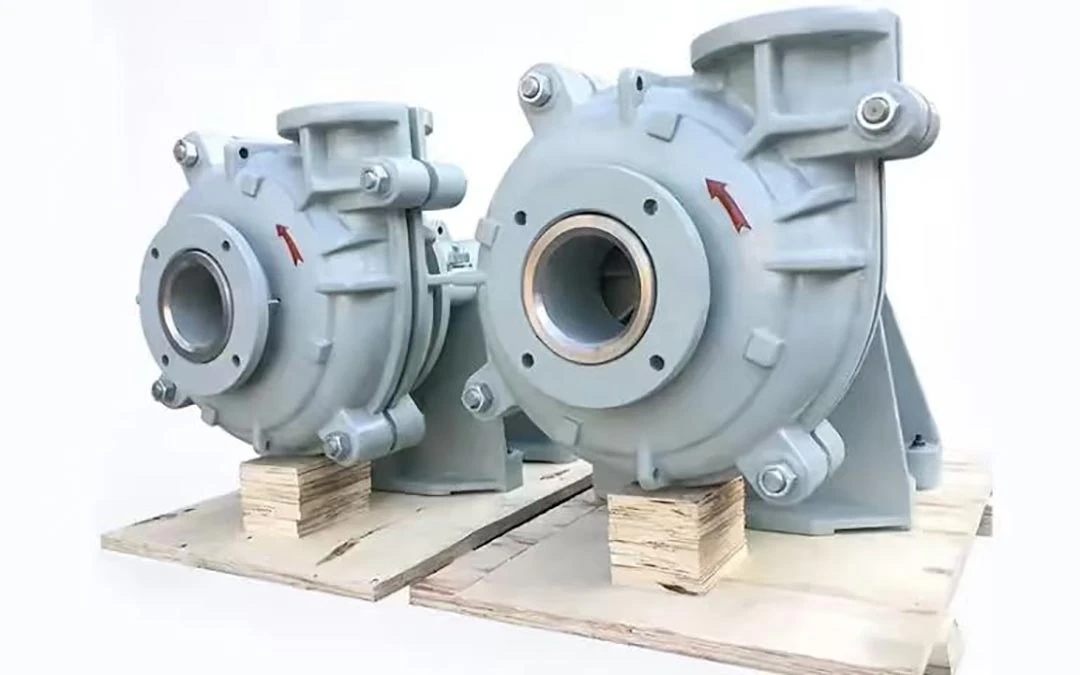
A horizontal slurry pump is a ruggedized, heavy-duty centrifugal pump engineered to do what standard clear-water pumps cannot: move thick, high-viscosity fluids packed with coarse, abrasive solids. While a typical water pump relies on thin-walled casings and tight internal clearances—which would quickly choke and erode under harsh conditions—slurry pumps are built to take a beating. They feature heavy, thick-walled outer casings, wide internal flow passages, open or specialized closed impellers, and heavily reinforced internal wear parts designed to keep demanding industrial processes moving.
Key Structural Components of the MAH Series
- Wear-Resistant Flow System (Internal Liners): The external pump casing consists of heavy-walled cast iron reinforced with external cooling ribs. Inside, it houses a fully replaceable wet-end lining system. A major maintenance benefit of this design is that the front cover plate can be unbolted, allowing the inner liners to slide out smoothly for replacement without requiring the disassembly or movement of the heavy bearing assembly.
- The Impeller: Featuring large diameters and heavy, thick-walled vanes, these impellers possess expansive internal passages engineered to minimize turbulence and smoothly pass large-diameter solids without clogging.
- Heavy-Duty Bearing Assembly: Structural rigidity is maintained via an integrated bearing frame secured tightly by four massive through-bolts. The entire bearing cartridge assembly can be removed rapidly as a single unit, minimizing non-productive maintenance downtime. The assembly utilizes high-capacity angular contact ball bearings at the wet end to withstand extreme axial thrust, combined with single or double-row deep groove roller bearings at the drive end to manage heavy radial loads.
- Flexible Shaft Sealing Options: To protect the shaft and prevent high-pressure slurry leakage, premium pumps like the MAH series offer flexible seal configurations. The standard configuration utilizes a classic packing gland fitted with durable PTFE packing and lubricated by the pumped medium. For more aggressive or dry-running environments, plants can opt for an external clean-water flush system or integrated mechanical seals mounted via dedicated adapter plates.
Why Choose Horizontal Configurations?
Opting for a heavy-duty horizontal configuration over vertical or submersible setups offers distinct structural and hydraulic advantages, particularly in continuous, high-volume processing environments.
Easier Maintenance
The horizontal, split-casing design of the MAH series means that wear components like the volute liner and throatbush are easily accessible. Because the bearing frame and drive systems are positioned horizontally away from the wet end, technicians can conduct routine liner inspection, impeller adjustments, and parts replacement safely from the ground without disturbing the primary intake or discharge pipeline infrastructure.
Improved Seal Protection
High-performing horizontal pumps leverage advanced fluid dynamic relief features. The MAH series comes standard with an expeller (dynamic) pressure relief structure. The expeller acts as a secondary, back-facing impeller that generates a centrifugal counter-force when the pump is running. This significantly lowers the fluid pressure pushing against the stuffing box, dramatically reduces internal backflow, and prevents abrasive particles from grinding into the shaft sleeve, which greatly extends the operational lifespan of the shaft seal.
Flexible Drive Options
Horizontal pumps allow for highly flexible layout options to optimize plant footprint and achieve precise speed control. They can be coupled directly to an electric motor via a direct drive (DC) arrangement or tuned using various V-belt drive configurations (such as CV, or ZV layouts). This flexibility allows operators to match the exact RPM required by changing pipeline hydraulics, ensuring the pump operates close to its Best Efficiency Point (BEP).
Critical Applications Across Heavy Industries
Because horizontal slurry pumps are engineered to survive extreme abrasive and corrosive wear, they serve as critical infrastructure components across several global heavy sectors. The MAH Series is proven to handle demanding duties across these core applications:
Mining and Mineral Processing
In metal mining (copper, gold, iron ore, lithium), ore must be crushed and ground into a fine slurry before chemical extraction. As dedicated mining slurry pumps, they are heavily deployed on mill discharge duties, where they pump highly concentrated, razor-sharp rock slurry directly out of ball and SAG mills. They are also widely utilized for flotation feed transport, thickener underflow, and high-pressure tailings disposal pipelines moving waste material to storage facilities.
Dredging, Sand, and Gravel
For marine extraction, river desilting, and harbor clearing, pumps must move large, naturally abrasive aggregate material. Thanks to wide internal clearances, horizontal slurry pumps easily handle high-density sand mixtures and gravel without choking.
Power Generation (FGD & Ash Handling)
Coal-fired power stations rely on these pumps for two harsh processes. First, they manage bottom ash handling, pumping the glassy, highly abrasive remnants of coal combustion away from the boilers. Second, they drive Flue Gas Desulfurization (FGD) scrubbing loops, recycling dense limestone slurry through chemical spray arrays to strip sulfur dioxide from exhaust gases.
Chemical Processing and Coal Preparation
Whether handling acidic chemical slurs mixed with crystalline by-products or washing and sizing raw coal in preparation plants, the ability to hot-swap internal liners allows a single horizontal pump platform to adapt effortlessly to both highly acidic or highly alkaline environments.
Technical Performance Benchmarks: The MAH Series Matrix
When evaluating heavy-duty horizontal pumps, engineering teams must review quantitative metrics to ensure the equipment meets the hydraulic and structural demands of the plant. As documented in technical engineering specifications, the MAH series establishes clear industrial performance boundaries:
| Engineering Parameter | Standard MAH Series Range | High-Head (HH) Variant Range |
| Flow Rate (Q) | 10.8 to 6,500 m³/h (48 – 28,600 USGPM) | Optimized for high-velocity lines |
| Total Dynamic Head (H) | ≤ 55 meters | ≤ 125 meters (410 feet) |
| Discharge Outlet Sizes | 25 mm to 450 mm (1″ to 18″) | Heavy-walled high-pressure flanges |
| Maximum Rated Power | Up to 300 kW | Up to 1,200 kW |
| Max Allowable Solid Particle Size | 14 mm up to 104 mm spherical | Varies by impeller clearance |
| Quality Compliance Standard | ISO 9001:2015 (Manufacturing) | CE Certified (Product Safety) |
How to Select the Right Horizontal Slurry Pump: A Step-by-Step Engineering Approach
Selecting the incorrect pump size or material will lead to premature failure, pipeline blockages, and soaring maintenance costs. Industrial engineers follow a rigorous four-step selection process to match a horizontal pump to their specific layout.
Step 1: Characterize the Slurry Media
You must quantify both the liquid carrier and the solid particles. Document the average particle size distribution (d50), the shape of the solids (rounded sand vs. sharp, angular crushed rock), the specific gravity (SG) of the mixture, the concentration of solids by volume (Cv) or weight (Cw), and the chemical pH.
Step 2: Select the Correct Wet-End Liner Material
Materials must be matched precisely to the wear mechanism:
- 27% Chrome White Iron (HB500+): This ultra-hard metal alloy is excellent for handling coarse, sharp-edged particles under high-impact conditions, such as mill discharge and heavy tailings pipelines.
- Natural Rubber Liners: When configured with a full rubber wet-end lining, the MAH effectively operates as a rubber slurry pump—highly resilient and superior for handling fine, micro-particle slurries or slurries containing small, rounded solids (like fine sand).
- Polyurethane Liners: An excellent intermediate choice that offers balanced resistance to both fine particle abrasion and chemical degradation in mildly corrosive chemical or coal-washing circuits.
Step 3: Calculate Total Dynamic Head (TDH) and Slurry De-rating
Calculate the static elevation change and add the frictional head losses generated as the thick slurry moves through the intake and discharge pipelines. Because pumping solid-laden slurry requires more energy than pumping clear water, engineers must apply performance de-rating factors (reducing the pump’s clear-water head and efficiency curves) based on the slurry’s solid concentration (Cw) and particle size.
Step 4: Establish the Limiting Pipeline Velocity
If the fluid moves too slowly through the pipeline, the heavy solid particles will fall out of suspension and settle along the bottom of the pipe, eventually leading to a catastrophic pipeline blockage. The operating velocity must remain safely above the critical settling velocity. However, if the fluid moves too quickly, the abrasive wear on both the pump internals and the pipeline walls will increase exponentially. The ideal selection identifies a pump that maintains a stable velocity just above the settling threshold at maximum efficiency.
Best Practices for Installation and Maintenance
To achieve the maximum possible Mean Time Between Failures (MTBF), operations must implement strict installation and preventative maintenance procedures.
- Precision Shaft Alignment: When utilizing V-belt or direct-coupled drives, ensure laser alignment between the motor shaft and the pump shaft. Misalignment induces high radial stresses, causing premature failure of the heavy-duty angular contact bearings and ripping through packing gland seals.
- Lubrication Management: The heavy-duty bearing assembly comes standard with high-grade grease lubrication, though oil lubrication options are available. Ensure grease intervals are strictly maintained to keep moisture and fine atmospheric dust out of the bearing cartridge.
- Regular Impeller Clearance Adjustments: As the front of the impeller vanes and the throatbush experience normal wear over months of operation, the internal clearance gap widens, creating turbulent backflow and dropping the pump’s hydraulic efficiency. Maintenance teams should periodically use the integrated adjustment screws on the bearing frame to push the impeller forward, closing the gap against the throatbush to restore original factory-level efficiency.
FAQ
Q1: How does the MAH Series reduce maintenance downtime?
A: Thanks to the split-casing design and quick-opening front cover, technicians can replace internal wear liners without moving the motor or bearing assembly. This design reduces MTTR by 40% to 60%, dropping maintenance time to under 2 hours.
Q2: Can the pump handle high-temperature fluids?
A: Yes. For hot slurries up to 90°C, the pump utilizes an optional oil-lubricated bearing assembly with high-temperature grease and an expeller structure to lower seal-zone heat. The outer casing features cooling ribs to prevent thermal deformation.
Q3: High-Chrome Metal vs. Rubber Liner: Which is better?
A: Choose 27% Cr White Iron (HB500+) for coarse, large-particle, sharp solids (like mill discharge) needing high impact resistance. Choose Natural Rubber for fine-particle slurries and sliding abrasion in mildly corrosive environments.
Conclusion
Horizontal slurry pumps play a critical role in transporting abrasive and high-solids slurries across industries such as mining, mineral processing, dredging, and power generation. Proper pump selection—including hydraulic sizing, material choice, and maintenance considerations—can significantly improve reliability and reduce operating costs.
The MAH Series offers a range of configurations designed for demanding slurry applications. For assistance with pump selection, performance data, or application-specific requirements, contact the Kairun Pump engineering team.