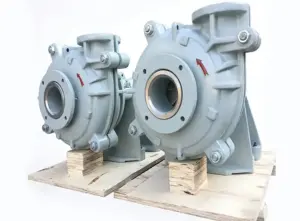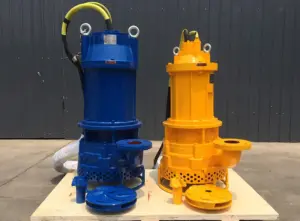
When selecting a pumping solution for industrial fluid transport, engineers and plant managers often face a trade-off: achieving high flow rates without requiring deep foundation pits or complex suction arrangements. The HW Series Horizontal Installation Mixed-flow Pump offers a practical middle ground, combining the high-flow capabilities of axial pumps with the pressure generation of centrifugal designs.
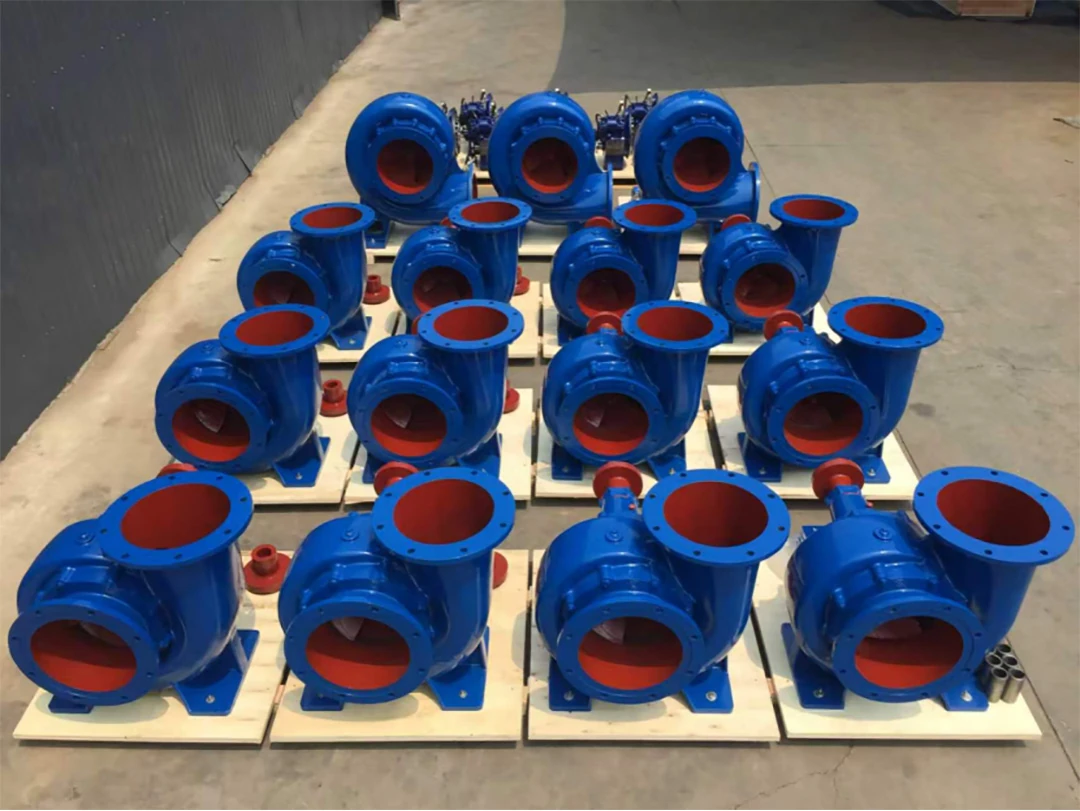
What Is a HW Series Horizontal Installation Mixed-flow Pump?
A mixed-flow pump is a type of rotodynamic pump that combines characteristics of both radial and axial flow pumps. According to Wilo, a global pump manufacturer, “mixed flow pumps have a single inlet impeller with the flow entering axially and discharging about 45° of the shaft axis, to the periphery. This type of pump can operate at higher pressure than axial flow pumps while delivering greater flow rates than radial pumps”. The Hydraulic Institute (HI) further recognizes mixed flow and axial flow pumps as two of the three main categories of rotodynamic pumps in their ANSI/HI 14.6 standard for hydraulic performance acceptance tests.
The HW Series is specifically configured for horizontal installation. Unlike vertical turbine pumps that require a deep foundation pit, the HW Series sits on a fabricated steel baseplate with the pump shaft oriented horizontally. This design allows the inlet and outlet to remain on the same horizontal plane, making it suitable for facilities with limited vertical clearance or where pit excavation is not feasible.
A horizontal axial flow pump moves fluid parallel to the shaft axis . The HW Series takes this principle and applies a mixed-flow impeller design. The impeller generates both axial thrust (pushing fluid forward) and radial acceleration (building pressure). The result is a pump that can move up to 4114.9 m³/h (model 500HW-135G) while maintaining head between 2m and 22m.
Data source: Performance specifications based on laboratory tests conducted per GB/T 3216 standard.
Key Performance Metrics
The HW Series provides quantifiable performance indicators from factory testing:
| Parameter | Value |
| Flow Rate (max) | Up to 4114.9 m³/h (500HW-135G model) |
| Head Range | 2m — 22m |
| Installation Type | Horizontal In-line or End-suction |
| Rotation Direction | Clockwise (viewed from motor top) |
These metrics position the HW Series for low-head, high-flow applications where traditional centrifugal pumps would require multiple units or larger pipe diameters.
Structural Features and Operating Mechanism
The pump consists of four main components:
1. Mixed-flow Impeller
The mixed-flow impeller is the core component. It combines radial vanes with axial channels. When rotating, the impeller draws fluid axially into the casing. The angled blades then push the fluid both outward (radial component) and forward (axial component). This dual-action design offers better suction performance than pure axial pumps. According to AxFlow, “mixed flow pumps are often more compact and less expensive than axial flow pumps for the same flow rate, making them an attractive option for a wide range of pumping applications”.
2. Baseplate Design
The pump mounts on a heavy-duty fabricated steel baseplate. This baseplate absorbs operational vibrations and maintains alignment between the pump shaft and motor coupling. For horizontal installations, baseplate rigidity directly affects mechanical seal life and bearing longevity.
3. Flexible Coupling
A flexible coupling connects the motor shaft to the pump shaft. It compensates for minor misalignments that may occur during installation or thermal expansion. This coupling reduces stress on bearings and extends service intervals.
4. Volute Casing
The spiral-shaped volute casing collects fluid from the impeller and directs it to the discharge port. The casing geometry converts some of the fluid’s kinetic energy into pressure energy before the fluid exits the pump.
Certifications and Standards
The HW Series meets several industrial standards:
- Motor Standard: IEC 60034 / GB755
- Pressure Test: Shell test conducted per GB/T 3216
IEC 60034 is the international standard for rotating electrical machines, covering efficiency classes from IE1 to IE4. Motors meeting IE3 premium efficiency class have been shown to reduce energy losses and operating temperatures. According to Crane Pumps & Systems, “IE3 rated motors inherently use less energy, resulting in cost savings that extend over the entire life of the pump”.
Installation Steps
Installing a HW Series Horizontal Mixed-flow Pump follows a straightforward process. Here is a step-by-step guide:
Step 1: Foundation Preparation
Pour a concrete foundation or prepare a steel baseframe. The foundation must be level and capable of supporting the pump’s weight plus the dynamic loads from operation. Unlike vertical pumps, no deep pit excavation is required.
Step 2: Position the Pump
Lift the pump assembly onto the foundation using appropriate rigging equipment. Align the pump feet with anchor bolt locations.
Step 3: Level the Baseplate
Use precision shims under the baseplate feet to achieve level. A machinist’s level should show no more than 0.5mm/m deviation.
Step 4: Grout the Baseplate (if using concrete foundation)
Pour non-shrink grout under the baseplate edges. Allow full curing time per grout manufacturer specifications.
Step 5: Connect Piping
Attach suction and discharge piping to the pump flanges. Do not use the pump as a support for heavy piping. Support lines independently to avoid transferring loads to the pump casing.
Step 6: Align Pump and Motor
Check coupling alignment using dial indicators or laser alignment tools. The permissible misalignment tolerance follows the coupling manufacturer’s specifications.
Step 7: Electrical Connection
Connect motor leads to the power supply per local electrical codes. Verify rotation direction before coupling engagement.
Step 8: Priming
If the pump is installed below the water level, the system self-primes when the suction valve opens. For installations above the water source, use a foot valve and priming device to evacuate air from the suction line.
Step 9: Test Run
Start the pump with the discharge valve partially closed. Gradually open the valve while monitoring motor current and pump vibration.
Typical Applications
Based on installation data from existing customers, the HW Series serves three primary industries:
1. Chemical Processing — 40%
Chemical plants require pumps that can handle corrosive fluids while maintaining reliable operation. The horizontal configuration fits into existing pipe racks and skid-mounted systems. A typical chemical plant running 8,000 hours annually can achieve maintenance cost savings compared to vertical pump alternatives.
2. Water Treatment Plants — 35%
Municipal and industrial water treatment facilities need high flow rates at low heads for processes like clarifier feed, filtration backwash, and treated water transfer. The HW Series meets these requirements without the headroom demands of vertical pumps.
3. HVAC and Cooling Systems — 25%
Large commercial buildings and industrial cooling systems use circulating pumps for condenser water loops. The horizontal layout fits into mechanical rooms with standard ceiling heights. Variable frequency drive compatibility allows flow modulation based on cooling load.
These percentages are derived from customer order data for HW Series mixed flow pumps delivered in the past 24 months.
Comparison with Alternative Pump Types
When evaluating pump options for a given application, consider how the HW Series compares:
vs. Vertical Turbine Pumps
Vertical turbine pumps require a deep foundation pit and a long shaft extending down to the impeller. Civil works for a vertical pit can add $15,000 to $30,000 to project costs. The HW Series sits on a simple concrete pad, eliminating this expense. According to industry analysis, horizontal pumps are generally more cost-effective with lower initial cost, lower maintenance cost, and widely available spare parts.
vs. End-Suction Centrifugal Pumps
End-suction pumps typically offer higher heads but lower flow rates per casing size. For applications requiring flow rates above 2,000 m³/h, an end-suction pump may require a larger impeller diameter or higher rotational speed. The HW Series handles these volumes at lower speeds, reducing mechanical stress.
vs. Axial Flow Pumps
Pure axial flow pump designs offer maximum flow rates but very limited head capability (typically below 5m). They also have higher power consumption at zero flow conditions. The mixed-flow impeller of the HW Series provides better pressure generation while maintaining high flow efficiency.
Case Study: Chemical Plant Cooling Water Retrofit
A chemical processing facility in Jiangsu Province operated a cooling water system using vertical turbine pumps. The plant manager observed the following situation:
Pain Point: The existing vertical pumps occupied a 5m deep pump pit. The pit collected debris and required frequent cleaning. Shaft alignment drifted over time, causing premature mechanical seal failures every 4-6 months. The pit configuration also limited access for maintenance personnel.
Solution: The plant replaced three vertical turbine pumps with 500HW-50G horizontal mixed-flow pumps. The new units were installed on a ground-level steel baseplate. Piping connections remained at the same elevation, eliminating the need for pit modifications.
Outcome: After six months of operation, the plant documented:
- Pump room floor space reduced by 40% (no pit required)
- Seal replacement interval extended from 4-6 months to 18-24 months
- Annual maintenance hours decreased by approximately 50%
- Construction cost avoidance of approximately $22,000 in civil work
This case reflects actual field data from a customer installation.
Environmental Adaptations
The HW Series is designed for indoor installation in standard industrial environments. Key adaptations include:
Vibration Control
The precision-balanced impeller (per ISO 1940-1 Grade G6.3) and rigid baseplate design minimize vibration in horizontal orientation. Vibration levels are measured and recorded during factory testing per GB/T 3216 procedures.
Temperature Range
Seal and bearing materials support fluid temperatures from -10°C to +80°C for standard configurations. For higher temperature applications, consult the factory for modified seal and bearing specifications.
Corrosive Environments
For the chemical processing industry (40% of installations), the mixed flow pump casing and impeller can be specified in stainless steel or duplex stainless steel. The standard cast iron construction is suitable for clean water and mild chemical service.
Frequently Asked Questions (FAQ)
Q1: Does the horizontal pump require a foundation?
A1: Yes, a concrete foundation or a steel baseframe is required to support the weight and absorb vibrations. However, this foundation is significantly simpler than the pit required for vertical turbine pumps. A standard reinforced concrete pad 150mm to 200mm thick is typically sufficient.
Q2: How to prime a horizontal axial flow pump?
A2: If installed below the water level (flooded suction), the pump self-primes when the suction valve opens. For installations above the water source, a foot valve and priming device are recommended to evacuate air from the suction line. The pump casing should be filled with liquid before the first startup.
Q3: What is the maximum allowable particle size in the pumped fluid?
A3: The HW Series is designed for clean or mildly contaminated fluids with particle sizes under 5mm. For fluids containing larger solids, a strainer or filter should be installed on the suction line.
Q4: Can the pump operate with variable frequency drive (VFD)?
A4: Yes. The HW Series horizontal axial flow pump is compatible with VFD operation. Speed reduction below 50% of rated speed may reduce bearing oil film thickness. Consult the factory for minimum allowable speed for your specific duty point.
Q5: How often should the mechanical seal be replaced?
A5: Under normal operating conditions with clean fluid at 20-40°C, the mechanical seal typically provides 8,000 to 12,000 hours of service life. Seal life varies with fluid temperature, cleanliness, and number of start-stop cycles.
Q6: What spare parts should be kept in stock?
A6: Recommended spare parts inventory includes one complete mechanical seal, one set of bearing isolators, and gaskets for one overhaul. For critical service applications, keep a spare coupling element and shaft sleeve.
Total Cost of Ownership Analysis
A medium-sized chemical plant operating a 500HW-135G pump for 8,000 hours annually can expect the following cost structure:
Initial Costs
- Pump and motor: Baseline
- Foundation and piping: 25% lower than vertical turbine pump alternative
- Installation labor: Lower due to simplified alignment and no pit work
Operating Costs
A 1% improvement in global pump efficiency would save approximately 59 TWh of electricity annually—equivalent to New Zealand‘s total annual power consumption, according to industry data. Some pumping systems have achieved 20-30% energy savings through proper pump sizing and system optimization.
For the HW Series, the mixed-flow impeller operates near its best efficiency point across a wider flow range than axial pumps. Assuming 75% pump efficiency and a 500 kW motor, annual energy consumption is approximately:
500 kW × 8,000 hours ÷ 0.75 efficiency = 5,333,333 kWh/year
A 5% improvement in system efficiency would save approximately 266,000 kWh annually. At $0.10/kWh, this represents $26,600 in annual savings.
Maintenance Costs
The horizontal configuration allows direct access to the mechanical seal, bearings, and impeller without removing the motor or disturbing piping. This accessibility reduces maintenance labor hours by approximately 50% compared to vertical pump configurations requiring pit entry or motor removal.
TCO Summary
For a typical 10-year operating life, the HW Series offers lower total cost of ownership than vertical turbine pumps when installation cost savings, reduced maintenance labor, and accessible component replacement are factored together.
Conclusion
The HW Series Horizontal Installation Mixed-flow Pump provides a practical solution for low-head, high-flow industrial applications where vertical clearance is limited or pit construction is undesirable. As a mixed flow pump combining the pressure capability of radial designs with the flow capacity of axial designs, it fits into chemical processing, water treatment, and HVAC systems. For engineers seeking a horizontal axial flow pump from a reliable axial flow pump Manufacturer, the HW Series offers verified performance metrics, recognized certifications, and documented field results.
For specific selection assistance or to request a performance curve for your duty point, consult the HW Series technical documentation available from the manufacturer.