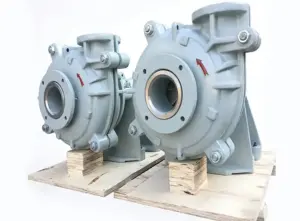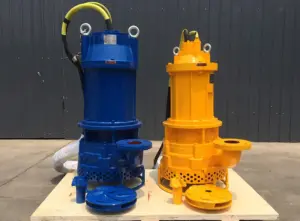
For large-scale water transfer projects, pump selection directly affects system efficiency, operating cost, and long-term reliability. In agricultural irrigation and urban flood control, the choice often narrows down to two specific types: the axial flow pump and the mixed flow pump. Although both pump types are capable of handling high-volume water transfer, their hydraulic structures determine where each design performs best. For project managers sourcing internationally, understanding these differences is essential, especially when evaluating axial flow pump manufacturers. This article provides a technical, data-driven comparison to help engineers, contractors, and procurement specialists understand which solution fits their project requirements.
Understanding the Fundamentals
To differentiate these pumps, one must first understand the fluid dynamics at play.
In an axial flow pump, water enters and leaves the impeller in a direction nearly parallel to the pump shaft, allowing the unit to achieve high discharge capacity at relatively low heads. Its impeller utilizes airfoil-shaped blades that generate lift, pushing water in a straight direction along the axis. In actual pumping stations, axial flow pumps are selected mainly when the required flow is very large but the available head is limited. Their efficiency advantage becomes less obvious once the system requires higher lifting pressure. Because the power required at shut-off is at its maximum, these units must be started with an open discharge valve to prevent motor overload. Large axial flow pumps can achieve efficiencies above 80% when operating close to their Best Efficiency Point (BEP), with actual performance depending on hydraulic design and operating conditions.
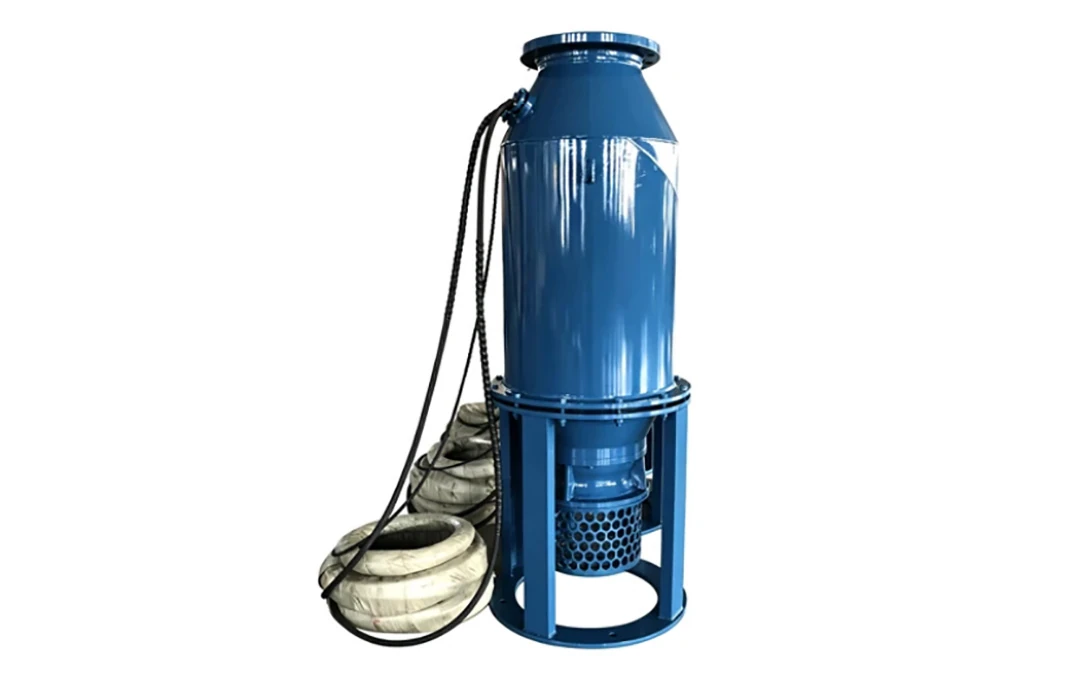
Mixed flow pumps operate between axial flow and centrifugal pump designs, using both radial and axial hydraulic forces to achieve a balance between flow capacity and pressure generation. Liquid passes through the impeller at an angle to the shaft, benefiting from both centrifugal force and blade lift. This hydraulic arrangement allows mixed flow pumps to provide higher heads than axial flow pumps while maintaining considerably higher flow capacity than conventional centrifugal pumps. It delivers moderate volume but achieves significantly higher heads, reaching up to 30 meters in some configurations.
The Advantage of Global Sourcing
For international buyers, pump selection is not only about purchase price. Factors such as spare parts availability, installation support, hydraulic testing capability, and long-term maintenance requirements often determine the actual project cost. The competitiveness of international manufacturers is not limited to production cost. Many suppliers also provide customized hydraulic designs, material selection, and installation configurations based on specific project requirements. Hydraulic labs have extensive experience tailoring blade angles and materials for challenging conditions like silt-laden rivers or corrosive seawater applications. They often utilize duplex stainless steel or specialized coatings that extend operational life by 2-3 times in abrasive environments.
When evaluating suppliers, many firms turn to china mixed flow pump producers for their mature supply chains. The integration of in-house foundries and motor winding shops shortens lead times and allows for cost-effective customizations that are often prohibitive in low-volume Western markets.
Head-to-Head Technical Comparison
The following table provides a quantified summary of the operational parameters sourced from industry testing standards.
| Feature | Axial Flow Type | Mixed Flow Type |
| Flow Rate (m³/s) | 0.5 – 30 | 0.1 – 30 |
| Head Range (m) | 1 – 15 (Primarily <10) | 5 – 30 |
| Specific Speed (ns) | 500 – 1200 | 300 – 500 |
| Peak Efficiency | 85% – 88% | 82% – 86% |
| Efficiency Curve | Narrow high-efficiency zone | Wide high-efficiency zone |
| Motor Power (kW) | 5.5 – 1000 | 7.5 – 1000 |
| Cavitation Requirement | High (requires significant submersion) | Lower (positive suction head possible) |
| Relative Equipment Cost | Low (simple structure, light weight) | Medium (more complex casting) |
| Optimal Application | Ultra-high flow, low lift | High flow, medium lift, variable levels |
Data Reference: Comparative analysis based on hydraulic performance curves standardized by the National Pump Product Quality Inspection Center.
Deep Dive into Application Scenarios
Flood Control and Drainage
Axial flow pumps remain one of the most widely adopted solutions for large drainage stations where extremely high flow rates and limited pumping heads are required. Consider a large drainage pump station in the middle and lower reaches of the Yangtze River, tasked with a design flow of 50 m³/s. Centrifugal pumps were deemed too expensive and inefficient for such a low head of 8 meters. Instead, six vertical adjustable-blade units with 1000 kW motors were installed. The key innovation was the remote adjustment of the impeller blades. During monsoon seasons, as river water levels rose, operators adjusted the blade angles in real-time to keep the pumps operating at an average efficiency of 85%. This setup reduced annual electricity consumption by approximately 800,000 kWh and cut civil construction costs by 25% compared to conventional solutions. For such emergency response, reputable axial flow pump manufacturers ensure the blades maintain structural integrity under rapid load changes.
Agricultural Irrigation
For irrigation, the mixed flow design often presents the superior solution. Water sources such as rivers and reservoirs experience significant level fluctuation, which is the Achilles’ heel of a fixed-blade axial unit. A pump with a broader efficiency band maintains high operational effectiveness even as the suction level drops. If a farmer requires 3 m³/s lifted at 12 meters, this configuration fits perfectly, whereas an axial alternative would struggle to reach the required head. The vertical installation option also saves valuable land space on farmland. Consequently, many engineering firms specify products from established suppliers for large-scale water transfer lifts that require robust priming capabilities without excessive excavation depth.
High-Performance Solutions and Customization
Manufacturers have evolved to offer integrated solutions that blur traditional installation constraints.
Submersible configurations are becoming popular for urban infrastructure. These units integrate the motor and impeller in a watertight casing, lowering them into the water via a guide rail. This saves massive civil works costs associated with traditional dry-pit stations and reduces noise pollution in urban settings.
For harsh environments, a specialized china axial flow pump can be engineered with cold-resistant electrical insulation for northern winters or protective coatings for saline-alkali soils.
On the other hand, vertical configurations remain the workhorse for stable irrigation networks. Modular designs allow for the application of patented technologies, such as space guide vanes that recover rotational kinetic energy, lifting the dynamic head by a critical margin. As a link between advanced manufacturing and project demand, firms like Kairun Pump provide engineers who utilize CFD (Computational Fluid Dynamics) analysis to verify that the selected impeller hits the Best Efficiency Point (BEP) exactly where the client needs it.
How to Select the Right Manufacturer
Procurement specialists evaluating suppliers should focus on three pillars beyond the initial price:
1. Technical Verification: Request performance curves validated by third-party testing, not just theoretical calculations. A manufacturer should guarantee the non-overloading power characteristic throughout the full head range.
2. Certification and Material Traceability: Look for ISO 9001:2015 and ISO 14001:2015 systems, plus CE 2014/35/EU compliance for electrical safety. Verify material certificates for stainless steel or duplex steel in corrosion-resistant applications.
3. Lifecycle Cost Modeling: An 80% efficient pump is vastly different from an 85% efficient pump over a 20-year lifespan. Leading suppliers provide ROI calculators comparing equipment investment versus energy savings. Often, the slightly higher initial cost of an adjustable-blade system yields payback within 2-3 years of electricity savings in continuous duty.
FAQ
Q: Which pump is better for low-head flood control?
A: The axial flow type is strictly superior for heads below 10 meters. It moves the maximum water volume per unit of energy consumed, provided the water level remains relatively stable or an adjustable blade mechanism is used.
Q: Can mixed flow designs handle variable water levels?
A: Yes, this is a primary advantage. Their performance curves drop more gradually than axial curves, meaning the output stays relatively stable even if the river level drops by several meters. This makes them the first choice for irrigation intake.
Q: Why consider Chinese manufacturing for large pumps?
A: The supply chain maturity allows for a massive range of specifications. Whether you need a submersible unit or a giant vertical mixed flow pump configuration, the ability to customize alloys and hydraulics often surpasses what is available from low-volume domestic sources in other regions.
Conclusion
In most low-head, high-volume applications, axial flow pumps are generally preferred because their hydraulic characteristics better match these operating conditions. Successful pump selection depends on accurately matching the pump’s hydraulic characteristics with the actual site conditions, including required flow rate, total head, water level variation, and operating schedule. Rather than oversizing one type for the wrong application, utilizing a specialized manufacturer ensures long-term reliability and energy efficiency.
Kairun Pump provides customized axial and mixed flow pump solutions for irrigation, drainage, and water transfer projects, including hydraulic design support, performance testing, and project consultation. As a leading name among china mixed flow pump providers, we are ready to support your next installation from design to commissioning.