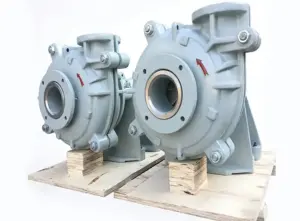
Submersible slurry pumps are the workhorses of mining dewatering, dredging, construction and industrial sludge handling.
Unlike standard centrifugal pumps, they are engineered to run fully submerged, moving abrasive media — sand, mud, coal slurry, tailings and sludge — straight from sumps, pits, ponds and tanks to the surface. Because the motor and the pump are close-coupled in a single unit, installation is simple: lower the pump into the liquid, connect the discharge line and power, and start pumping. There is no priming, no long suction pipe and no separate pump house to build.
Yet one standard pump cannot handle every job. Slurries differ in solids concentration, particle size, settling behavior and the geometry of the pit or pond the pump must work in. So submersible slurry pump have been manufactured in several configurations:
- the classic submersible slurry pump mud pump
- versions with a mix impeller
- models with double-side agitators
- hydraulic submersible slurry pumps driven by an excavator.
- explosion-proof submersible slurry pump versions
- and submersible slurry pumps combined with high-pressure flushing water guns.
This article explains how each configuration works and how to choose the right one.
Configuration 1: Standard Submersible Slurry Pump (Mud Pump)
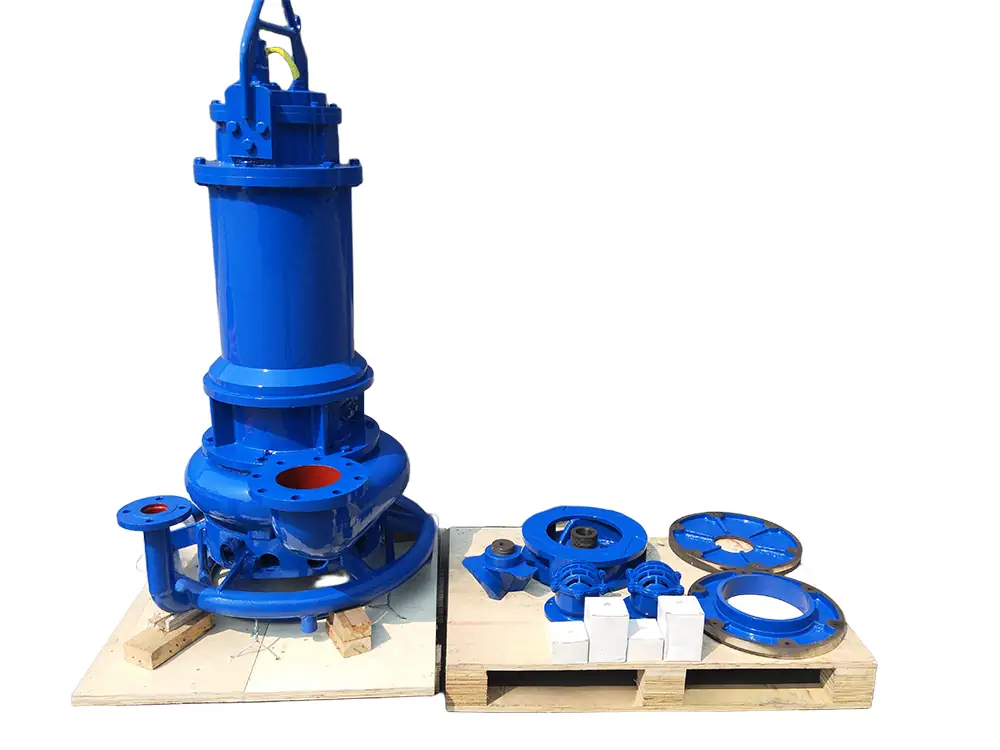
The standard submersible slurry pump — the submersible mud pump — is the baseline design. The electric motor sits on top of the pump, and the slurry intake is at the very bottom, so the pump can draw a sump or pit down to its lowest level. The wet end is cast in high-chrome alloy (typically Cr27) to resist abrasion from sand and rock particles. A double mechanical seal with an oil chamber protects the motor, and a cooling jacket around the motor allows safe operation even during partial immersion.
The working principle is straightforward. The rotating impeller creates suction at the bottom intake, draws slurry into the casing and accelerates it, and the volute converts that velocity into discharge pressure, pushing the mixture up the delivery pipe. Because the pump is submerged, it is self-priming by design and can handle a wide range of particle sizes, depending on the impeller and casing geometry selected.
Typical applications include mine sump dewatering, mud pits, foundation pits on construction sites, tank cleaning, and the transfer of sand, clay or sludge that is already suspended or easily fluidized by incoming water. When solids have settled and compacted, however, a standard pump tends to pump the clearer water on top and leave a hard layer of settled material behind. That limitation is exactly what the following configurations are designed to solve.
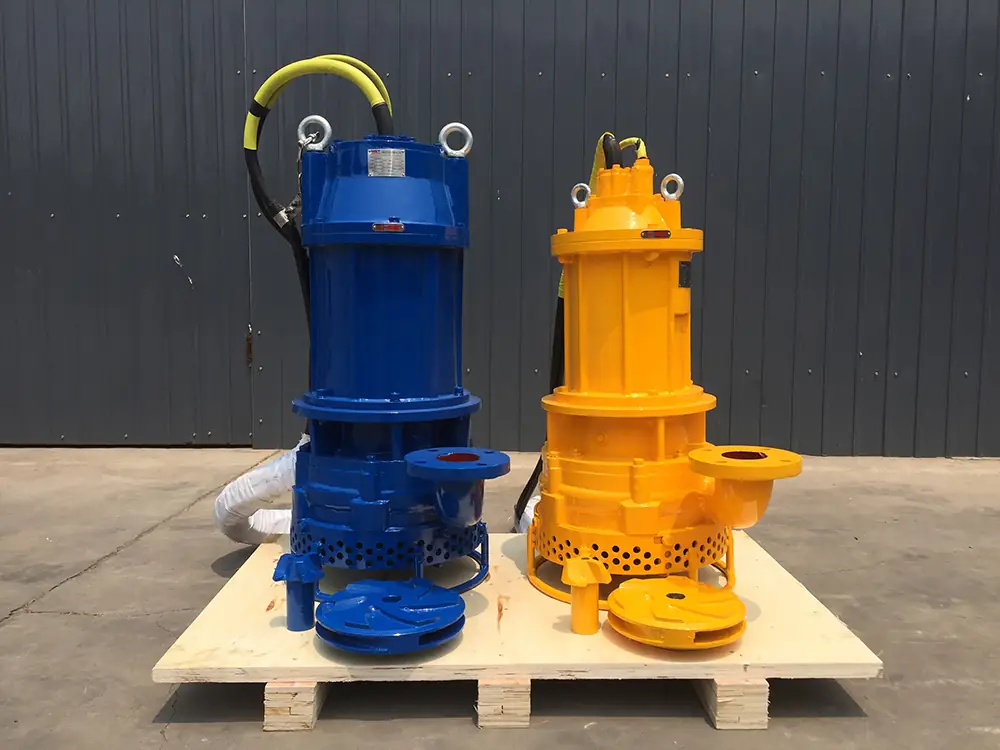
Configuration 2: Submersible Slurry Pump with Mix Impeller
A submersible slurry pump with a mix impeller adds a second, smaller impeller on the same shaft, mounted below the main impeller. As the shaft rotates, the mix impeller churns the settled solids directly beneath the suction and jets them back into suspension, creating a dense slurry that the main impeller can then pump away. No external flushing water, auxiliary stirrer or air injection is required.
This configuration is the first step up from the standard mud pump. It is ideal where solids have time to settle between operating cycles: storage tanks, clarifiers, settling ponds, coal washing basins and slurry storage cells. The mixing action keeps the pump productive, dramatically increases the amount of settled material that can be evacuated, and reduces manual cleaning and downtime.
One design consideration is that part of the motor power is consumed by the mixing duty, so the hydraulic performance curve must be matched to the application. The mix impeller works best on settled but not heavily compacted solids; for hard-packed deposits, an agitator configuration is the more effective choice.
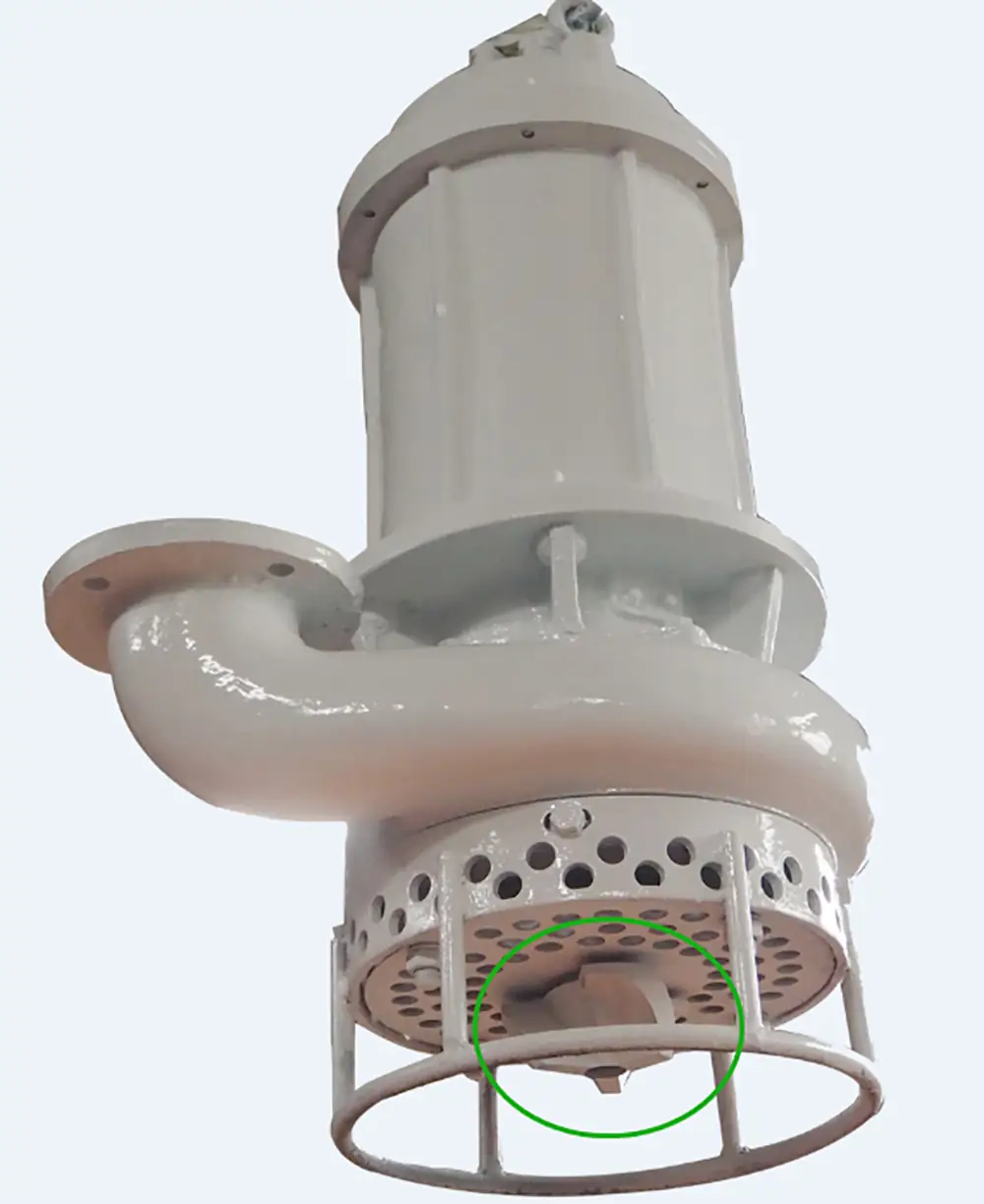
Configuration 3: Submersible Slurry Pump with Double-Side (Twin) Agitator
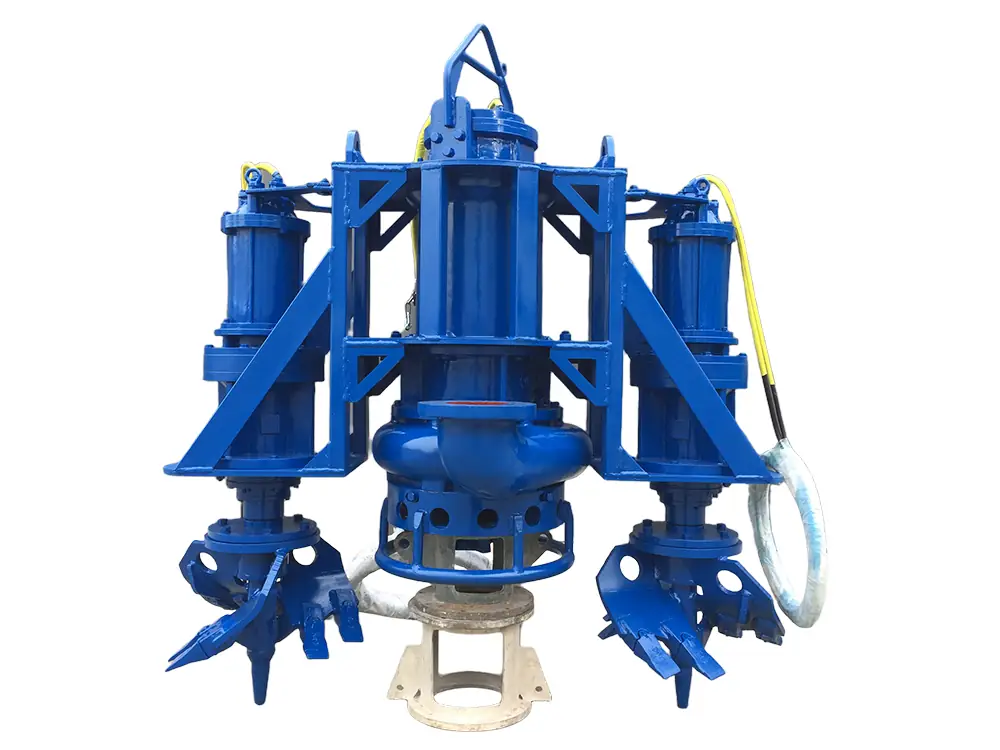
The twin-agitator configuration takes fluidization a step further. Instead of a mixing impeller under the suction, two agitator blades are mounted on both sides of the pump suction and driven by the same shaft and motor. The rotating blades fluidize a zone of settled sand, mud or sludge ahead of the pump, converting a compacted bed into pumpable slurry and feeding it directly to the suction.
A double-side (twin) agitator carries blades on both sides of the pump, creating a symmetrical fluidization zone that covers a much wider footprint. The twin design prevents dead zones and reduces the risk of the pump “rat-holing” — digging a narrow hole around its own suction and stalling while the surrounding material stays in place. It is the preferred choice for wide pits, slurry ponds, lagoons, tailings ponds and heavy, deep deposits. The agitator is a fully integrated, shaft-driven component with no separate motor, gearbox or external power, so reliability stays high and the pump remains a single, compact unit.
Configuration 4: Hydraulic Submersible Slurry Pump (Excavator-Driven)
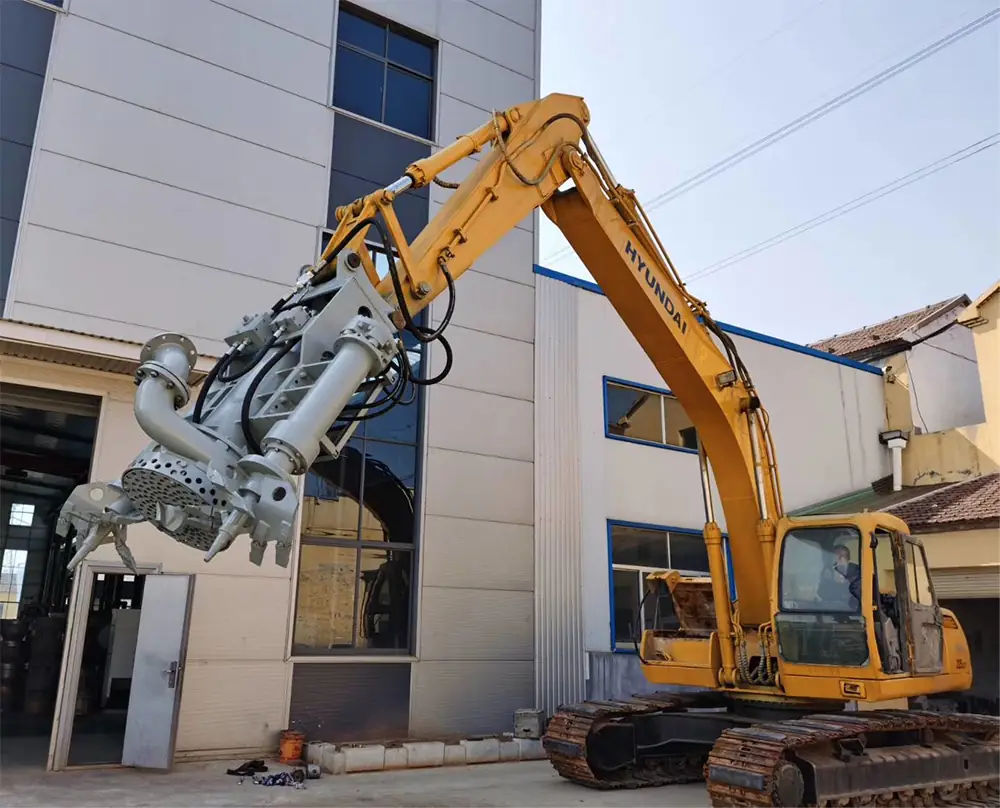
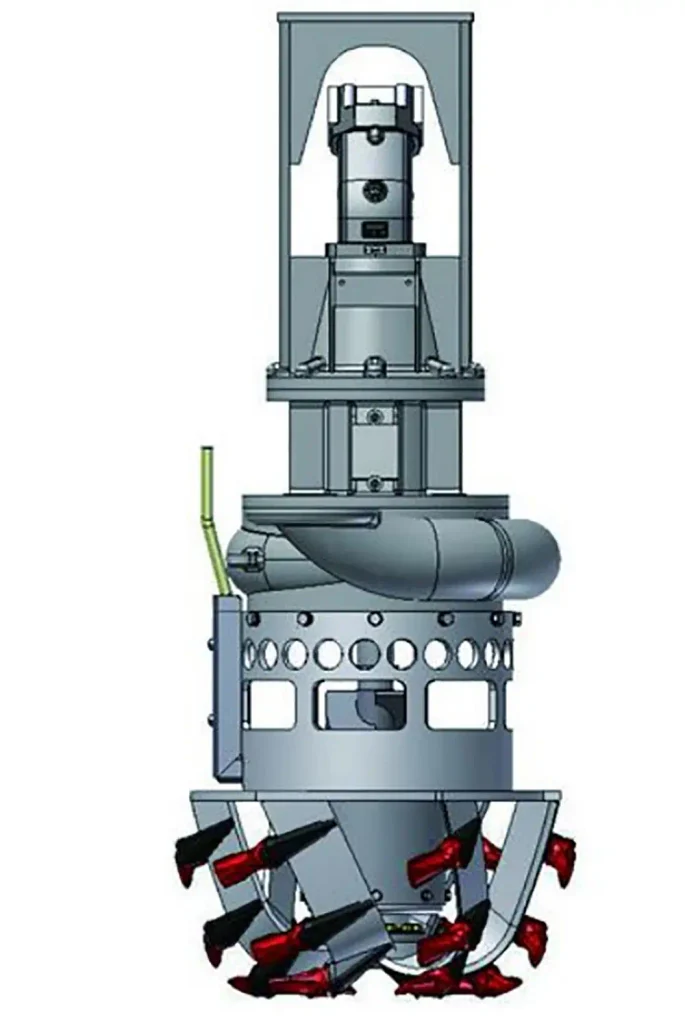
The hydraulic submersible slurry pump replaces the electric motor with a hydraulic motor. It is powered by the hydraulic system of an excavator, loader or other mobile machine, or by a portable hydraulic power unit (HPU). This makes it fundamentally different from the electric versions: no electricity is required at the site at all.
Here is how it works. The excavator’s auxiliary hydraulic circuit supplies pressurized oil to the hydraulic motor inside the pump, which drives the impeller. Pump speed is controlled simply by adjusting the oil flow, so the operator can throttle it directly from the cab. The discharge line runs to the surface, and the pump can be hung from the excavator boom or lowered by crane, letting the same machine reposition the pump as dredging progresses.
The advantages are significant for many projects. Remote mines, quarries, river and lake dredging sites and flood-response zones often have no grid power; a hydraulic pump solves the problem instantly. Because it is driven by oil flow rather than mains frequency, one pump works in both 50 Hz and 60 Hz regions and is unaffected by local voltage — a real benefit for exporters shipping one standard machine worldwide. Finally, deployment is fast: an excavator drives to the site, connects two hoses and starts pumping within minutes.
Typical applications include open-pit mine dewatering, quarry settling basins, river and lake dredging, emergency flood cleanup, and construction dewatering in remote areas where diesel-driven excavators are already on site.
Configuration 5: Explosion-Proof Submersible Slurry Pump
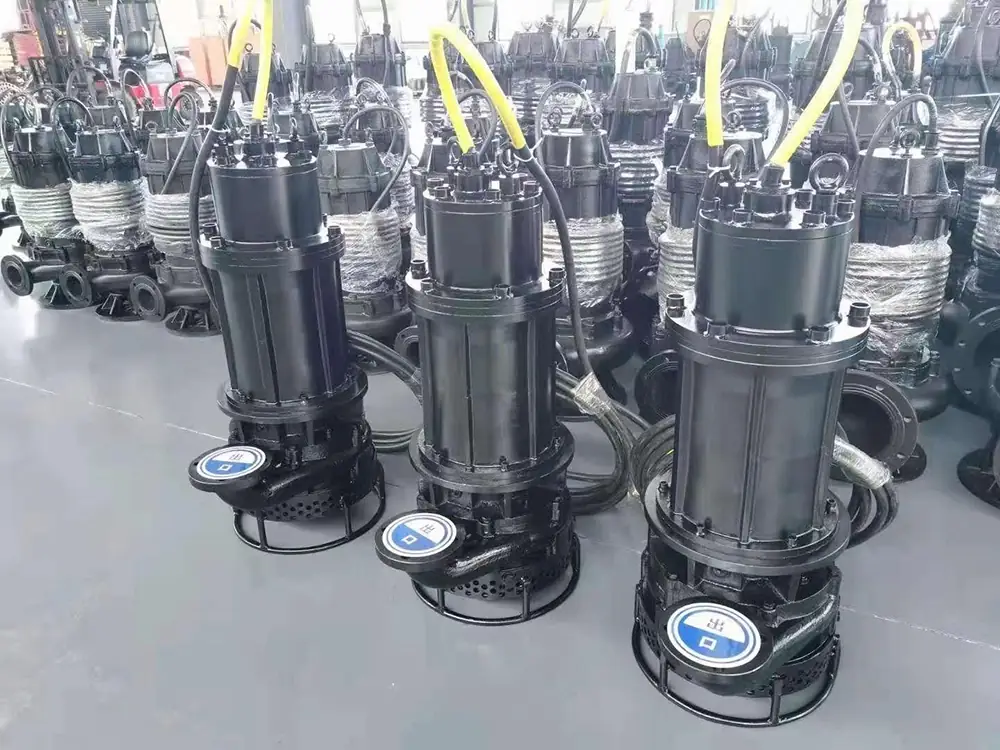
In coal mines, petrochemical plants, oil depots and other areas where flammable gases, vapors or combustible dust may be present, a standard electric pump is a safety risk: any spark from the motor or the cable could ignite the atmosphere. The explosion-proof submersible slurry pump solves this with a flameproof motor enclosure, specially sealed cable entries and certified components that contain any internal ignition and prevent it from reaching the surrounding atmosphere.
Here is how it works. The motor is enclosed in a rugged flameproof (Ex d) housing designed to withstand an internal explosion without transmitting it, while flameproof cable glands, junction boxes and seals close every entry point. The complete unit is engineered and certified to hazardous-area standards such as ATEX, IECEx or GB, with the temperature class and gas group matched to the zone in which the pump will operate. The submersible design is unchanged, so the pump keeps the same high-chrome wet end and slurry-handling performance as the standard mud pump.
Typical applications include coal mine sump dewatering, oil and gas storage tank pits, petrochemical plants, solvent and chemical areas, and sites with explosive coal dust, grain dust or other combustible atmospheres, where safe dewatering and sludge transfer are mandatory.
Configuration 6: Submersible Slurry Pump with High-Pressure Flushing
When deposits are heavily compacted or the pit geometry is irregular, even an agitator may struggle to reach every corner. In this configuration, the submersible slurry pump is paired with a high-pressure flushing water gun: a surface-mounted high-pressure water jetting unit delivers a powerful jet through a hose and a hand-held or boom-mounted nozzle that the operator directs at the settled material.
Here is how it works. The high-pressure jet breaks up hard-packed sand, clay, sludge and filter cakes and washes them toward the pump suction, where the submersible slurry pump evacuates the resulting slurry. Because the nozzle is aimed manually, the jet can be directed exactly where the deposit is — inside tanks, under baffles, in corners and along long channels — reaching areas that fixed agitators cannot.
Typical applications include cleaning of storage tanks and clarifiers, dredging of compacted sediments in ponds and canals, filter-press and settling-cell cleaning, and maintenance work where deposits have been allowed to harden. The flushing gun and the pump can be supplied as a matched system, sharing the same discharge and power arrangement for quick site setup.
How to Choose the Right Configuration
With six configurations on offer, selection comes down to a handful of practical questions:
- What is the solids concentration, particle size and how compacted are the deposits?
- How large, and what shape, is the pit, sump, pond or tank?
- Is grid power available, or is the site remote?
- Is an excavator or another hydraulic machine already working at the site?
- What flow, head and solids-handling size does the job require?
As a rule of thumb: suspended or lightly settled slurries in tanks and pits — choose the standard mud pump or the mix impeller version; wide basins, lagoons and heavy deposits — double-side agitator; compacted or hard-to-reach deposits — add a high-pressure flushing water gun; hazardous atmospheres — choose an explosion-proof submersible slurry pump; remote or no-power sites, or jobs where an excavator is already on site — hydraulic submersible slurry pump. The table below summarizes the comparison.
Table 1 Submersible slurry pump configuration comparison
| Configuration | Drive | Fluidization method | Typical applications | Best for |
| Standard submersible slurry pump (mud pump) | Electric motor | None — handles solids already in suspension | Mine sumps, mud pits, foundation dewatering, tank cleaning | Simple transfer of suspended slurries |
| Mix impeller version | Electric motor | Bottom mixing impeller re-suspends settled solids | Storage tanks, clarifiers, settling ponds, coal washing basins | Settled-but-soft solids; maximizing pump-out |
| Double-side agitator | Electric motor | Twin blades; wide symmetrical fluidization | Wide pits, slurry ponds, lagoons, tailings ponds | Heavy or deep deposits; avoiding dead zones |
| Hydraulic submersible slurry pump (excavator-driven) | Hydraulic motor from excavator or HPU | Agitator or mix options on request | Remote mines, quarries, river and lake dredging, flood response | No grid power; wet or explosive environments; mobile operations |
| Explosion-proof submersible slurry pump | Flameproof (Ex d) motor | None — sealed flameproof design | Coal mine sumps, petrochemical plants, oil depots, explosive dust areas | Hazardous atmospheres; ATEX/IECEx/GB zones |
| With high-pressure flushing water gun | Electric or hydraulic drive | High-pressure water jet breaks up compacted deposits | Storage-tank cleaning, compacted sediments, filter-press cleaning, canals | Hard-packed or hard-to-reach deposits |
Conclusion
Each configuration extends the same proven submersible slurry pump concept into a different job. The right choice is rarely about the pump itself — it is about the slurry and the site. Kairun Pump manufactures all six configurations — standard mud pump, mix impeller, double-side agitator, hydraulic excavator-driven, explosion-proof and high-pressure-flushing models — with high-chrome wet ends, robust mechanical sealing and a full range of voltages, frequencies, flows, heads and solids-handling sizes. Custom engineering is available for demanding applications. Send our engineers your application details and site conditions, and we will recommend the configuration that keeps your project pumping.