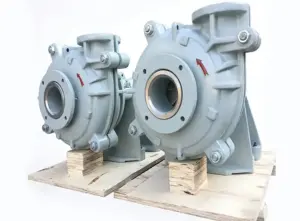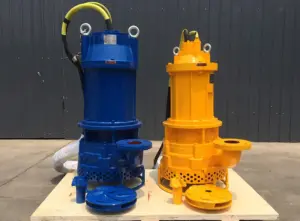
As an important type of submersible centrifugal water pump, explosion proof submersible sewage pumps adopt underwater installation, flame proof safety structure and large anti clog flow passages. They are widely used in chemical sewage stations, underground mine drainage, petrochemical wastewater, explosion proof areas of municipal sewage plants, underground utility tunnels and gas station sumps, acting as key equipment for high risk conditions in centrifugal pump in wastewater treatment.Many projects only focus on flow rate and head during procurement, ignoring explosion proof grade, medium corrosion and on site service requirements. This causes safety risks, frequent blockages, quick seal damage and unplanned shutdowns, resulting in high later stage O&M costs.To achieve good performance of explosion proof submersible sewage pumps, selection should not depend only on nameplate data. It requires comprehensive matching according to site conditions. This is a key engineering principle stressed by many sewage pump suppliers.
Common Misconceptions in Selecting Explosion-Proof Submersible Sewage Pumps
Safety risks in many projects often stem from errors in judging where explosion-proof pumps are applicable. These errors generally fall into three categories:
1. Selecting standard pumps solely based on the medium (sewage) while ignoring hazardous area classifications
Some procurement decisions focus only on flow rate and head, failing to identify the presence of combustible volatile substances. If organic solvents, oil vapors, or volatile gases are present near the sump, electrical sparks generated during the starting, stopping, or malfunctioning of a standard motor could ignite explosive mixtures, leading to accidents.
2. Blindly selecting explosion-proof models for the entire project, resulting in unnecessary costs
Purchasing high-cost explosion-proof pumps for non-hazardous areas—such as those handling ordinary domestic sewage or clear water tanks with no risk of volatile emissions—significantly drives up equipment and spare parts costs, leading to wasted investment.
3. Replacing only the motor with an explosion-proof version without matching the pump body and accessories
In some projects, standard motors are simply swapped for explosion-proof ones, but the cables, seals, and terminal boxes fail to meet explosion-proof standards. Consequently, the complete assembly still does not comply with explosion-proof requirements and cannot be safely used in hazardous areas.
Five Key Operating Scenarios Requiring Explosion-Proof Submersible Sewage Pumps
Deciding whether to use an explosion-proof submersible sewage pump requires a comprehensive assessment based on the medium’s characteristics and the operating environment. Key factors include the presence of explosive gases or vapors and whether the site has been designated as a hazardous area.
1. Wastewater Collection Systems for Chemical, Petrochemical, and Coal-Chemical Industries
Production processes release flammable organic vapors such as benzene, alcohols, and ketones; consequently, wastewater tanks, collection wells, and equalization basins are classified as Ex-rated hazardous areas.
Chemical wastewater tanks, emergency containment basins, and initial stormwater collection tanks emit flammable and explosive volatile substances. Since combustible gases can easily accumulate in the headspace of these tanks, explosion-proof submersible sewage pumps must be used.
2. Sump Pits at Gas Stations, Oil Depots, and Tank Farms
Sump pits in fuel unloading areas, oil tank farms, and petrochemical storage areas collect oily wastewater. Oil vapors tend to accumulate in these pits, making them typical explosion-hazard locations. Standard submersible sewage pump motors pose an ignition risk due to potential sparking; therefore, explosion-proof submersible sewage pumps must be used for drainage.
3. Underground Drainage in Coal Mines and Other Mines
Underground mine environments contain explosive mixtures such as methane (firedamp) and coal dust, falling under Class I explosion-proof requirements. Explosion-proof submersible sewage pumps designed for mining applications must be selected for underground sumps and drainage points to eliminate the risk of methane explosions.
4. Wastewater Sump Pits in Underground Utility Tunnels and Hazardous Material Warehouses
In underground utility tunnels and warehouses storing flammable or explosive materials, any material leakage results in wastewater containing combustible components. Explosive gases can easily accumulate in these confined, enclosed spaces; thus, explosion-proof submersible sewage pumps should be selected for the sump pits.
5.Industrial Wastewater Treatment Sites with Flammable/Explosive Volatiles
Wastewater from coating, pharmaceutical, and ink manufacturing facilities contains organic solvents. Volatilization within the tanks creates explosive gas mixtures. Even if the wastewater itself is not flammable, the volatilized gases pose an explosion risk, necessitating the use of explosion-proof submersible sewage pumps in the treatment tanks.
Note: Even if the medium within the tank is non-volatile, if the tank is located within a designated explosion-hazard zone, the equipment inside the tank still requires explosion-proof specifications.
Scenarios where standard submersible sewage pumps can be used (explosion-proof ratings not required):
1. Standard municipal domestic sewage or non-explosion-proof zones within comprehensive sewage treatment plants where no combustible gases are released;
2. Standard stormwater lift stations or industrial clean water tanks free of flammable or explosive materials;
3. Wastewater containing acids, alkalis, or salts, provided the site is free of combustible or volatile substances and has not been designated as a hazardous area requiring explosion-proof equipment.
| Wrong Judgment Practice | Practical Problems Caused | Correct Judgment & Treatment Effect |
| Use ordinary submersible sewage pumps in hazardous areas | Electric sparks generated by motor failure bring major risks of explosion and fire | Select explosion proof submersible sewage pumps with proper rating according to hazardous area classification to eliminate explosion risks, while ensuring drainage performance meets process requirements |
| Purchase explosion proof pumps uniformly for all working conditions | Excessive costs for equipment and spare parts in non hazardous areas | Use explosion proof submersible sewage pumps in hazardous areas and standard submersible sewage pumps in ordinary areas to balance safety and project investment |
| Only replace the motor with an explosion proof one while keeping other standard pump components | The whole unit fails to meet explosion proof standards and safety hazards remain | Purchase complete sets of explosion proof submersible sewage pumps. Ensure motors, terminal boxes and explosion proof cables fully comply with explosion proof specifications |
Project Case Study: Selection of an Initial Rainwater Collection Tank for a Chemical Enterprise
A fine chemical enterprise required an initial rainwater collection tank with an effective volume of 800 m³. The production units at the site are located in an Ex d IIB T4 explosion-proof zone. The initial rainwater runoff contains trace amounts of organic solvents, creating a risk of volatile combustible gas accumulation in the headspace above the tank. The project initially planned to procure two standard submersible sewage pumps.
1.Risks of the Original Plan
Standard submersible sewage pump motors lack explosion-proof capabilities. In the event of motor overload or a short circuit caused by seal failure, internal electrical sparks could ignite the combustible gases volatilizing from the water surface, posing an explosion risk.
2.Optimized Selection Plan
The pumps were replaced with two explosion-proof submersible centrifugal pumps (rated Ex d IIB T4). The units were supplied as complete assemblies, including explosion-proof, flame-retardant cables. A guide-rail coupling and lifting system was installed, allowing for maintenance without the need to drain the tank.
3.Benefits of the Optimization
The equipment complies with safety regulations for explosion-proof zones, eliminating the risk of combustible gas explosions.
The guide-rail lifting structure allows for maintenance during equipment failure without draining the rainwater tank, ensuring continuous plant production.
Flow rate and head specifications match rainwater discharge requirements, ensuring rapid discharge during emergency situations.
FAQ
Q1: Is an explosion-proof submersible sewage pump mandatory when transporting flammable or explosive liquids?
A: Not necessarily. The key factor is **whether the site environment allows for the formation of an explosive gas mixture**. If the system is fully enclosed with no risk of volatilization or gas accumulation—and subject to an explosion-proof zoning assessment—standard pumps might suffice; however, if the tank is open and the medium volatilizes into the air, an explosion-proof model is required.
Q2: How do I select the explosion-proof rating for the pump?
A: Ex d IIB T4 is commonly used in the chemical industry. Ex d IIC T4 should be selected for high-risk media such as hydrogen or acetylene. For underground coal mines, Class I mining-specific explosion-proof products must be used. Selection should strictly adhere to the project’s explosion-proof zoning documentation.
Q3: If the sewage is non-combustible, is an explosion-proof submersible sewage pump unnecessary?
A: No, that is not necessarily the case. Even if the sewage itself is non-flammable, if the area is classified as an explosive hazard zone, any sewage pump installed in the basin must be an explosion-proof submersible model.
Conclusion
Determining when to select an explosion-proof submersible sewage pump requires looking beyond the nature of the sewage medium itself; the critical factor is identifying whether the site environment contains explosive gases or vapors and whether it falls within a hazardous zone classification. This assessment serves as a key basis for system design by sewage pump suppliers.
As safety-critical equipment in wastewater treatment, explosion-proof submersible sewage pumps are primarily deployed in high-risk environments such as chemical and petrochemical plants, oil depots and tank farms, underground mines, and hazardous material storage facilities. In contrast, standard submersible sewage pumps are selected for non-hazardous areas to balance safety with project costs. Before selection, one must consult the project’s hazardous area classification documentation to determine the required explosion-proof rating, materials, and installation method, thereby mitigating safety risks at the source.