Key Takeaways
- Choose a pump that meets the required flow rate and head at the same operating point.
- Forlow-head, high-flow drainage, compare axial-flow models first; consider mixed-flow designs when more lifting height is needed.
- If the water level may fall below the required intake depth, add low-water protection or change the intake arrangement.
- Use screens for large debris and compare model performance curves before placing an order.
Introduction
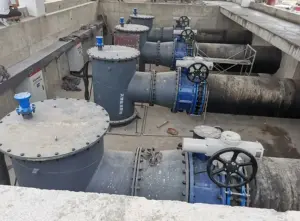
Heavy rain can quickly raise water levels in urban areas, industrial sites, and low-lying land. A rainwater pump station must remove enough water to limit flooding, especially when rainfall is heavy and the drainage system is under pressure.
Choosing a pump is not simply a matter of selecting the highest flow rate. The pump must deliver the required water volume at the necessary lifting height, while handling the site’s water levels, debris, and installation limits.
How to Choose the Right Pump Type
Start by defining the required flow rate and head. These two figures determine which pump types are worth comparing and help prevent a mismatch between the pump and the drainage system.
Match Flow Rate with Head
Flow rate is the volume of water moved over a period of time, usually measured in m³/h or m³/s. Head describes the effort needed to move water to the discharge point. It includes the height difference and losses caused by pipes, bends, and valves.
For example, when a station must move a large volume of water into a nearby river and the height difference is small, an axial-flow design is a sensible starting point. As a first screening rule, axial-flow pumps are commonly considered for heads of around 15 m or less. If the required head is higher, compare mixed-flow or other suitable designs instead of assuming an axial-flow model will work.
Do not select a pump based on maximum flow alone. If a model reaches its listed maximum flow only at a lower head than your project requires, it may not deliver enough water once installed. Check the flow and head together.
Use the Performance Curve to Select a Model
A performance curve shows how a pump’s flow changes as the head changes. It helps you see whether a model can deliver the required amount of water at the lifting height your station needs.
The U.S. Department of Energy’s Improving Pumping System Performance: A Sourcebook for Industry recommends evaluating flow, head, efficiency, and power together. Efficiency indicates how effectively the pump converts input energy into useful water movement.
To compare models, mark the project’s required flow and head on each performance curve. If the operating point falls outside the model’s working range, move to another model. If two models both meet the requirement, compare their efficiency and power at that same operating point, not just their highest catalogue ratings.
Choose Axial Flow or Mixed Flow
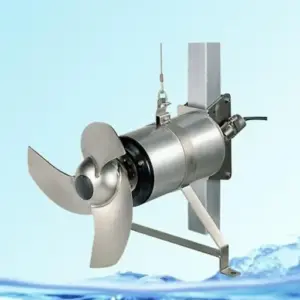
An axial flow water pump moves water mainly along the pump shaft. It is generally suitable for high flow at low head. A mixed-flow pump moves water both along the shaft and outward, so it may be a better candidate when the system needs greater head while still moving a large volume of water.
As a practical decision rule, compare axial-flow models first when the head is low and flow demand is high. If the required head rises beyond the range shown on those models’ performance curves, compare mixed-flow options rather than selecting an axial-flow pump solely because its maximum flow looks suitable.
What Site Conditions Must Be Checked?
Even a correctly sized pump can perform poorly if water cannot enter smoothly or the installation does not suit the site. Check the water level, debris risk, and maintenance access before choosing the final arrangement.
Check Water Depth at the Intake
When the water above the intake becomes too shallow, air may enter the pump or a vortex may form. This can cause noise, vibration, and reduced flow.
For a flood control pump station, compare the lowest expected operating water level with the minimum intake submergence required by the selected pump. If the water level may fall below that limit after most of the rainwater has been removed, use a low-water sensor or stop control. If the intake cannot remain submerged, revise the intake or pump-well arrangement rather than allowing the pump to continue running.
The U.S. Army Corps of Engineers’ pump-station guidance explains why adequate intake submergence and the prevention of vortices matter: air entering the pump can disrupt stable operation.
Protect the Pump from Debris
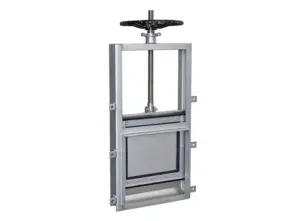
If runoff carries leaves, branches, plastic, or other large rubbish, install an accessible intake screen or trash rack before the water reaches the pump. Inspect and clean it regularly. If the screen becomes blocked, incoming flow can fall even when the pump itself is large enough.
For water containing sand or hard particles, check the pump’s permitted water conditions and wear protection. If the debris is larger than the pump is designed to pass, screen it out or select equipment intended for that type of water. Do not assume that a pump suitable for slightly polluted water can handle large solids.
Plan for Installation and Maintenance
A vertical arrangement is worth considering when floor space is limited or the pump needs to sit inside a well. However, it is only practical if the station provides enough headroom, lifting access, and room to inspect the motor and electrical connections.
Before construction, confirm the pump-well depth, support platform, discharge connection, and lifting route. If the pump cannot be lifted out safely, choose a different arrangement or revise the access design before installation.
Why Consider KR Pumps’ Vertical Tubular-Well Axial Flow Pump?
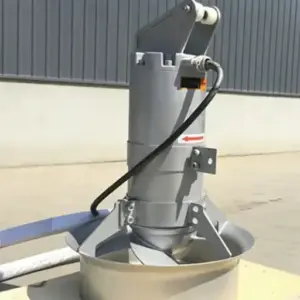
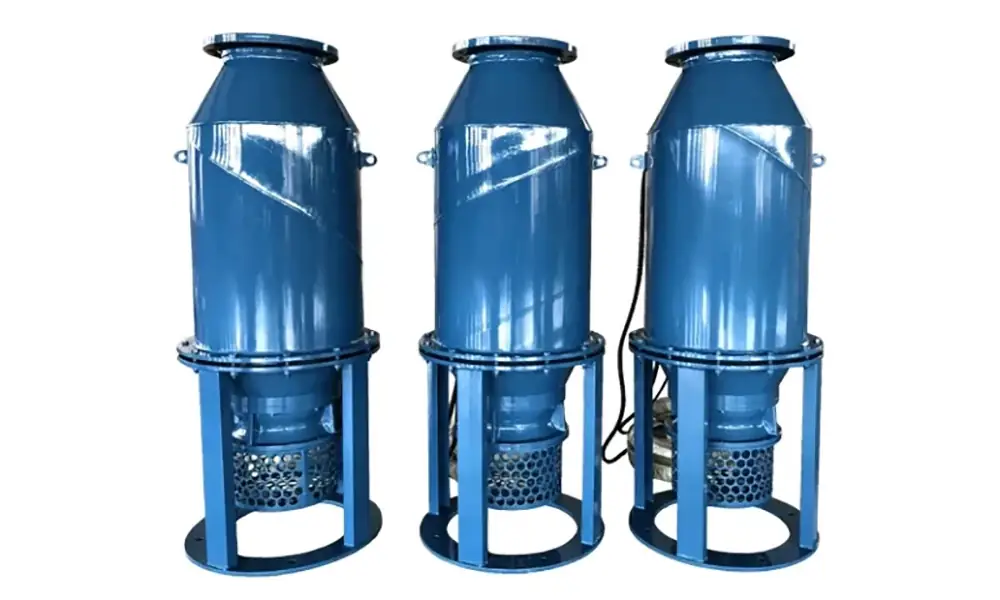
For stations that need high flow at relatively low head, KR Pumps’ Vertical Tubular-Well Axial Flow Pump is one option to assess. Its vertical configuration places the motor on an upper platform in the described arrangement. The models below cover different combinations of flow, head, and motor power.
Compare Model Specifications
| Model | Flow (m³/h) | Head (m) | Power (kW) | Efficiency |
| 500QZ-50G | 2,677 | 10.38 | 110 | 83.3% |
| 700QZ-75 | 5,451.5 | 7.33 | 160 | 83.9% |
| 1000QZ-35 | 11,571.5 | 15.67 | 630 | 85.8% |
| 1300QZ-50 | 16,868.8 | 9.66 | 630 | 86.0% |
| 1600QZ-75 | 32,616.3 | 7.09 | 900 | 86.5% |
Consider the Vertical Layout
The vertical arrangement may suit a pump well where floor space is limited. In the described configuration, the motor sits above the pump, which can keep the motor accessible for inspection. Choose this layout when the station can provide a suitable support platform and enough room for safe maintenance.
Check Pump Removal and Service Access
KR Pumps describes the pump as liftable for inspection. This can help when submerged parts need to be checked without draining the entire basin. To make use of this feature, the station must have suitable lifting equipment, sufficient overhead clearance, and a clear route for removing the pump.
Match the Pump to Water Conditions
The product is intended for clean or slightly polluted water. Its axial impeller moves water along the shaft direction, while guide vanes help direct the flow through the pump.
If the station regularly receives large rubbish or abrasive particles, add suitable screening or consider a pump designed for more demanding water conditions. Before ordering, confirm the selected model’s bearing, sealing, motor-protection, and maintenance requirements.
Frequently Asked Questions
What Is an Axial Flow Pump Used For?
An axial-flow pump is commonly used to move large volumes of water against relatively low head. Typical applications include drainage, flood mitigation, irrigation, and water transfer.
What Is the Difference Between Axial Flow and Mixed Flow Pumps?
An axial-flow impeller moves water mainly parallel to the shaft. A mixed-flow impeller combines axial and radial flow. Axial-flow designs are often used for high-flow, low-head duties, while mixed-flow designs may suit applications that require greater head.
How Do I Choose a Pump for a Rainwater Station?
Calculate the required flow and total head for the expected water-level range. Compare these values with the model’s performance curve, then check intake submergence, water quality, installation space, and motor requirements.
Why Is Intake Submergence Important?
The U.S. Army Corps of Engineers’ pump-station manual explains that a well-designed sump must provide adequate submergence and avoid vortices, air intake, and unstable flow. These conditions matter because poor intake hydraulics can affect pump performance.
What Does Pump Efficiency Tell Me?
Efficiency shows how effectively a pump converts input power into useful hydraulic output. Compare efficiency at the required flow and head rather than relying only on the highest percentage in a catalogue.
Conclusion
Reliable drainage depends on how well the pumping equipment handles changing water levels and demanding operating conditions over time. A well-matched pump should deliver the required flow without placing unnecessary demands on the motor, intake structure, or maintenance team.
For a rain water pump station, a vertical tubular-well design offers a practical option for high-volume, low-head drainage. Its steel well helps protect the submerged pump assembly, while the integrated structure supports an organized station layout. These features can benefit municipal drainage and flood-control projects where dependable operation and manageable maintenance are important.
If you are looking for a reliable axial flow pump supplier, feel free to contact KR Pumps for suitable models, technical specifications, and quotations based on your required flow rate, total head, water-level range, and installation conditions.