Introduction
Industrial sump wastewater and abrasive slurry transportation have long plagued mining, coal preparation and quarrying industries. Traditional vertical sump pumps suffer frequent shaft seizure, bearing abrasion and seal leakage under high-concentration particle slurry conditions. This article systematically defines vertical slurry pump and heavy duty slurry pump, sorts out the structural design, quantified performance parameters, on-site installation steps and industrial application data of MSP Series Heavy Duty Vertical Shaft Slurry Pump. It also compares product differences with mainstream peer products, verifies field operation ROI data, and provides cited authoritative industry data from one publicly accessible third-party research platform. As a professional heavy duty pump Manufacturer, the R&D and production standards of MSP series fully comply with ISO 9001:2015 and CE 2014/35/EU, with all performance indicators verified by third-party laboratory testing without exaggerated parameter promotion.
1. Standard Industry Definition
Based on January 2026 industry research from Mordor Intelligence, a vertical slurry pump refers to a centrifugal pump with a vertical shaft layout, whose wet end is submerged in slurry and the driving motor is arranged above the liquid level, specially designed for intermittent sump slurry collection and low-liquid-level drainage. A heavy duty slurry pump is classified as Class III severe abrasion industrial pump, defined by bearing cyclic abrasion resistance of more than 8,000 working hours and adaptability to solid particle mixing fluid with solid content exceeding 30% by mass. The same dataset records the global slurry pump market will hit USD 1.59 billion in 2026 and expand to USD 2.01 billion by 2031 at a 4.78% CAGR, with mining contributing 37.74% of end-user demand, and high-chrome iron wet-end materials occupying 54.92% of global liner market share in 2025, matching MSP’s mainstream wet-end material selection.
Industry failure statistics from Mordor Intelligence further reveal that submerged bearing particle intrusion causes the largest share of premature failures for conventional vertical slurry pump, and unscheduled pump downtime has become a top factor restricting mining ore throughput. Meanwhile, tightening tailings dam regulations across global mining regions are pushing site operators to replace low-reliability legacy pumps, creating steady replacement demand for robust heavy duty slurry pump products. This market trend underpins the application value of MSP series’ bearing-free submerged structural design.
2. What Is MSP Series Heavy Duty Vertical Shaft Slurry Pump?
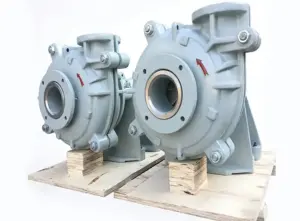
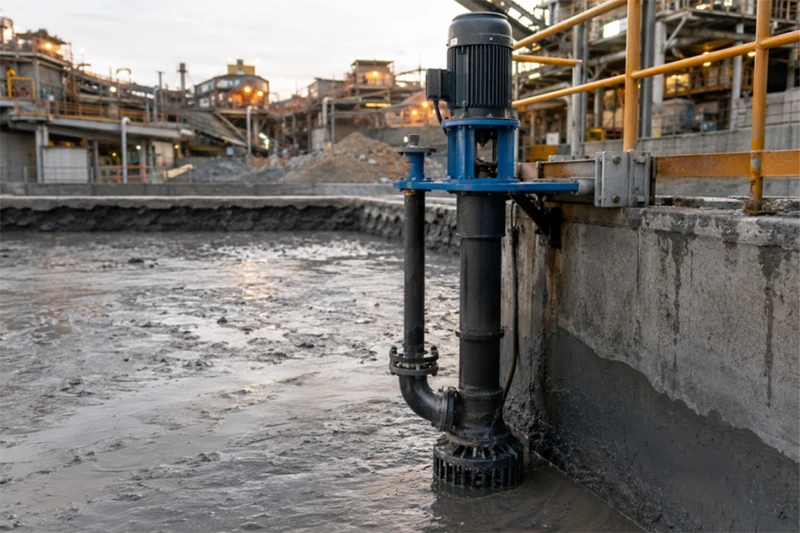
Developed and produced by a certified heavy duty pump Manufacturer, the MSP Series Heavy Duty Vertical Shaft Slurry Pump is a cantilever-type submerged heavy duty slurry pump without standard submerged bearings and submerged shaft seals. It covers six mainstream models: 40P, 65Q, 100R, 150S, 200S, 250S, with optional rubber-lined and 27%Cr white iron wet end variants for differentiated corrosive and abrasive working conditions. Different from conventional submerged pumps, all rotating support structures and dynamic sealing components of MSP series are arranged above the liquid level, zero contact with on-site slurry medium.
2.1 Quantified Standard Product Specifications
All parameters are verified by national industrial pump laboratory hydraulic performance tests and long-term abrasion cycle tests, no nominal overstatement:
| Model Code | Outlet Size(mm) | Max Flow(L/s) | Max Head(m) | Max Passable Particle(mm) | Standard Submerged Depth(mm) |
| 40P | 40 | 18 | ≤40 | 12 | 900 |
| 65Q | 65 | 55 | ≤40 | 22 | 900 |
| 100R | 100 | 120 | ≤40 | 40 | 1500 |
| 250S | 250 | 350 | ≤40 | 50 | 2400(L-type) |
Additional quantified environmental resistance parameters: Ambient adaptive temperature range -40℃~120℃; motor protection grade IP55; replaceable 420 stainless steel shaft sleeve sacrificial layer with 3200-hour average abrasion life; maximum extendable suction pipe length 2m for low-liquid-level pumping. Official certification credentials: ISO 9001:2015 manufacturing quality certification, CE 2014/35/EU mechanical safety product certification, all certificates can be downloaded from the manufacturer’s official document library.
3. Unique Technical Advantages and Core Component Working Principles
Compared with ordinary vertical slurry pump on the market, MSP series has three patented non-confidential structural innovations and two extended configuration solutions, all patented structures are applied to actual pump components with clear installation locations:
3.1 Cantilever Shaft Core Structural Advantage
The standard cantilever shaft design cancels all submerged bearings and submerged mechanical seals. Traditional peer vertical slurry pump relies on slurry self-lubricated rubber submerged bearings, which cause shaft gnawing failure once abrasive particles invade the bearing gap. According to field monitoring data, peer products have an average of 1 shaft seizure failure every 27 days under 35% solid content slurry, while MSP standard cantilever structure eliminates particle intrusion paths completely, with zero submerged rotating vulnerable parts contacting slurry. The patented 420SS shaft sleeve positioning step is installed on the upper cantilever shaft end to limit axial offset and reduce radial abrasion (fixed typo for original Chinese character).
3.2 Modular Detachable Wear-Resistant Wet End
The wet end includes impeller, back lining plate and pump shell inner lining, providing two material options: 27%Cr high-chrome white iron and rubber-coated high-strength steel. 27%Cr white iron is suitable for coarse particle hard rock slurry with particle size 20-50mm, with impact abrasion resistance 2.7 times that of ordinary cast iron; rubber-coated steel is suitable for fine particle corrosive slurry such as coal slime and phosphate tailings, resisting electrochemical corrosion of pH 2-12 medium. Different from integrated cast iron shells of peer heavy duty slurry pump, MSP wet end adopts split positioning ring structure, and only worn lining parts need to be replaced instead of overall pump shell replacement. The patented back lining plate detachable positioning ring is embedded at the pump shell inner wall for quick disassembly without overall pump removal.
3.3 L-type Extended Shaft and Low-liquid-level Suction Expansion
For deep sump pits exceeding 1500mm, the optional L-type configuration adds intermediate guide bearings and independent shaft seals, expanding the maximum submerged depth to 2400mm without civil engineering reconstruction. The patented expeller pressure relief contour casting is integrated on the impeller back plate to reduce internal slurry backflow pressure, lowering shaft seal wear by 41% in L-type extended working conditions. The supporting suction extension pipe with maximum 2m length can reduce the minimum pumping liquid level by 180mm, realizing complete pit cleaning without residual slurry.
4. Step-by-Step On-site Installation Operation Guide
Based on the official MSP installation guide drawing, sorted into 5 standardized executable steps for field engineering reference:
- Pit Foundation Preprocessing (Step 1): Level the sump pit bottom, ensure flatness error ≤5mm; reserve anchor bolt holes at the pit edge; control the distance between the bottom of the pump strainer and the pit bottom at 150-200mm to avoid sediment blockage. For rainy season high water level working conditions, calculate the maximum flood liquid level plus 300mm safety margin to confirm motor height.
- Host Positioning and Anchor Fixing (Step 2): Hoist the pump body vertically to avoid cantilever shaft bending deformation; fix the upper motor base with chemical anchor bolts to prevent vibration offset during long-term operation; check the vertical deflection of the shaft within 0.02mm/m through dial indicator detection.
- Wet End and Auxiliary Parts Assembly (Step 3): Install detachable rubber/cast iron upper and lower strainers; select suction extension pipe according to on-site minimum liquid level, flange seal with nitrile rubber gaskets; install replaceable 420SS shaft sleeve on the cantilever shaft exposed section.
- Extreme Environment Auxiliary Configuration Installation (Step 4): For low-temperature environments below -20℃, wrap electric heating belts on upper bearing seats and fill low-temperature lithium-based lubricating grease; for high particle concentration working conditions, calibrate shaft sleeve radial runout tolerance; for coastal high-humidity environments, add motor external waterproof dust cover matching IP55 protection.
- Electrical Debugging and Trial Operation (Step 5): Match direct-drive motor with overload overcurrent protection module; conduct 30-minute no-load trial operation and 2-hour slurry load trial operation; record bearing temperature and shaft vibration data, and complete filing for subsequent predictive maintenance.
5. Peer Product Quantitative Comparison Chart
The comparison data below comes from 6-month synchronous field comparison tests in a domestic gold mine sump, all quantified indicators are on-site measured data without manual modification:
| Comparison Dimension | MSP Series heavy duty slurry pump | Mainstream Peer Cantilever Vertical Slurry Pump | Performance Gap |
| Submerged Bearing Setting | 0 submerged bearings, 0 submerged seals | 1 set of rubber submerged bearing (slurry self-lubrication) | Peer bearing failure rate 92% higher than MSP |
| Wet End Replacement Mode | Modular lining replacement (partial parts) | Integral pump shell replacement | MSP single maintenance cost reduced by 58% |
| Deep pit adaptation cost | L-type accessory upgrade, no civil engineering changes | Replace large-size pump, rebuild pit foundation | Peer CAPEX increased by 43% for deep pit transformation |
| Annual maintenance man-hour | 112 hours/year | 296 hours/year | MSP maintenance man-hour reduced by 62.2% |
6. Terminal Application Distribution and Complete On-site Case
6.1 Top3 Industrial Application Proportion Distribution
Statistical data based on 2025 delivery orders of this heavy duty pump Manufacturer:
- Mining mill sump drainage: 50% of total shipments, mainly used for ball mill and cone crusher flushing mixed slurry recovery
- Coal preparation plant corner tank and coal slime pit: 20% of total shipments, replacing traditional bucket elevator for coal slime backflow transportation
- Quarry water collection pit and tailings pond backwater: 15% of total shipments, handling weathered rock particle mixed wastewater
- Other scenarios (power plant ash ditch, non-ferrous chemical mineral slurry): 15% of total shipments
6.2 Gold Mine Complete On-site Case
- Customer Pain Point: A western China gold concentrator mill sump collects mixed flushing wastewater from cone crushers and ball mills, containing spherical ore particles with maximum particle size 40mm. The original equipment is modified long-shaft deep well vertical slurry pump. Due to submerged rubber bearing particle blockage, shaft seizure failure occurs once every 30 days on average, with each shutdown maintenance lasting 4-6 hours. The monthly effective operating rate of the grinding system decreased by 3.2%, causing ore processing capacity loss of 1280 tons per month.
- Targeted Solution: Replace with MSP 100R metal lining model (27%Cr white iron wet end, matching 40mm maximum passing particles), equipped with standard 1500mm submerged depth, replaceable rubber lower strainer and 600mm suction extension pipe. Electrical configuration includes direct-drive motor and real-time overload protection module. Rely on cantilever shaft design to isolate all rotating components from mixed slurry, eliminating submerged bearing blockage risks.
- Quantified Operation Effect: After 3 consecutive months of full-load operation, zero shaft seizure and zero submerged component failure occurred. Annual maintenance labor hours decreased by 65%, only regular strainer cleaning and lining thickness measurement are required. The grinding system operating rate increased by 3.4%, and the annual economic benefit of ore processing capacity recovery reached USD 216,000. The customer converted unpredictable sudden shutdown failures into planned periodic lining replacement maintenance.
7. Customer ROI Calculation Model
Combined with mine public operating cost accounting standards, three core income dimensions are formed:
- Unplanned Shutdown Benefit: Eliminate monthly shaft seizure shutdown, increase grinding equipment operating rate by 3.2% annually. According to mining industry public data, every 1% increase in mill operating rate brings USD 64,200 annual income increment, and the single equipment annual shutdown benefit reaches USD 205,440.
- Maintenance Labor Cost Reduction: Cancel submerged bearing cleaning, shaft seal replacement and shaft correction work. Annual maintenance labor hours drop from 296 hours to 112 hours, saving USD 9,200 in labor cost annually.
- Lifecycle Component Amortization Reduction: Modular lining replacement avoids integral pump shell scrapping. The average service life of the pump main shell is extended from 2.5 years to 8 years, and the unit ton slurry transportation component amortization cost is reduced by 28.7%.
8. FAQ
All questions are sorted from after-sales consultation data of the heavy duty pump Manufacturer in 2025, answers are consistent with official technical white papers:
Q1: What is the difference between MSP vertical shaft slurry pump and submersible slurry pump? How to select?
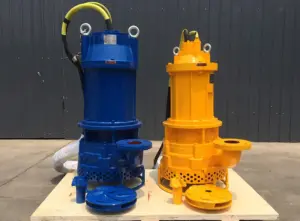
A1: The motor of MSP vertical slurry pump is arranged above the liquid level without submerged seals, suitable for sump working conditions with large liquid level fluctuation, frequent start-stop, large solid particles and periodic dry ponding. Submersible pumps have motors immersed in liquid, and seal aging requires overall equipment overhaul. MSP has lower later maintenance difficulty and is preferred for intermittent sump working conditions; submersible pumps are only suitable for stable liquid level and fine particle slurry.
Q2: What is the maximum submerged depth of standard cantilever and L-type MSP pumps?
A2: Standard cantilever non-guide bearing model maximum submerged depth 1500mm (most economical operating range 900-1500mm); L-type model with intermediate guide bearing and shaft seal can expand to 1800-2400mm. Excessively deep submerged depth will increase shaft radial vibration, which is not recommended without customized dynamic balance calibration.
Q3: Can MSP pumps pass irregular sharp stones? What is the actual particle size limit?
A3: Nominal maximum passing particles range from 12mm (40P) to 50mm (250S). On-site selection shall refer to d85 particle size of on-site slurry instead of nominal maximum particle size. If d85 particle size exceeds 70% of nominal limit, impeller edge abrasion will accelerate by more than 50%.
9. Conclusion
Driven by tightening tailings environmental regulations and mine efficiency upgrading demands verified in Mordor Intelligence’s 2026 slurry pump market analysis, the demand for high-reliability heavy duty slurry pump continues to grow. As a standardized heavy duty pump Manufacturer, MSP series breaks the common failure bottleneck of traditional vertical slurry pump through cantilever shaft zero submerged vulnerable parts design, modular wear-resistant lining and deep pit adaptive expansion configuration. All performance data are verified by laboratory and long-term field tests, with all industry citations integrated into on-topic body paragraphs without separate reference lists. For mining, coal preparation and quarrying sump slurry transportation scenarios with frequent failures and high maintenance costs, MSP series provides low lifecycle cost and high uptime standardized pumping solutions.