Introduction
Submersible axial flow pumps are high-flow, low-head underwater pumping equipment widely adopted for flood control pumping stations, municipal water transfer, agricultural irrigation and large-scale wastewater circulation projects worldwide. Driven by global climate-resilient infrastructure construction, urban pump station renovation and growing demand for large-volume water conveyance, China’s export of submersible axial flow pumps keeps robust growth in 2026. Major export destinations cover Southeast Asia, the Middle East, Africa, Central Asia and Eastern Europe. Chinese-manufactured submersible axial flow pumps gain increasing global market share with competitive total-cost-of ownership, IP68 reliable submersible design and flexible custom engineering solutions.
Compared with traditional long-shaft vertical axial flow pumps, submersible axial flow pumps adopt fully-submerged integrated motor-pump construction. They remove costly pump-house buildings and complex transmission shafts, cutting civil-engineering investment by 30-40% and lowering on-site installation workload significantly. Able to deliver massive water volume under low lift conditions, these pumps solve classic pain points of conventional pump stations such as high construction cost, complex maintenance and loud operating noise. They become preferred equipment for new-build and retrofitted large-capacity water-conveyance projects across global markets.
Submersible Axial Flow Pump Product Description
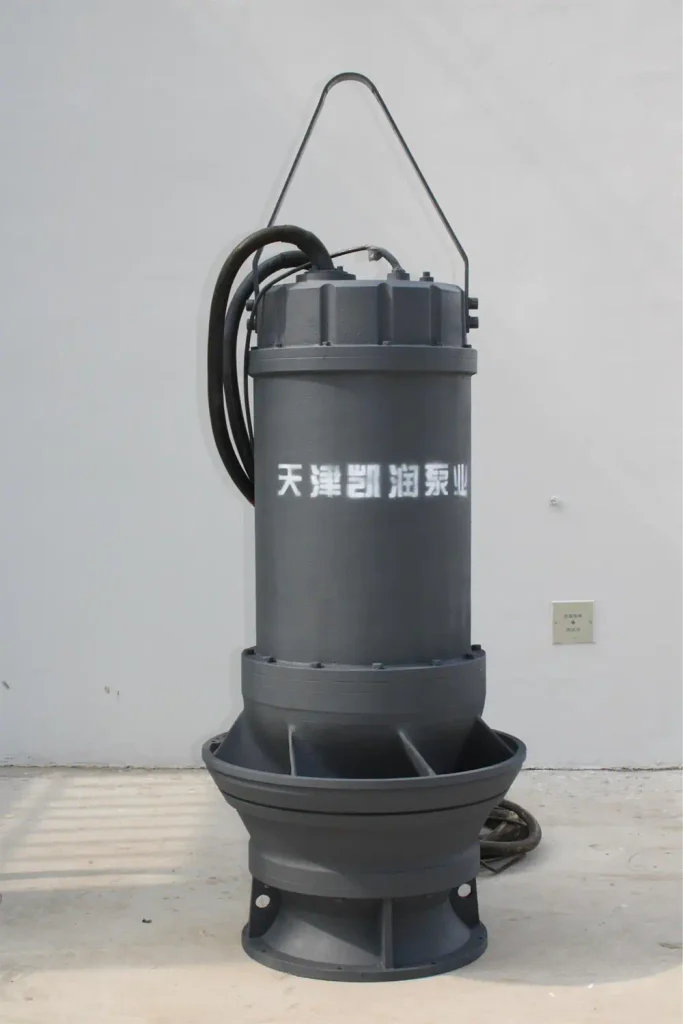
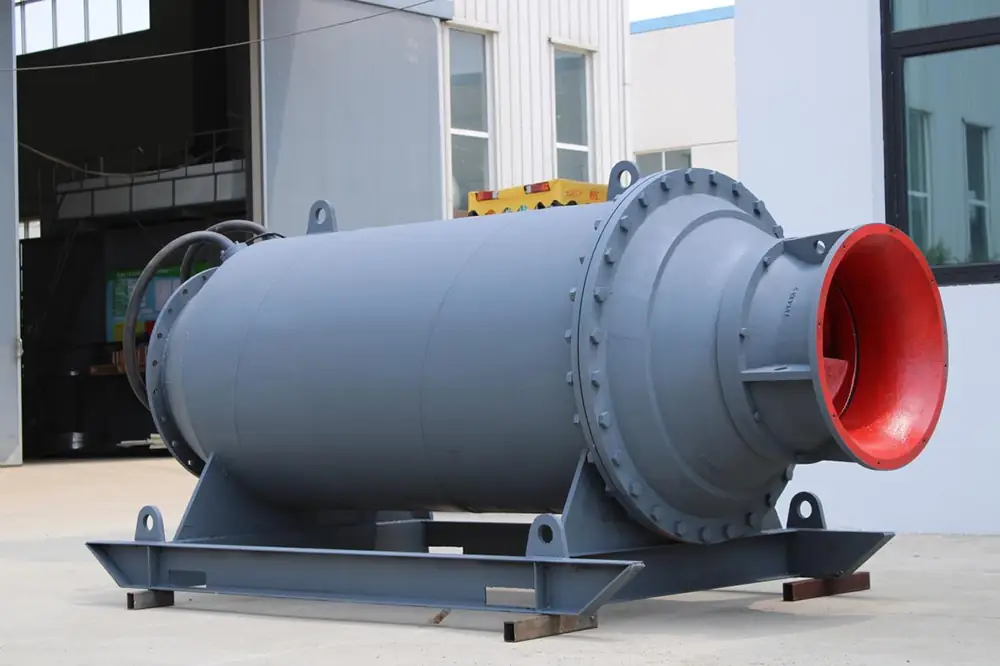
A submersible axial flow pump is a compact integrated underwater pumping unit, consisting of waterproof submersible motor, high‑precision double‑end mechanical sealing assembly, optimized axial‑flow impeller, pump housing and installation accessories including discharge elbow, guide rail or suspension bracket. The whole unit works fully immersed in water and supports 24‑hour non‑stop continuous operation.
All standard units adopt IP68 submersible protection grade, equipped with silicon‑carbide double mechanical seals, motor over‑temperature protection, oil‑chamber leakage monitoring and phase‑loss protection sensors to prevent underwater motor failure. Performance spectrum covers flow from 500 m³/h up to 100 000 m³/h, head ranging 1‑20 m, power range 7.5 kW‑1400 kW, supporting multiple voltage options including 380V, 660V, 3kV, 6kV for global 50Hz / 60Hz project requirements.
Material configurations match diversified working‑condition demands:
– Cast iron / ductile iron: cost‑effective for conventional rainwater, river water and general flood‑drainage projects.
– 304 / 316L stainless steel or bronze wetted parts: for slightly corrosive wastewater, seawater intake and coastal engineering to resist salt‑spray corrosion.
– Polyurethane coated impellers: for water containing suspended debris, improving wear‑resistance and anti‑twisting performance.
New‑generation 2026 submersible axial flow pumps support optional intelligent IoT monitoring modules. Remote access tracks vibration, motor temperature, runtime and fault alarms, satisfying smart digital transformation requirements for overseas large pump stations. Main installation modes include barrel‑type suspension, guide‑rail hoisting and horizontal tubular mounting. Guide‑rail design allows lifting for inspection without draining the sump, greatly reducing project downtime and maintenance cost.
Working Principle of Submersible Axial Flow Pumps
Different from centrifugal pumps relying on radial centrifugal force, the submersible axial flow pump works based on hydrodynamic lift principle. Water flows parallel to the pump shaft (axial direction) through the pump unit.
When powered on, the sealed submersible motor drives the propeller‑shaped impeller to rotate underwater at designed speed. Twisted hydrofoil‑shaped impeller blades generate pressure difference: low‑pressure suction side draws water in, high‑pressure discharge side pushes water along the axial direction. Fixed guide vanes inside pump casing convert rotating swirl energy into stable linear thrust, realizing large‑volume water conveyance under low‑head conditions.
Water enters axially from the pump inlet, obtains kinetic energy through rotating impeller blades, then discharges along the outlet elbow into pipeline systems. The fully‑submerged installation brings good natural cooling effect for motor components. Optimized CFD‑simulated hydraulic models minimize flow turbulence and energy loss, achieving hydraulic efficiency up to 82‑90% within best‑efficiency operating range.
Two typical installation orientations exist:
1. Vertical submersible axial flow pump: suspended vertically inside pumping‑station sump, widely used for municipal flood‑control pump stations.
2. Horizontal tubular submersible axial flow pump: horizontal inline installation, mostly applied for wastewater mixed‑liquid recirculation, water‑body circulation and water transfer channels.
After one‑time commissioning, the pump can run automatically without frequent manual intervention, complying with global low‑carbon and energy‑saving standards for 2026 water‑conservancy projects.
Main Impeller Types of Submersible Axial Flow Pumps
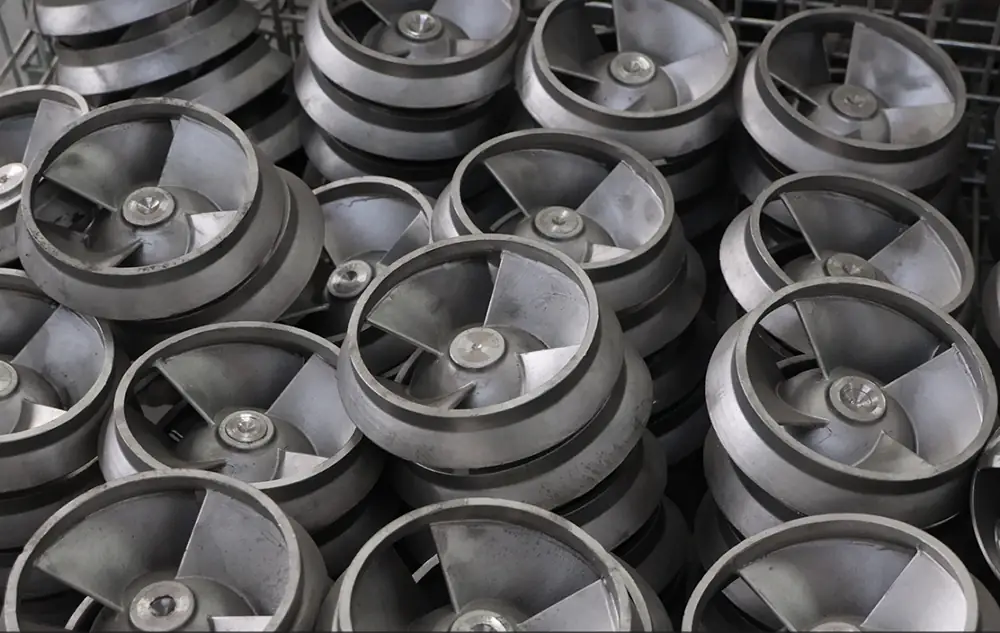
Impeller is the core component directly determining pump flow capacity, efficiency, anti‑clogging performance and service life. Three mainstream impeller solutions dominate global submersible axial‑flow pump projects in 2026.
1.Fixed‑Pitch Propeller Impeller
Open‑structure multi‑blade propeller impeller with fixed blade angle, normally 3‑4 twisted hydrofoil blades. Features simple structure, high hydraulic efficiency and competitive cost.
Best‑fit scenarios: flood‑control pumping stations, agricultural irrigation, river water transfer, clean rainwater delivery. Suitable for media with low fiber and low solid‑content, the most widely‑used impeller type for standard municipal water‑conveyance projects.
2.Adjustable‑Pitch (Vane‑Adjustable) Axial‑Flow Impeller
Blade mounting angle can be manually or hydraulically adjusted on‑site. Operators change blade pitch to adapt to variable flow‑rate and head requirements without replacing pump units.
Best‑fit scenarios: reservoirs, variable‑condition water transfer projects, pumping stations with large seasonal fluctuation of water level. It maintains high efficiency across wide working ranges and reduces overall energy consumption under variable load conditions, widely adopted for large‑scale national water‑conservancy infrastructure.
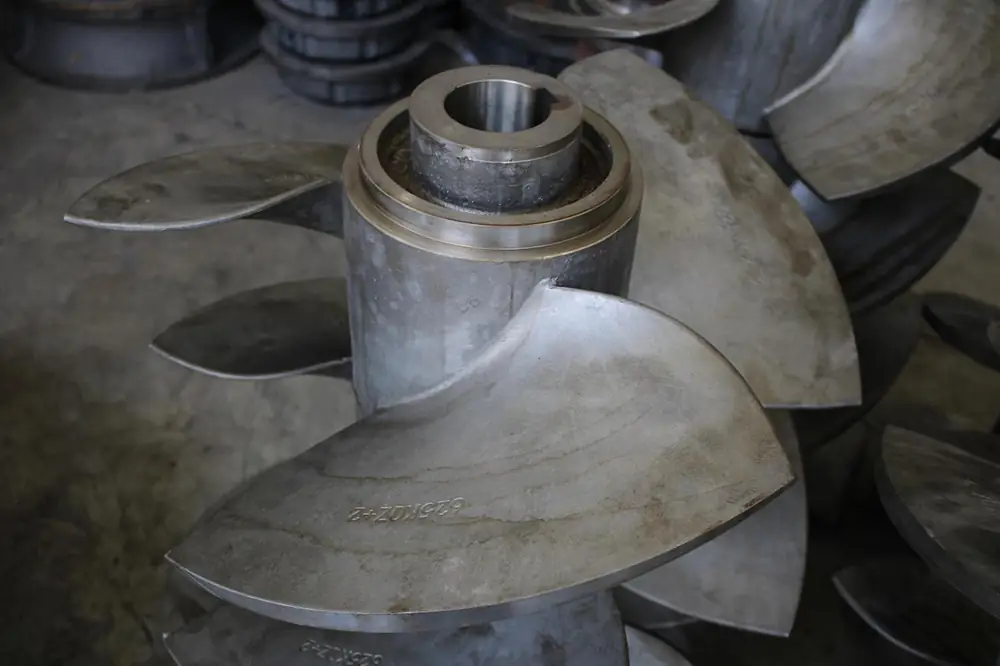
3.Anti‑Twist Special‑Shaped Propeller Impeller
Optimized swept‑back self‑cleaning blade profile, specially improved for water containing weeds, fibrous debris and small suspended solids. Reduces winding risk from aquatic plants and soft impurities.
Best‑fit scenarios: river intake pumping stations, coastal drainage, aquaculture water circulation, wastewater mixed‑liquid recirculation. Perfect for complex raw water conditions frequently encountered in Southeast Asia, Africa and other emerging‑market projects.
Note: Submersible mixed‑flow impeller belongs to diagonal‑flow category, delivering performance between axial‑flow and centrifugal pumps, for medium‑head large‑flow conditions, used as alternative selection for special‑requirement projects.
Core Application Fields of Submersible Axial Flow Pumps
Thanks to its prominent advantage of huge flow at low lift, submersible axial flow pumps are extensively deployed across municipal flood defence, water conservancy, agriculture, industrial and coastal marine projects. In 2026 global market, flood‑control & drainage accounts for the largest application share, while Middle East and Africa maintain fast growth driven by water‑infrastructure investment.
1.Municipal Flood‑Control & Storm‑Water Pump Stations
This is the primary application field. Submersible axial flow pumps quickly drain urban storm‑water and flood water during heavy rainfall events. Replacing traditional long‑shaft pump systems, they save pump‑house construction investment and support continuous emergency operation, critical for city water‑logging prevention in regions facing increasing extreme weather.
2.Agricultural Drainage & Irrigation Projects
Large‑capacity units deliver water from rivers and reservoirs for large‑farmland irrigation; meanwhile drain flooded low‑lying farmland. Compact submerged installation simplifies on‑site civil works for rural and agricultural water‑conservancy projects in emerging‑market countries.
3.Wastewater Treatment & Water‑Body Circulation
Horizontal tubular submersible axial flow pumps serve as mixed‑liquid recirculation pumps for A²/O, oxidation‑ditch biochemical processes in wastewater plants. They realize large‑volume internal tank circulation, maintain sludge suspension and improve denitrification efficiency. Also applied for lake and river ecological restoration to boost water‑body flow and reduce stagnant dead zones.
4.Industrial Water Circulation System
Widely used for power‑plant cooling‑water intake & discharge, large factory circulating‑water systems, fish‑farm aquaculture water exchange. Stainless‑steel customized models adapt to slightly corrosive industrial circulating water, ensuring stable large‑volume water supply for industrial production lines.
5.Port, Dock & Coastal Water‑Conservancy Projects
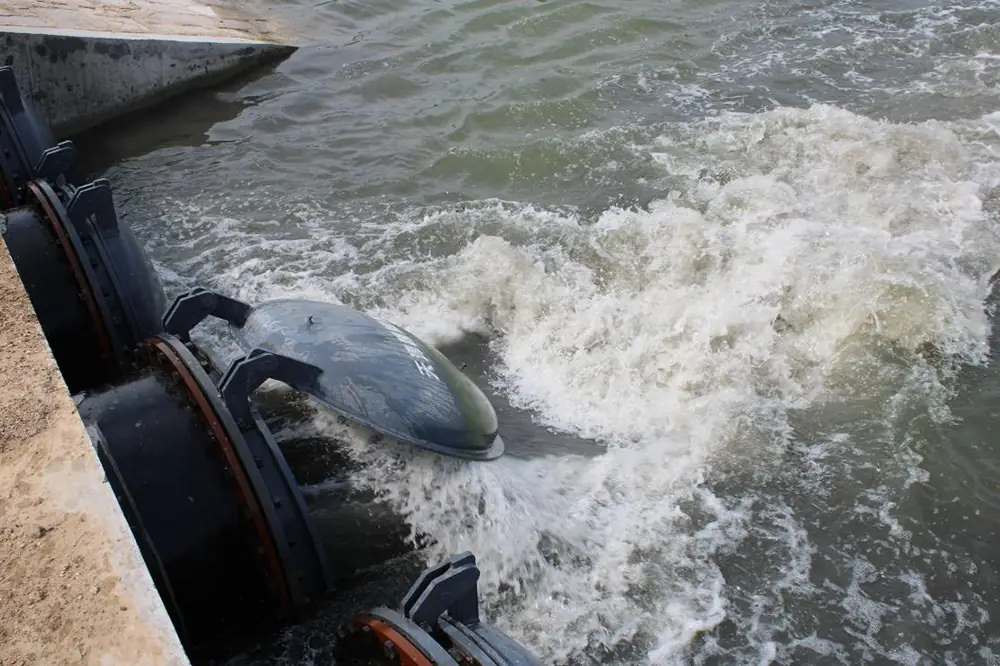
Deployed for dock water‑level regulation, port drainage, seawater intake and coastal flood defence. Corrosion‑resistant material options resist seawater salt corrosion, supporting long‑term operation under coastal high‑salinity working‑conditions.
Conclusion
Against the backdrop of global climate‑resilient infrastructure upgrading in 2026, submersible axial flow pumps occupy an irreplaceable position for large‑volume low‑head water conveyance tasks. Featuring integrated submerged design, multiple optional impeller structures, high hydraulic efficiency and flexible installation modes, they effectively solve pain points including high station construction cost, difficult maintenance and poor adaptability to variable water‑level conditions.
Chinese submersible axial‑flow pump manufacturers keep expanding global market influence by serialized product portfolio, custom‑material solutions and mature large‑project delivery experience. As water‑conservancy investment continuously rises in Southeast Asia, Middle East, Africa and Central‑Asia emerging markets, submersible axial flow pumping equipment will enjoy broad export prospects and keep empowering worldwide flood prevention, agricultural irrigation and water‑environment governance.