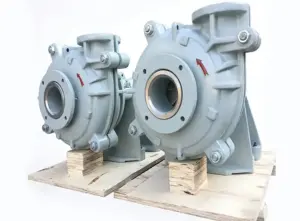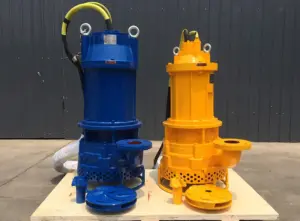
In the demanding world of industrial water management, selecting the right pump technology directly impacts energy costs, infrastructure investment, and long-term reliability. When an application calls for moving massive volumes of water against low to moderate heads, traditional pump types often fall into an efficiency gap. This ultimate guide provides an objective, data-backed exploration of the submersible mixed flow pump design — its design philosophy, key performance indicators, application scenarios, and how it compares to other technologies. Whether you manage a municipal drainage network, operate a large-scale aquaculture farm, or source equipment as an OEM, understanding the nuances of this pump class will help you make an informed decision.
Definition and Working Principle
A submersible mixed flow pump is a rotodynamic pump where fluid enters the impeller axially and is discharged at an angle between axial and radial. This hydraulic design purposefully blends the characteristics of axial and centrifugal flow patterns, creating a balanced solution that maintains high hydraulic efficiency in the moderate head range. According to a Pumps & Systems article analysing these pump types, “mixed-flow pumps offer the ideal solution for applications where the head requirements are too high for an axial flow pump but the flow rates are too large for a traditional centrifugal pump” (source: Mixed-Flow Pumps Bridge the Gap).
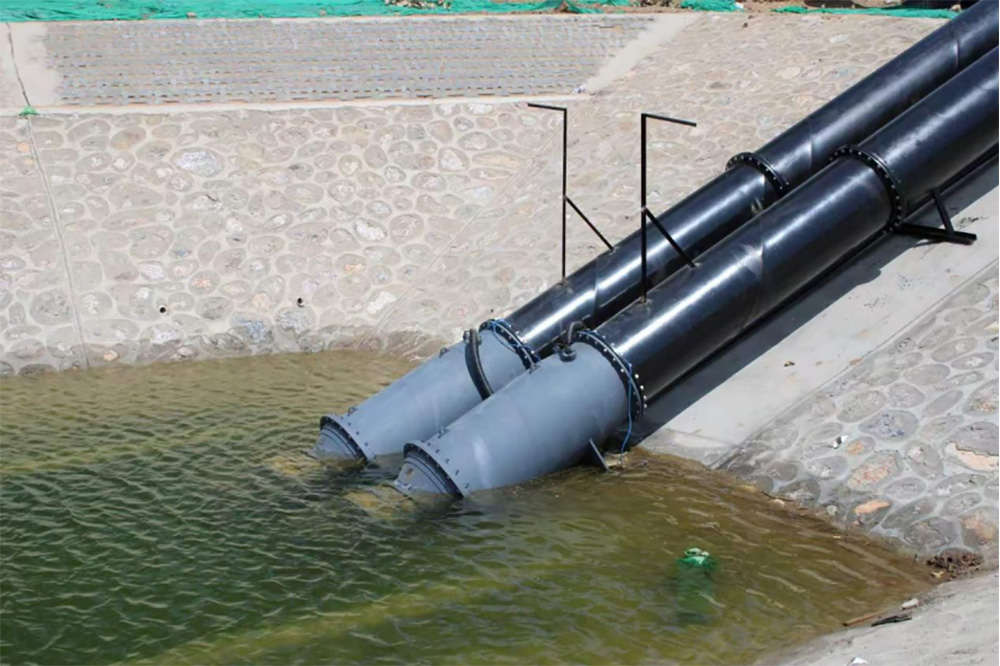
An axial flow pump, by contrast, moves fluid purely parallel to the shaft and is best suited for extremely low-head, ultra-high-volume applications. While highly efficient in that narrow band, its performance degrades quickly if the required head increases even slightly. The mixed-flow impeller bridges this gap, delivering dependable output where neither a pure axial design nor a centrifugal pump can perform economically.
Core Design Features and Component Technology
The reliability of an industrial submersible mixed flow pump starts with its internal architecture. The distinctive “axial-plus-centrifugal” composite impeller uses a variable-pitch, variable-circulation approach that evens out blade loading, reduces hydraulic losses, and significantly extends the high-efficiency operating window. Double mechanical seals (e.g., silicon-carbide vs. graphite faces) coupled with an oil-chamber barrier create a robust leakage barrier, keeping the motor cavity absolutely dry even when fully submerged for months. High-strength cast iron or stainless-steel diffusers provide structural rigidity and superior cavitation resistance, while embedded Pt100 temperature sensors in the motor windings continuously monitor thermal status and trigger a hard shutdown if temperature exceeds safe limits.
Technical Specifications and Certifications
The following table summarises the key performance data derived from laboratory acceptance tests in accordance with ISO 9906 grade 1.
Table 1: Submersible Mixed Flow Pump Performance Envelope
| Parameter | Value / Range | Remarks |
| Flow rate | 500 – 20,000 m³/h | Ideal for large-volume dewatering |
| Total dynamic head | 2 – 20 m | Low-to-medium head, high-efficiency output |
| Liquid temperature | 0 ℃ – 50 ℃ (standard); optional high-temp configuration up to 120 ℃ | Standard for clear water; consult factory for hot water or thermal fluid applications |
| Motor power | 15 kW – 400 kW | Three-phase asynchronous motor |
| Peak efficiency | ≥ 85% | At best efficiency point (BEP), tested per ISO 9906 |
| Voltage & frequency | 380 V – 10 kV, 50/60 Hz, customizable | Low-voltage and high-voltage options available to match site power supply |
All units are manufactured under an ISO 9001:2015 quality management system. The pump sets carry CE marking in compliance with Machinery Directive 2006/42/EC and relevant EMC standards. Motors meet the energy efficiency grades defined in GB 18613 (China) or equivalent IE3/IE4 efficiency levels upon request.
Application Solutions and Typical Industry Distribution
Data from Grand View Research underscores that industrial submersible pumps are critical infrastructure components, with municipal drainage and wastewater treatment representing one of the largest application segments (source: Submersible Pumps Market Report). For this mixed-flow category, the demand breakdown across the top industries is as follows:
- Municipal Drainage & Flood Control (35%): Urban stormwater emergency drainage, rainwater retention basin emptying.
- Agriculture & Aquaculture (30%): Large-area farm irrigation, recirculation and water exchange in aquaculture ponds.
- Industrial Water Handling (25%): Factory cooling water circulation, industrial wastewater transfer and discharge.
- Water Conservancy Projects (10%): River regulation, lifting stations, and low-head water transfer.
This is the precise domain of the submersible water pump industrial solution, where continuous duty and media compatibility are non-negotiable.
Real–World Case: Urban Flash Flood Emergency
Scenario: A southern coastal city experienced an extreme rainfall event, causing severe waterlogging under a major overpass. Water depth exceeded 4 m.
Pain Points: Conventional mobile diesel pumps struggled with insufficient head, frequent clogging from debris, and cumbersome suction hose deployment. The city needed a high-flow, low-head solution that could operate directly in muddy water without priming.
Solution: Multiple large-bore submersible mixed flow pump units were lowered into the flooded zone using a crane and automatic coupling system. The pumps’ fully submersible, closed-coupled design eliminated the need for suction piping; they simply pushed water out through discharge elbows. The mixed-flow impeller handled the 4–6 m head comfortably while delivering over 5000 m³/h per unit.
Outcome: The underpass was completely drained in three hours, restoring traffic and demonstrating exceptional flood-fighting reliability.
Handling Abrasive and Corrosive Media
For media with high solid content, these pumps can be equipped with a wear-resistant impeller coating and expanded flow path to prevent clogging and corrosion. In a flood environment with floating objects, a flap valve or floating hoop accessory can prevent the river from flowing back and adapt to the fast fluctuating water levels. When transferring acidic or alkaline industrial effluents, all over-flow components can be upgraded to 304/316L or duplex stainless steel, transforming the unit into a true submersible water pump industrial grade asset.
Competitive Advantages Compared to Alternative Pump Types
When comparing this pump technology against other pump types, three differentiating factors stand out:
1. Broader Performance Sweet Spot: An axial flow design demands precise installation alignment and suffers rapid efficiency decay when the head rises slightly. A centrifugal pump under the condition of low head and high flow runs on the left side of its optimal efficiency point, wasting energy. Mixed-flow design maintains a flat efficiency curve across the top area of 2–20m, providing a higher hydraulic efficiency of up to 20% in this range.
2. Lower Total Lifecycle Cost: Traditional pump stations require massive civil construction and above-ground mounting structures. A submersible mixed-flow pumping station saves the pump room and complicated intake canal, and reduces the initial investment in civil infrastructure by about 30%. The compact vertical or rack-mounted layout greatly reduces the floor space.
3. Simplified Maintenance: The close-coupled, bottom-heavy design runs with exceptional stability. Combined with a dedicated auto-coupling system and submersible cable, a single unit can be retrieved for inspection in minutes, minimising downtime. After reinstallation, shaft alignment is not required.
Customer ROI Model
Because this type of pump operates near its optimum efficiency point in typical medium head applications, energy savings accumulate rapidly. Compared with a conventional pump delivering the same hydraulic power, an efficiency uplift of 15–20% directly translates into lower electricity bills. For a continuously operating device (8,000 hours/year), this usually reduces the annual energy cost by about 20%. In addition, the initial civil engineering saves 30% of the cost and reduces the on-site manpower demand, so the investment payback period is very short.
How to Select a Submersible Mixed Flow Pump: A Step–by–Step Guide
1. Define Operating Point: Determine the required flow (m³/h) and total dynamic head (m) at the worst-case and normal conditions.
2. Analyse Media Characteristics: Measure pH, solids content, and temperature. Decide whether standard cast iron or stainless-steel wetted parts are needed.
3. Consult the Performance Curves: Match your duty point to the pump’s maximum efficiency zone. A reputable submersible pump factory will supply ISO-certified test curves.
4. Size the Motor: Verify that the motor power covers the entire curve without overloading, considering the liquid specific gravity.
5. Review Installation Configuration: Choose between portable vertical, coupled rack, or floating pontoon arrangements based on site access.
6. Validate Protection Features: Confirm that motor thermal sensors, moisture probes in the oil chamber, and sealing monitoring are included.
Frequently Asked Questions (FAQ)
Q1: How does a submersible mixed flow pump differ from a pure axial design?
A: A submersible mixed flow pump employs an impeller that moves fluid in a direction between axial and radial, making it ideal for moderate heads (2–20 m) with large flow rates. In contrast, a pure axial design is optimized only for very low heads (<5 m) and extremely high volumes; its efficiency drops significantly if the head demand increases.
Q2: Where is an axial flow pump the best choice?
A: An axial flow pump is the best choice for applications requiring massive volumes at very low heads, typically below 5 m. Examples include large-scale flood control pumping stations where the lift is minimal, or certain aquaculture circulation loops with negligible back pressure.
Q3: As a submersible pump factory, do you offer customised configurations?
A: Yes. A competent submersible pump factory will tailor the pump’s materials (stainless steel, duplex), voltage/frequency (up to 10 kV), and structural features (agitator, cooling jacket) to the specific flow, head, and water quality requirements of each project.
Conclusion
The submersible mixed flow design is a purpose-built hydraulic machine that excels in the high-flow, medium-head niche dominating municipal drainage, agricultural water circulation, and industrial transfer processes. From the composite impeller’s wide-efficiency band to the double mechanical seal’s leak-free integrity, every design element targets reduced energy consumption, lower infrastructure expenditure, and operational simplicity. By specifying equipment through a qualified submersible pump factory that offers full performance curves and material flexibility, operators can confidently deploy these industrial water solutions in the most demanding environments. If you are currently evaluating equipment for a low-head, high-capacity water movement challenge, comparing the mixed-flow submersible platform against your actual duty point will almost certainly reveal a compelling case both technically and financially.