Vertical axial flow pump maintenance starts with checking the installed design, tracking how it runs, and following the exact pump and motor manuals. Isolate the equipment before work that opens, adjusts, or removes parts, and use its specified lubricants, inspection limits, and restart checks.
A completed calendar checklist cannot tell you whether a drainage pump is ready for its next duty. A bearing may be due for attention because it has run more hours. A lower flow reading may reflect a changed discharge level instead of worn parts. Without those details, even careful maintenance can address the wrong problem.
Operators and site engineers need a record that links each finding to an action. This guide shows how to build that record and plan the work. It covers safe checks, oil and grease needs, faults, and overhaul plans. It draws on manufacturer guidance and a published repair case while keeping their own equipment limits separate.
Use it to plan vertical axial flow pump maintenance with your trained maintenance team. The installed manuals and site procedures govern the actual work; a general article cannot set missing clearances, lubricant quantities, or alarm settings.
Key Takeaways
- Confirm whether the pump has an above-deck driver and lineshaft or a submerged motor before choosing maintenance tasks.
- Compare flow, head, current, vibration, and temperature at the same operating conditions.
- Product, oil, fresh-water, grease, and sealed-bearing arrangements require different instructions; weekly greasing is not a universal rule.
- Record findings before dismantling, and compare restart readings with the approved baseline.
Identify the Pump and Make Maintenance Safe
Match the manual to the installed equipment
Start vertical axial flow pump maintenance with the nameplates and assembly drawing. Record the pump and motor model, serial numbers, bearing arrangement, seal type, and manual revision. Find the oil, water, or flush supplies the pump needs. Check which gauges or sensors show their condition.
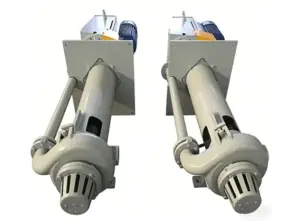
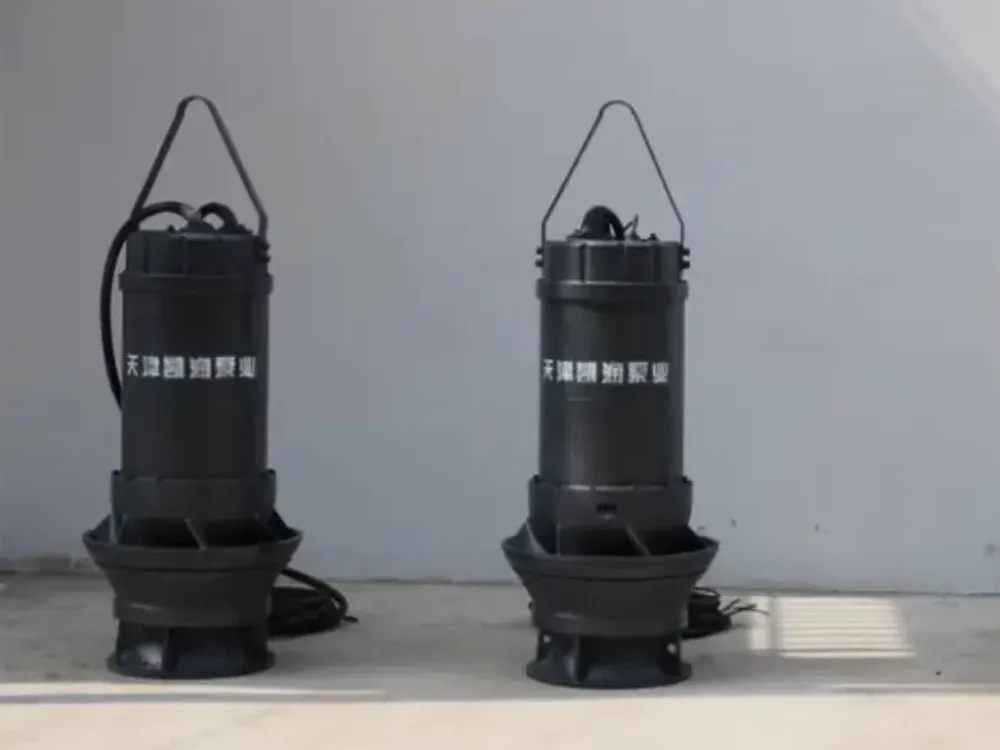
For vertical axial flow pump maintenance, the word vertical alone does not identify the drive or bearing layout. An above-deck motor driving a long lineshaft needs different attention from a submerged motor assembly. Kairun’s vertical axial flow pump overview, for example, describes a submersible motor arrangement. Compare that overview with your installed equipment, then obtain the correct instructions before you assign service tasks.
Fictional training scenario: Alex’s two pump records. Alex prepares a November maintenance plan for two drainage units. One drawing shows an above-deck driver; the other shows a submerged motor. The previous checklist gives both the same oil-feed inspection.
Alex separates the records and flags the missing manual for the submerged unit. The planning outcome is a corrected task list, with the wrong oil-feed task removed. This is an invented training example, not a Kairun customer case.
Separate observation from intrusive work
For vertical axial flow pump maintenance, decide which readings staff can take safely while the pump runs. Opening guards, clearing screens, adjusting parts, taking internal measurements, and lifting equipment belong under the site procedure for isolated work.
Trained, authorized staff must control electrical, automatic-start, stored, and hydraulic energy. Follow the site’s isolation and verification procedure, to prevent unwanted rotation or restart. Apply the relevant access, lifting, and confined-space procedures where needed.
Flowserve’s VTP/VPC user instructions, sections 8.1–8.2.3, support this distinction and require guards to be restored before restart. They concern vertical turbine equipment, not a universal Kairun maintenance schedule. Use their general checks as context. Keep the installed manual’s rules for your pump.
Vertical Axial Flow Pump Maintenance Checklist
A useful pump maintenance checklist connects a task to its trigger, evidence, and responsible person. The table helps you plan vertical axial flow pump maintenance; it does not set replacement intervals. Set actual frequencies from the installed manuals, operating hours, service conditions, and approved site plan.
| Planning trigger | Observation or task | Record and follow-up |
|---|---|---|
| Before a planned run | Review open defects, intake condition, required auxiliary supplies, and permissives | Confirm readiness through the approved operating procedure. |
| During operation, from safe locations | Observe noise, vibration, bearing temperature, leakage, flow, head, and current where instruments permit | Record readings and operating conditions; investigate changes against site limits. |
| After a trip or unusual event | Preserve alarm history, levels, speed, and the event sequence | Identify the cause before an authorized restart. |
| At manual-defined service points | Perform applicable lubrication, seal, fastener, coupling, and auxiliary-system work | Record manual reference, materials used, measurements, and unresolved defects. |
| During a planned isolated outage | Inspect accessible wear, corrosion, shaft, bearing, and seal condition | Compare measurements with model-specific acceptance criteria. |
Make readings comparable
A vertical axial flow pump maintenance log needs a record of how the pump was running. Record speed, intake and discharge levels, running hours, and which other units are operating. Add flow rate in m³/h, head in m, and current or power where measured.
Head is the energy added per unit weight of liquid. One pressure reading alone does not give the total head.
For vertical axial flow pump maintenance trends, keep the same test point, tool, units, and method. Record vertical pump vibration and bearing heat at those points. A reading from a different point may not be directly comparable. Also mark a missing reading as missing, not zero.
Flowserve’s cited maintenance sections include noise, vibration, bearing temperature, lubricant condition, service hours, and auxiliary supplies. Their calendar frequencies apply to that manual. For your vertical pump maintenance plan, note why each task is due at that point rather than copying a generic daily-to-annual table.
Close each vertical axial flow pump maintenance entry with an action. Use the pump maintenance checklist to assign the next step:
- Keep tracking readings within the approved limits.
- Plan an inspection when the evidence calls for one.
- Stop and escalate when site procedures require it. Assign an owner and a review date. A tick alone tells the next shift little. Add what you found and what should happen next.
Vertical Axial Flow Pump Maintenance: Lubrication
Identify the bearing supply before adding lubricant
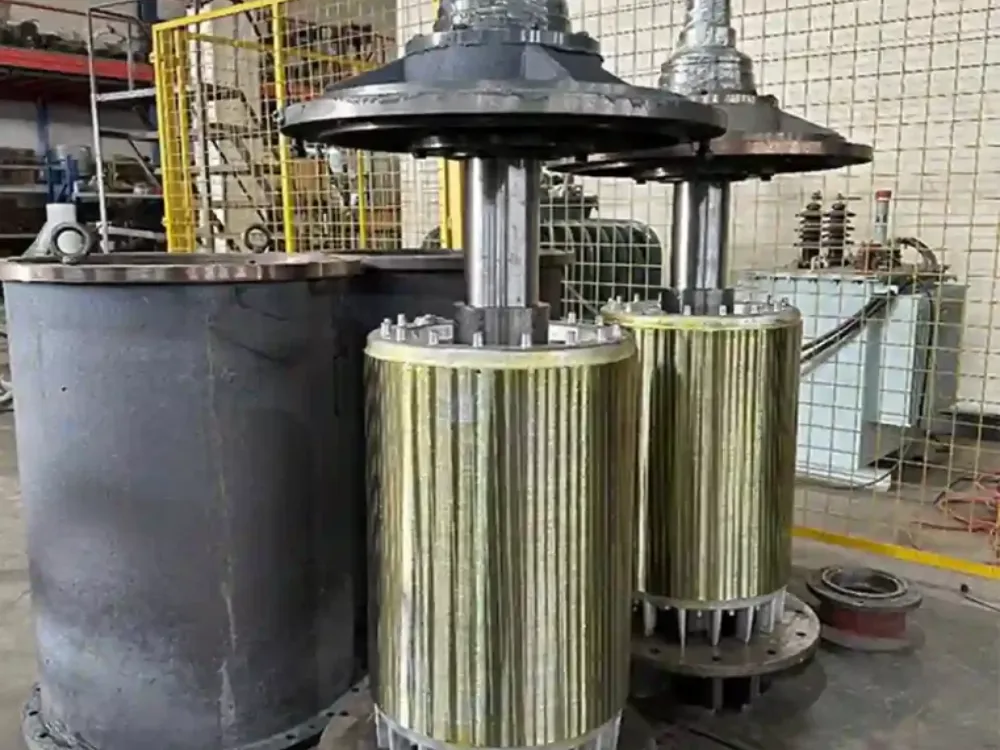
Pump bearing lubrication depends on what the bearing does and how it is built. Ruhrpumpen’s VAF product information lists product, oil, or fresh-water lubrication options. That direct axial-flow example explains why vertical axial flow pump maintenance cannot use one lubricant rule for every unit.
For product-lubricated bearings, check which bearings rely on the pumped liquid and what conditions the manual requires before starting. For a separate water supply, check where it enters and how its flow is shown. Do not assume that liquid in the sump proves every bearing receives the required supply.
For an oil-fed bearing, find the correct tank and oil grade. Check how the oil is fed and how to read its level. Log dirt, unexplained loss, or a change in how the oil looks. Have the cause checked.
Do not guess the correct feed setting from another pump’s instructions.
For grease-serviceable bearings, use the specified product, quantity, and service interval. Check that the products are compatible before changing grease. A sealed bearing may have no field lubrication task at all. Keep motor-bearing instructions separate: the driver manufacturer’s requirements govern driver lubrication.
A practical vertical axial flow pump maintenance record should therefore name the component beside every lubrication task. “Lubricated pump” is too vague.
Log the lubricant, amount, date, run hours, and person doing the work. Note any change that needs follow-up. This makes pump bearing lubrication traceable at the next service.
Treat packing and mechanical seals differently
Seal inspection also requires the correct drawing. Packing can require controlled leakage under its applicable instructions; trying to stop every drip may be wrong for that packing. A mechanical seal has different inspection and service requirements, including any specified auxiliary supply.
For vertical axial flow pump maintenance, record where liquid appears, when leakage occurs, and whether the pattern has changed. Do not tighten an unidentified gland or open a seal chamber as a routine response. For submerged assemblies, keep moisture or temperature alarm records where fitted and follow the prescribed fault procedure.
In axial flow pump maintenance, a leak is evidence to investigate. It does not by itself identify the failed component or show which adjustment is needed. Avoid turning a general inspection checklist into a repair based on guesses.
Trace Vibration and Falling Flow Before Replacing Parts
Start fault checks with the order of events. Compare readings taken at the same duty. Vertical pump vibration may involve hydraulic conditions, rotating components, alignment, supports, or resonance. More than one fault may be present. A vibration increase alone does not prove bearing wear.
Use vertical axial flow pump maintenance records to identify what changed before the symptom appeared. Was the intake level different? Did the speed change?
Was a second pump started? Did the symptom follow recent work?
Keep the observed facts separate from possible causes. Vertical pump vibration records are more useful when both are clear.
| Symptom | Evidence to collect safely | Next decision |
|---|---|---|
| Lower flow rate | Speed, levels, head, instrument condition, screen observations, and valve status | Check for a changed duty point or blockage before blaming internal wear. |
| New noise or vibration | Onset time, speed, measurement locations, levels, and recent work | Compare with site limits and arrange hydraulic or mechanical investigation. |
| Rising bearing temperature | Comparable readings, load, lubricant condition, and applicable auxiliary supply | Follow the alarm response and bearing-specific inspection procedure. |
| Leakage or moisture alarm | Location, timing, trend, seal arrangement, and alarm history | Apply the correct seal or motor fault procedure. |
| Repeated trips | Protection code, current, speed, level, and sequence of events | Resolve the cause before an authorized restart. |
Fictional training scenario: Morgan’s lower-flow report. Morgan receives a Monday shift report showing less flow than the previous week. The two entries have no discharge-level data. Before requesting wear parts, Morgan adds the missing levels and speed to the investigation record. The team schedules comparison readings under the approved operating procedure.
The outcome is a fault report the team can test, with no assumed cause. No repair result or performance saving is implied by this invented example.
Review vertical pump vibration and intake conditions
Cavitation is the formation and collapse of vapor bubbles in a liquid. Noise and surface damage can prompt investigation, but similar symptoms may have other causes. Use the pump cavitation site checks to organize further evidence when intake conditions or cavitation are suspected.
A vertical axial flow pump maintenance investigation should end with evidence for the next action. Avoid repeated test starts just to see whether a trip or abnormal condition disappears. Use the approved fault and restart process.
Vertical Axial Flow Pump Maintenance: Overhaul
Define the scope before the outage
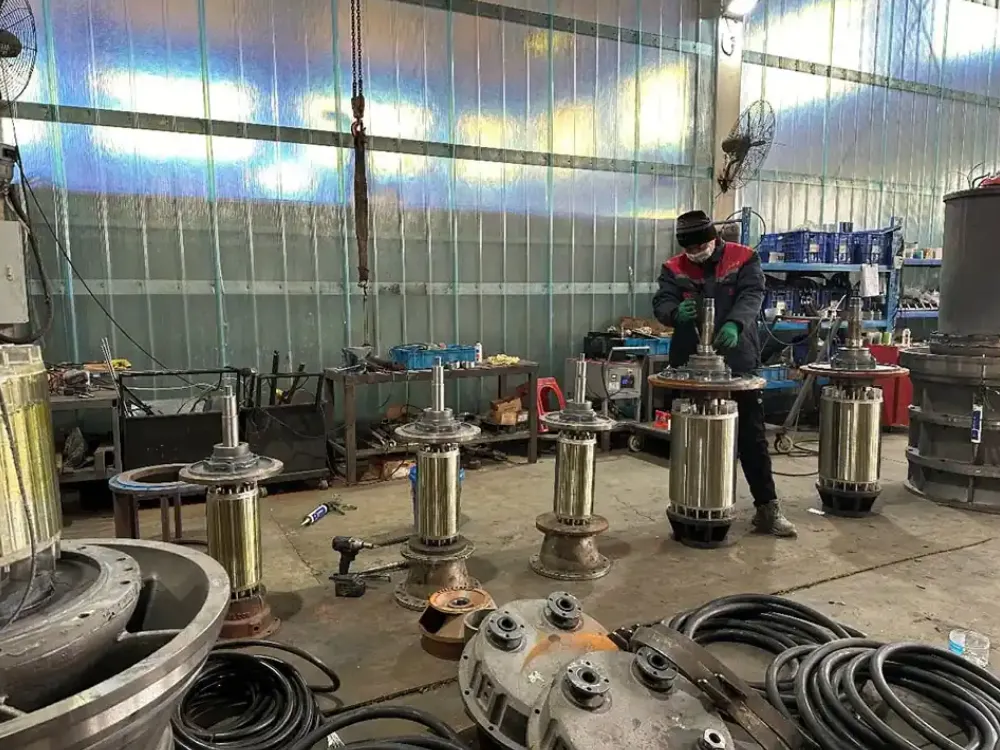
Plan vertical axial flow pump maintenance outages around known faults and the parts staff need to reach. Gather drawings, earlier readings, fault history, parts lists, and the lifting plan. Separate confirmed replacement needs from parts that need to be measured once the pump is open.
For each wear check in vertical axial flow pump maintenance, record the part, test point, tool, result, and approved limit. Photograph the condition before cleaning or repair where useful. Retain the reason for repair or replacement so the next team knows why the work was done.
Check that each new part matches the installed assembly and approved documents. Similar dimensions or a matching general pump description do not prove that parts can be swapped. Changes to a shaft, seal, bearing support, or impeller need a review by the responsible engineer.
Learn from a published repair case
In its 2019 dock impounding pump repair case, AxFlow describes work on a Vickers 44-inch vertical axial-flow pump. Reported findings included cavitation damage to the propeller, corrosion of the rising main, and a leaking lower seal.
AxFlow’s published scope included propeller repair, housing sleeves that maintained original clearances, shaft work, a replacement bearing and support plate, and a new bellhousing. The case illustrates how an overhaul can involve several interacting components. It does not establish a quantified efficiency gain, repair saving, or service-life extension, and Kairun is not identified as a participant.
For your axial flow pump maintenance plan, use this as a reason to inspect the assembly part by part. Do not copy the case’s design changes onto another unit.
Complete the vertical axial flow pump maintenance handover
Before restart after vertical axial flow pump maintenance, authorized staff should complete the required checks:
- Confirm assembly and settings against the installed instructions.
- Check pump bearing lubrication and required support supplies.
- Restore guards and check instruments and protective systems. Follow the installed instructions for settings and acceptance. The vertical pump installation checklist provides related installation context; the maintenance record should retain the specific work and restart evidence.
Record restart conditions and compare readings with the approved baseline. List open defects, limits on use, and who will follow up. Vertical axial flow pump maintenance remains open until the authorized handover records what was checked and what still needs attention.
Maintenance Questions Operators Ask
How often should a vertical axial flow pump be maintained?
Use the installed pump and motor manuals to set service intervals, then account for operating hours, conditions, and observed trends. Vertical axial flow pump maintenance also needs event-driven checks after trips or unusual operation. A standby unit and a pump that runs all day need a review of their duties. Base the vertical pump maintenance plan on those duties.
Which oil or grease should I use?
For vertical axial flow pump maintenance, use the lubricant specified for that exact part and service. Check whether the bearing uses product, separate water, oil, grease, or a sealed arrangement. Pump bearing lubrication and motor lubrication may follow different instructions. If the specification is missing, obtain it before adding or substituting lubricant.
What impeller clearance should I set?
Use the model-specific drawing and maintenance procedure; there is no universal clearance for this article to prescribe. Record the measurement method and assembly conditions as well as the result. In vertical axial flow pump maintenance, a value borrowed from another design can turn an inspection into an incorrect adjustment.
How should I budget for maintenance?
Build the estimate from the inspection scope, access and lifting needs, labor, parts, specialist work, and restart checks. Keep confirmed work separate from allowances for findings after dismantling. A useful inquiry includes nameplates, drawings, operating history, symptoms, and photographs. A general vertical pump maintenance price cannot show what your unit’s overhaul will cost.
Build a Maintenance Record You Can Use
Start with one equipment record that identifies the pump, motor, manuals, bearing arrangement, and seal type. Then connect routine readings to operating conditions. That gives the next shift a basis for comparison and gives the maintenance planner a reason for each task.
Keep what you saw, what caused it, and what you repaired in separate notes. An abnormal reading should trigger the approved response and a logged fault check. Lubrication instructions must name the component and its specification.
Use outage findings to decide the work. Then log the checks and approval for restart.
Your next step is to review the pump maintenance checklist against the installed manuals and close any gaps in identification or baseline data. Assign responsibility for open defects and define what facts are needed to close each one. This makes the record useful beyond the day the work is performed.
For a Kairun equipment inquiry, send your maintenance inquiry with nameplate details, serial number, operating log, and symptom photographs. Those details help define the question. Keep vertical axial flow pump maintenance grounded in the actual assembly, its documented limits, and the conditions under which it runs.