Complete axial flow pump commissioning by checking the setup, proving a safe wet start, and logging duty and trip tests against agreed limits. A generic centrifugal pump startup checklist can give an axial unit the wrong starting valve instruction.
If you’re preparing a drainage or irrigation station, you need a clear go-ahead before pressing Start. The motor, intake, discharge route, and controls must work together. The pump can turn the right way yet fail to reach the needed flow rate or running water level.
This guide takes you from an installed pump to a useful handover record. It explains which checks depend on the pump design, what to watch during pump startup, and how to handle a failed test. The cited pump manuals explain the design issues. Use your unit’s own files for its actual settings.
Use this as a planning checklist for qualified staff. Follow the signed site method for safe isolation, power, lifting, and tests. Axial flow pump commissioning also needs named people who can approve each stage and stop a test when the site conditions changes. Agree on those roles before work starts.
Key Takeaways
- Axial flow pump commissioning needs an approved manual, curve, starting sequence, and acceptance limits for the exact unit.
- Axial/propeller pumps can overload at low flow; confirm the starting discharge path instead of borrowing a radial-pump valve rule.
- Verify rotation, running water level, intake conditions, and motor cooling before sustained operation.
- Record flow rate, head, electrical readings, and protection results together; retain exceptions and authorized retests.
Plan Axial Flow Pump Commissioning Around the Exact Unit
Confirm the equipment and governing documents
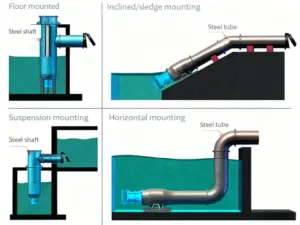
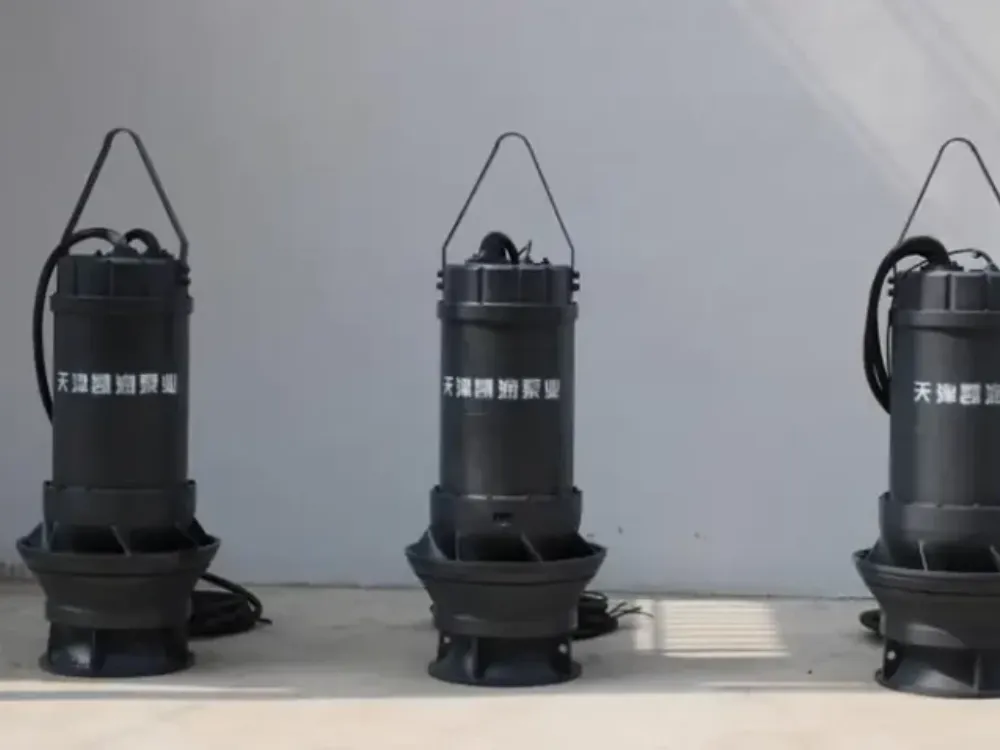
Start with the model, serial number, motor, and drive type. A long-shaft vertical unit needs checks that differ from a unit with a built-in submerged motor. The word vertical describes orientation, which alone does not identify the drive arrangement. Check the drive layout on its section drawing.
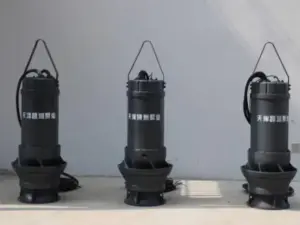
Kairun’s submersible axial flow pump page describes a pump with a built-in motor. That tells you the product type. For axial flow pump commissioning, get the selected unit’s own layout drawing, manual, supplied curve, and control details.
Next step: Compare your pump layout with the vertical axial flow pump catalog, then check the supplied drawing version before planning pump startup.
Agree on release points and acceptance criteria
The axial flow pump commissioning plan should name who signs off the pump, electrical checks, first wet run, and handover. For axial flow pump commissioning, list the needed flow rate and head, allowed operating range, starting water level, alarm limits, and test methods. Get missing values from the supplier or site designer before testing.
Keep open defects on the test sheet. A missing guard, unclear oil supply, or unsigned trip setting needs a fix before that stage. Set the run time and allowed starts in the signed test plan. Don’t copy numbers from a different pump manual.
Fictional scenario: Rina prepares a two-unit drainage station for a morning test. The panel list uses drawing version A, while the signed level-control drawing is version C. Rina puts the start on hold and asks the design owner to resolve the clash.
The team resumes only when the new test sheet lists the correct controls. This is a fictional training example, not a Kairun project record.
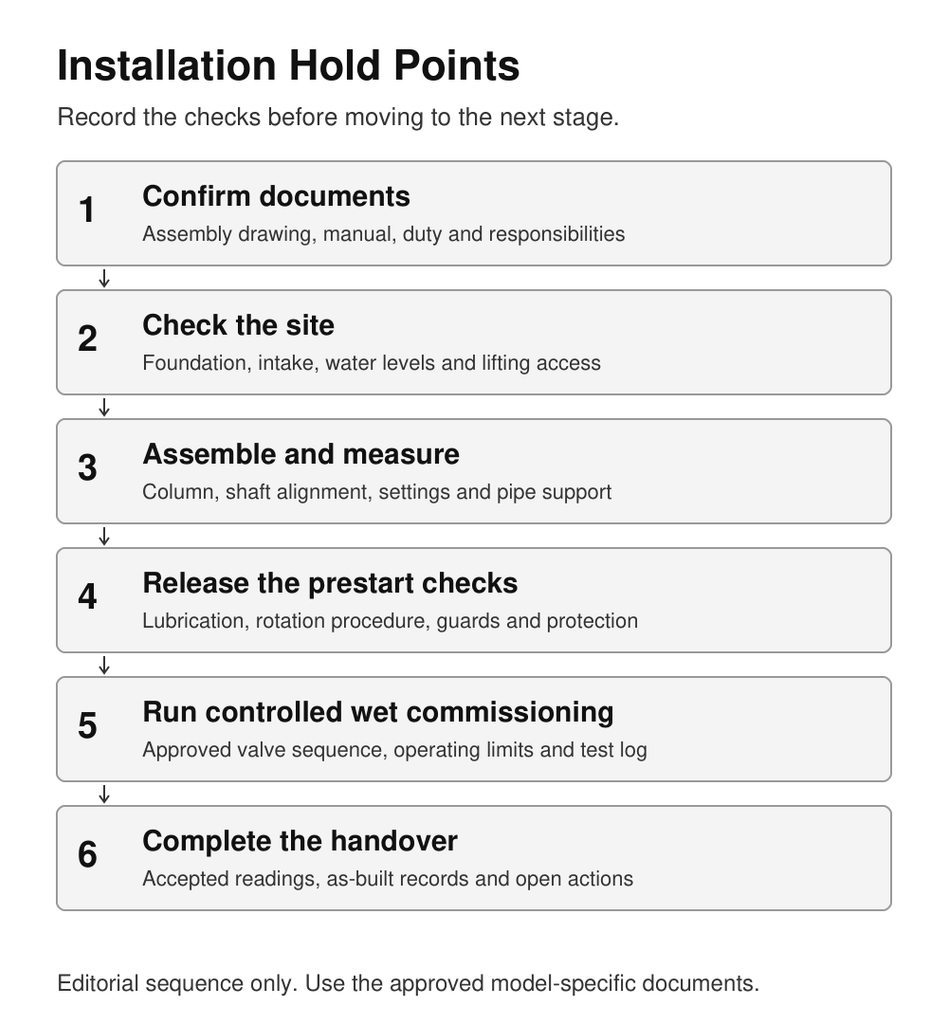
Installation release, wet testing, and handover for long-shaft vertical units. Editorial sequence only; use the approved unit documents.
Complete the Axial Flow Pump Commissioning Prechecks
Close mechanical checks for the installed design
- Long-shaft unit: Check the signed alignment, shaft-setting, coupling, and bearing-lubrication logs required by its manual. Confirm any external bearing-water supply before pump startup. Keep guards and safe access in place. Use the manual’s isolated method to check free movement.
- Integrated unit: Check its seat, the parts that hold it against movement, cable supports, and joints as fitted. Keep cables free from strain and moving parts. Use the lubrication instructions for this unit; a long-shaft bearing rule may not suit a sealed submerged motor.
- Intake and outlet: Axial flow pump commissioning needs a clean flow path. Check that building waste is gone, screens are clear, and gates or non-return devices are ready. Check the liquid supply and water level from a safe place, with no sump entry or access to moving parts.
Verify electrical and protective functions
Qualified staff must make the electrical checks using the pump instructions and local rules. Check that the supply matches the nameplate and the wires match the signed diagram. Log the earth, cable, insulation-test, overload, and phase-protection results where needed.
Use the stated safe isolation method for electrical tests. The drive and sensor circuits need their own test steps. Don’t apply a generic insulation test through connected equipment. The axial flow pump commissioning record should cite the test report, settings, and file versions.
The Sulzer installation and operating manual, section 11, covers heat sensors, seal monitoring where fitted, overload settings, level controls, and rotation. Its VUPX propeller units show the scope of the checks. Get the settings for your Kairun unit from its own files.
Before pump startup, prove the fitted alarms and trips with the signed test method. List what gives an alarm, what stops the motor, and what blocks restart. Check the low water level function without running the pump dry. Leave an unexplained failed test open.
Verify Rotation and Water Level Before Pump Startup
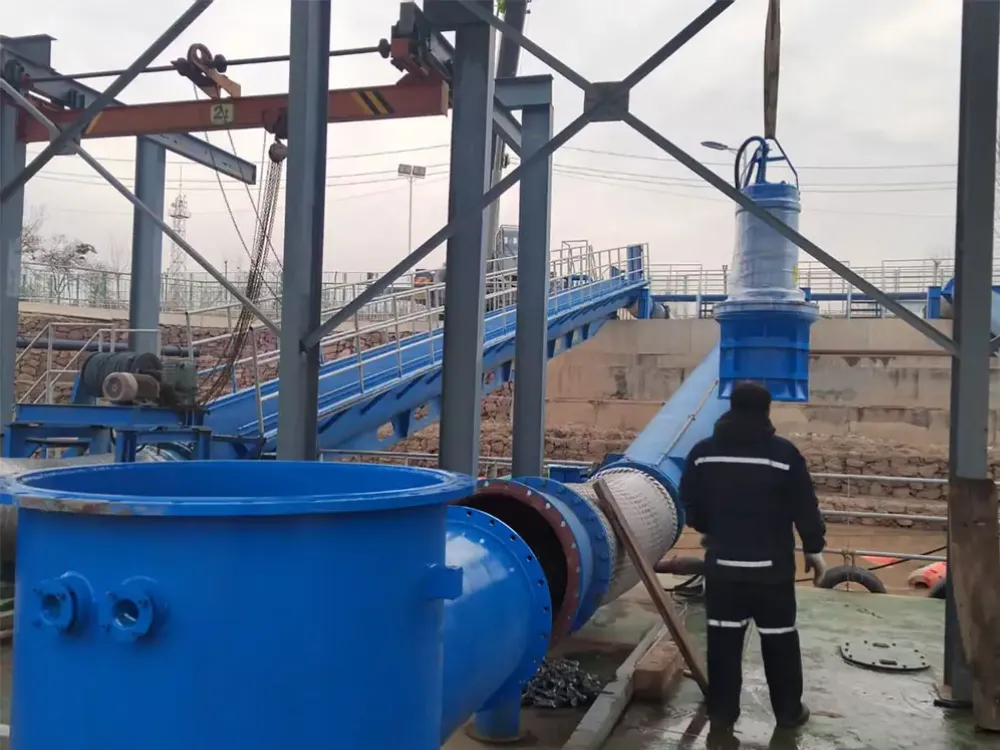
Use the model arrow and viewing direction
Axial flow pump commissioning must confirm which way the unit should turn. Use its arrow or drawing and the stated viewing side. The right direction differs between designs. A phase-sequence check alone does not prove the installed pump turns the right way.
Check what the approved rotation test allows. On a long-shaft unit, a driver-only test with the pump uncoupled follows its own isolation and coupling steps. That does not permit a dry run of a unit with a built-in motor. Don’t improvise a few-second dry jog for pump startup.
Have qualified staff secure the unit and perform the stated rotation test. Include a standby generator or other supply in the test plan where needed. If the direction is wrong, isolate the unit. Qualified staff must fix it and repeat the required check.
Confirm submergence and the discharge sequence
Log the water level against the datum on the signed intake drawing. The datum is the fixed elevation reference for the level reading. Submergence is the depth above the defined inlet point. For axial flow pump commissioning, check both the planned running level and the level before starting.
The Hydraulic Institute submergence guidance explains the need to prevent strong air-core vortices. More depth may be needed for net positive suction head, or NPSH. Check motor cooling too. A pass on one of these checks does not prove all three.
Confirm the approved minimum water level and the level expected as the sump draws down. Check how liquid reaches the inlet at the planned flow rate. Even with a covered motor, the inlet flow may be poor. Look beyond motor coverage before releasing the wet test.
Valve position deserves a separate check. KSB’s propeller-pump guidance describes maximum power input at zero flow and open-discharge starting to avoid overload. Use this warning during axial flow pump commissioning to question a borrowed closed-discharge rule. Get the exact pump startup sequence for the fitted gates, valves, flap devices, and any siphon layout.
Run the Wet Test Within the Approved Operating Area
Observe the first start against a stop plan
Before power is turned on, brief the team on signals, safe zones, expected water level changes, and who can stop the test. Check that staff and meters are ready. Release pump startup only when the signed prechecks match the site conditions.
During axial flow pump commissioning, watch the unit reach speed and establish flow. Check current, noise, vibration, leaks, and level trends from safe places. Use the approved stop method if a trip acts, the unit behaves abnormally, or a stated limit is exceeded.
Don’t keep a unit running at an unapproved low flow rate while troubleshooting. Axial and mixed-flow pumps can have unstable low-flow regions. The supplied curve and manual must define the allowed steady operating range and brief changes during the test.
Log pump startup events apart from steady readings. Judge a brief peak as the unit gains speed against its own limits. Judge steady running values against the limits for that state. Get the vibration limits, stabilization time, and run duration from the approved commissioning test plan.
Measure duty and prove the controls
Measure the flow rate with the agreed method and list the meter used. Pair it with head, speed, valve position, and water level readings for the same running state. If blade pitch can be changed, record its approved setting too.
The method for finding head depends on the site and the chosen test points. The height gap between water surfaces alone may not be the full pump head. Include pressure, height, and flow-speed terms where the test method needs them. Use a consistent datum and state the measurement uncertainty of the readings.
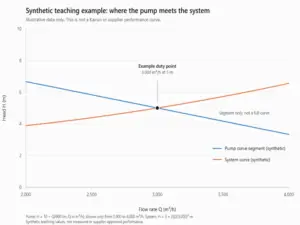
For axial flow pump commissioning, compare the measured flow rate and head with the supplied curve at the actual speed and setup. Apply the contract’s test method and acceptance limits. Use the factory report as a reference. Test the installed station too.
Log supply voltage, all phase currents, and measured input kW where the test needs it. Motor output on the nameplate is not measured power from the grid. Current alone cannot give input kW. Judge the flow rate and power readings together when deciding whether the unit passes.
Fictional scenario: Owen checks an irrigation unit with an invented target flow rate of 3,000 m³/h. The record shows 2,700 m³/h, with motor current inside its agreed limit. Owen logs the actual speed, head, and water level, then holds the duty test for review.
The flow rate shortfall needs review against the agreed test method and acceptance limits. These fictional readings show a decision, not product performance or a universal pass band.
Finish the planned control tests for axial flow pump commissioning. Check manual and auto modes, start/stop levels, emergency stop, and fitted alarms or trips. Test other power sources and groups of pumps only under the approved plan. Respect starting limits and reset rules throughout.
Next step: Review the submersible pump VFD checks when planning drive tests. Confirm the selected unit’s allowed speed range and pump startup ramp in its own files.
Record Results and Close Commissioning Exceptions
Build a record that another operator can use
A useful axial flow pump commissioning record ties each reading to the unit, test conditions, and acceptance decision. Use the proposed axial flow pump commissioning fields below as a blank template. This is an editorial checklist. It is not a supplied Kairun form or a signed test certificate.
| Record group | Information to enter |
|---|---|
| Identity and release | Site, date/time, model/serial, drive, document revisions, installation release, responsible people |
| Approved criteria | Required flow rate/head, allowed operating area, water level limits, protection settings and their source |
| Pump startup | Supply used, rotation-check reference, gate/valve sequence, start events, alarms, stop observations |
| Stable duty | Flow rate and method, head and datum, speed/pitch, gate/valve position, running water level |
| Electrical and condition | Voltage, phase currents, measured input kW if required, vibration location/direction/unit, temperatures, leaks/noise |
| Test quality | Instrument IDs, calibration status, measurement uncertainty, reading times, condition stability |
| Disposition | Pass or exception against each criterion, action owner, retest reference, restrictions, signoffs |
Give every axial flow pump commissioning fault or open item an owner and an agreed way to close it. Keep the first reading and the result after the fix. If the record keeps only the final pass, later staff lose part of the fault history.
Diagnose the cause before authorizing a retest
If the water level drops beyond its permitted range, current rises abnormally, or flow becomes unstable, follow the stop plan. Isolate before inspection. Don’t defeat a level trip or raise overload settings to keep the test moving.
Use the readings to choose what to check next. A low flow rate can involve rotation, speed, a blockage, a faulty meter, or an unexpected system head. Noise and vibration can come from the flow or the pump’s moving parts. The cavitation checks provide background, but sound alone cannot prove the cause.
The axial flow pump commissioning lead should approve the retests needed after a fix. Repeat the related control tests if sensor wiring changes. A changed hydraulic configuration can affect the duty test too. Log any limits on use and get the right approval before handover.
Axial Flow Pump Commissioning FAQ
Should the discharge valve be closed for the first start?
Use the approved axial-pump and station sequence, with a checked outlet path. KSB’s propeller guidance explains why closed-discharge starting can overload the drive. Axial flow pump commissioning should resolve valve and gate positions before pump startup, including any non-return or siphon behavior. Avoid extending radial-pump starting advice to this equipment.
Can you run the pump dry to check rotation?
Don’t assume a dry rotation check is allowed. Qualified staff must use the exact unit’s approved method and secure the pump for the test. An uncoupled-driver check is a separate activity. Axial flow pump commissioning does not create a general exception for dry running, even for a short pump startup test.
What water level is needed for the wet test?
Use the exact-model minimum and the approved intake drawing’s datum. Verify the water level while the unit runs, accounting for the planned flow rate and pump combinations. Axial flow pump commissioning must address intake submergence, NPSH, and cooling requirements. Another manufacturer’s depth cannot establish your station’s starting or stopping level.
Which readings belong in the handover record?
Log the unit ID, agreed limits, pump startup events, paired duty readings, trip-test results, and open faults. Include the running water level, flow rate, head, speed, and electrical readings, with instrument and test-method references. Keep the fixes and approved retests so the next operator can read the baseline without guessing.
Conclusion: Release the Pump With a Verified Baseline
Axial flow pump commissioning gives the operator a checked start method and a clear record of how the installed unit runs. Start with the correct files, close the pump and electrical prechecks, and check the intended outlet path. Confirm rotation and liquid levels using the selected unit’s own requirements.
Then prove the duty point and the fitted alarms and trips within the approved operating range. Keep the flow rate, head, water level, speed, and power readings tied to the same test conditions. Log the pump startup sequence on its own, including how each fitted alarm or trip responds.
Give open items a named owner and an approved retest. Before release, make sure the operator has the signed baseline, limits on use, and current instructions. This record helps future teams judge whether a changed reading comes from a changed site conditions or a growing fault.
Next step: For axial flow pump commissioning questions, send Kairun your equipment and document details, including the model, supplied curve, installation drawing, required duty, power supply, and open test issues. Use that information to request clarification before the next pump startup.