Introduction
Choosing the right submersible sewage pump is an important decision for wastewater collection, drainage, and treatment systems. A pump that is incorrectly sized or poorly matched to the wastewater can lead to insufficient flow, excessive energy consumption, clogging, or more frequent maintenance.
The selection process should therefore begin with the actual operating conditions rather than the motor power alone. Flow rate, pump head, solid particle size, wastewater characteristics, electrical requirements, material compatibility, and installation conditions all affect the suitability of a pump.
This guide explains the main factors to consider when selecting a sewage pump, helping buyers define their requirements before comparing different pump configurations and suppliers.
Start with Flow Rate and Head Requirements
Flow rate and head are two of the most important parameters when selecting a pump. They should be considered together because a pump does not operate at one fixed flow rate regardless of the system conditions.
How to Determine the Required Flow Rate
Flow rate refers to the volume of wastewater that the pump needs to move within a specific period. It is commonly expressed in cubic meters per hour (m³/h), liters per second (L/s), or gallons per minute (GPM).
The required flow rate depends on factors such as wastewater inflow, peak discharge requirements, the capacity of the treatment or drainage system, and whether one or multiple pumps will operate simultaneously.
For a practical selection process, determine the normal and peak wastewater flow first. A pump should then be selected based on the actual operating range rather than simply choosing the largest available capacity.
The EPA recommends considering wastewater flow fluctuations when determining pump capacity and pump station configuration. This is particularly important for systems where inflow varies significantly during the day or between normal and peak operating conditions.
Why Pump Head Matters
Pump head describes the energy required to move wastewater through the system. It is normally expressed in meters or feet of liquid.
Total system head can include the vertical elevation difference between the suction and discharge points as well as losses associated with piping, valves, fittings, and other components. The DOE explains that system head includes static and velocity-related components and should be evaluated as part of the overall pumping system.
A useful way to approach selection is to identify:
| Selection parameter | What it means | Why it matters |
| Flow rate | Required wastewater volume per unit of time | Determines the required pumping capacity |
| Static head | Elevation that the wastewater must overcome | Affects the energy required to lift wastewater |
| Friction losses | Resistance caused by pipes, valves, fittings, and other components | Adds to the total system head |
| Operating range | Normal and peak flow/head conditions | Helps prevent frequent operation outside the intended range |
The selected pump should have a performance curve that covers the required operating point. Selecting a pump based only on its maximum flow or maximum head can result in poor system performance if the actual duty point falls outside an appropriate operating range.
Consider Wastewater Characteristics and Solid Handling
Unlike clean-water applications, wastewater may contain suspended solids, fibers, sludge, paper debris, and other materials. These characteristics can strongly influence pump selection.
Solid Particles and Fibers
The first question is not simply how much wastewater needs to be moved, but also what the wastewater contains.
Large or irregular solids can create clogging risks if the pump passage and impeller configuration are not suitable for the application. Long fibers can also wrap around rotating components, potentially increasing maintenance requirements.
When evaluating a pump, buyers should identify the approximate maximum solid particle size and whether the wastewater contains long fibers or fibrous materials. This information should be provided to the supplier before a final pump configuration is selected.
The EPA’s wastewater pumping guidance recognizes the importance of selecting wastewater pumps according to the characteristics of the solids being handled. In applications where larger solids are present, non-clog pump configurations may be appropriate.
Wastewater Temperature and Corrosiveness
Wastewater temperature is another factor that should be checked before selecting a pump. Standard equipment is often designed around a defined operating temperature range, while higher-temperature applications may require specially selected motor insulation, seals, or other components.
Chemical composition also matters. Industrial wastewater may contain substances that are more corrosive than typical municipal sewage. In such cases, the wetted parts and other exposed components need to be compatible with the wastewater.
Before requesting a quotation, provide the supplier with information about:
- Wastewater type and source
- Maximum liquid temperature
- Maximum solid particle size
- Presence of fibers, sludge, or abrasive particles
- Corrosive or chemically aggressive components
This information gives the supplier a clearer basis for recommending an appropriate pump configuration.
Match Pump Configuration to the Operating Conditions
After determining the required flow, head, and wastewater characteristics, the next step is to match the pump’s electrical and mechanical configuration to the operating environment.
Motor Power, Voltage, and Speed
Motor power should be considered together with flow rate and head. A higher-power motor does not automatically mean that a pump is better suited to a particular wastewater system. Required motor power depends on the duty point and the efficiency of the pump and motor.
Electrical requirements should also match the available power supply. Voltage, phase, frequency, starting method, and control requirements should be confirmed before ordering.
For projects involving variable operating conditions, variable-speed control may also be considered where appropriate. The suitability of variable-speed operation depends on the system design and the required flow range.
Pump Material and Mechanical Seal
Material selection should reflect the wastewater environment and the expected operating conditions.
For general wastewater applications, corrosion-resistant and mechanically suitable materials may be sufficient. More aggressive wastewater may require stainless steel or other application-specific materials.
Mechanical seals are also important because the motor and electrical components need to remain isolated from the pumped liquid. Seal construction, material compatibility, operating temperature, and maintenance requirements should therefore be considered during selection.
Motor Protection for Submersible Operation
A submersible pump operates within the wet well or other submerged environment, so protection against water ingress and electrical stress is particularly important.
Protection requirements may include an appropriate enclosure rating, motor insulation class, thermal protection, and leakage monitoring. The exact configuration should be selected according to the operating environment and manufacturer specifications.
The key point is that submersible operation does not eliminate the need for careful system design. Pump controls, power supply, wet-well conditions, access, and emergency arrangements all contribute to reliable operation.
Consider Installation and Maintenance Requirements
A pump that meets the hydraulic requirements may still be inconvenient to operate if its installation and maintenance requirements are not considered during selection.
For wastewater pumping stations, maintenance access is especially important because pumps may need to be removed from a wet well for inspection or servicing.
Automatic Coupling for Easier Maintenance
An automatic coupling arrangement can simplify the removal and reinstallation of a submersible pump. In a typical guide-rail arrangement, the pump can be lifted from the wet well for maintenance and returned to its operating position without requiring personnel to enter the wet well for routine pump removal.
The EPA describes guide rails and lifting equipment as a common method for removing submersible pumps from wastewater pump stations.
When comparing pumps, buyers should therefore consider not only initial installation but also how the pump will be accessed, removed, inspected, and reinstalled throughout its service life.
Cable and Protection Features
The electrical cable and connection arrangement should also be suitable for submerged operation. Watertight cable entry, appropriate cable protection, and properly designed electrical connections help reduce the risk of water ingress and electrical problems.
The pump station itself also requires suitable control and protection equipment. Depending on the system, this may include liquid-level controls, overload protection, alarms, and appropriate emergency arrangements.
Why Choose Kairun’s Submersible Sewage Pumps?
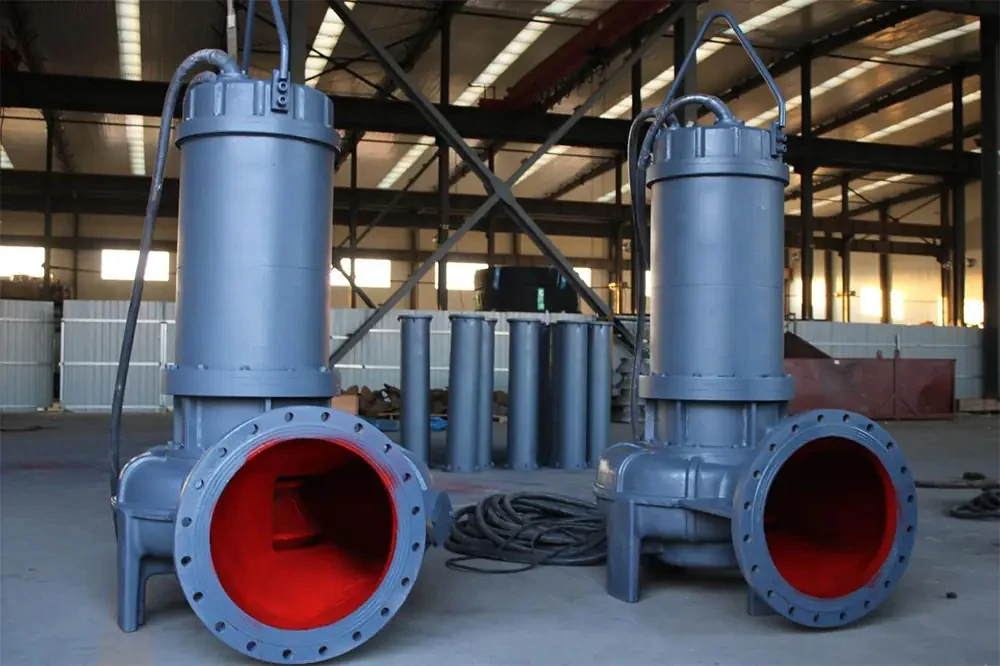
The selection factors discussed above provide a practical basis for evaluating different pump options. Kairun’s WQ series is designed around these requirements, with configurations that address solids handling, submerged operation, maintenance, and different project conditions.
Wide Flow and Head Range
The WQ series covers a flow rate range of 5–4,500 m³/h and a head range of 4–78 m. Motor power is available from 0.75 to 315 kW. This range allows the series to cover both relatively small drainage requirements and higher-capacity wastewater pumping applications.
Strong Solids-Handling Capability
Wastewater may contain solids, fibers, and other debris that increase the risk of clogging. The WQ series can be equipped with large-channel or dual-channel impellers for these conditions. Depending on the configuration, the maximum particle passage can reach approximately 80% of the outlet diameter, helping the pump handle larger solids and fibrous materials.
Reliable Protection for Submerged Operation
The WQ series is designed for submerged operation with an IP68 protection rating and F- or H-class insulation. Its motor is fully enclosed, while two series-connected hard-alloy mechanical seals help isolate the pumped liquid from the motor chamber. Thermal and leakage protection provide additional safeguards during operation.
Flexible Configurations for Different Projects
Different wastewater projects may require different materials and electrical specifications. The WQ series can be supplied with HT250 cast iron or 304/316 stainless steel pump bodies. Standard electrical specifications are 380V/660V, three-phase, 50Hz, while 60Hz and other voltages can be customized. The standard cable length is 8 m, with customized lengths available.
Manufacturing Experience and Service Support
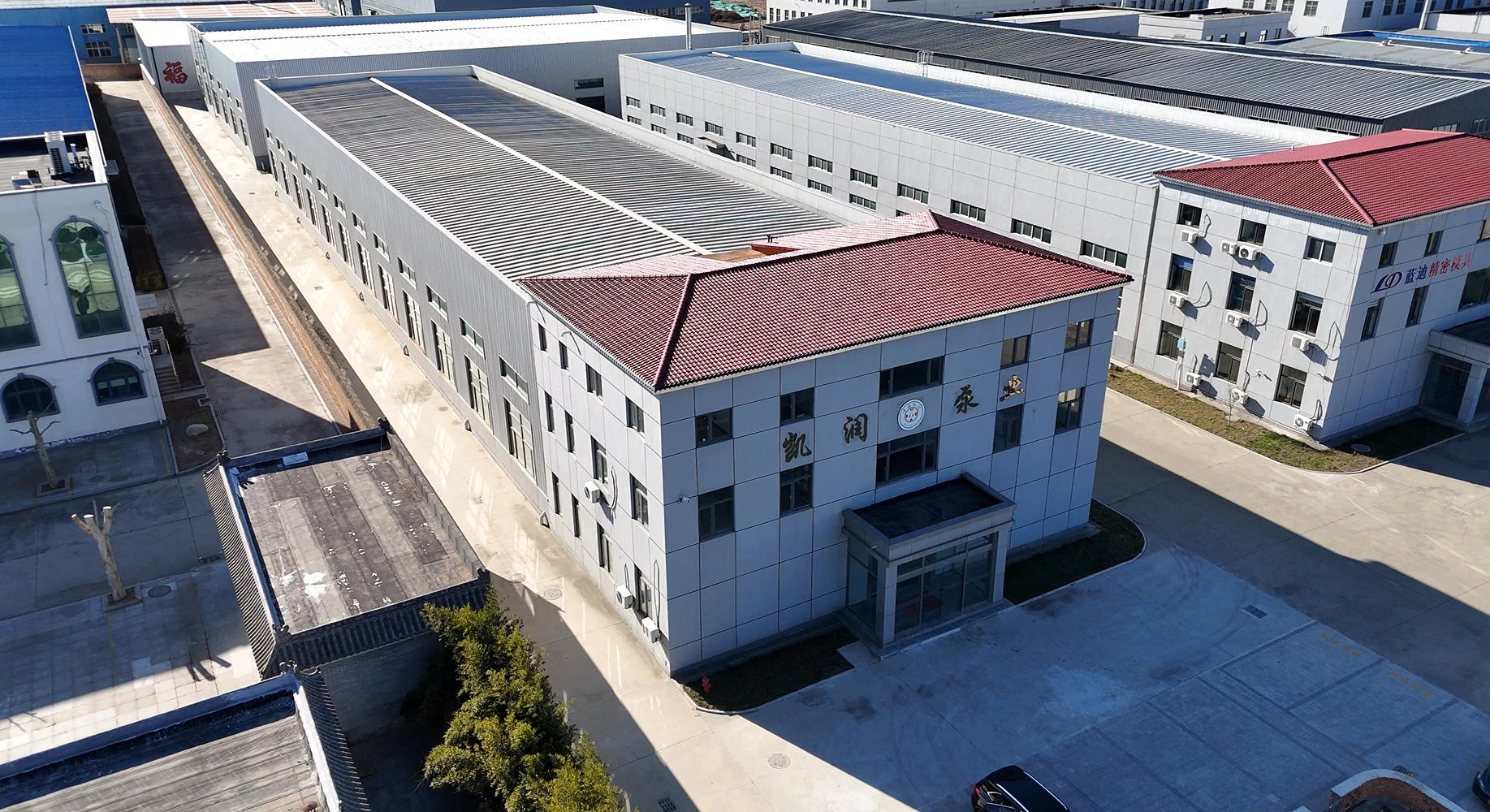
Kairun has been manufacturing pumps since 2005. Its production facility covers more than 9,000 square meters and is supported by a team of over 200 professionals in production, R&D, sales, and service.
As an experienced submersible sewage pump supplier, Kairun provides WQ series pumps with different configurations and customization options for municipal, industrial, construction, and environmental wastewater applications.
Frequently Asked Questions
Q1: What size of solid particles can a submersible sewage pump handle?
A: The maximum particle size depends on the outlet diameter and impeller passage. For the WQ series, the maximum particle passage can reach approximately 80% of the outlet diameter, depending on the configuration. The maximum solid size should be provided when selecting the pump.
Q2: What information is needed to select a submersible sewage pump?
A: Key information includes the required flow rate and head, wastewater type, solid particle size, fiber content, installation method, power supply, and submergence conditions. These details help determine a suitable pump configuration.
Q3: Is a submersible sewage pump easy to maintain?
A: Maintenance can be simplified with an optional automatic coupling system. The pump can be lifted along the guide rails for inspection and removal, reducing the need for personnel to enter the wet well during routine maintenance.
Conclusion
Choosing the right submersible sewage pump means matching the pump to the actual wastewater and operating conditions. Flow rate, head, solid particle size, wastewater characteristics, motor requirements, and installation conditions should all be considered before making a final selection.
Kairun’s WQ series is designed for a wide range of wastewater applications. It offers large-channel impeller options for handling solids and fibers, multiple material and motor configurations, and an automatic coupling system for easier maintenance. These options allow the pump to be adapted to different municipal, industrial, construction, and environmental wastewater applications.
Contact Kairun to discuss your wastewater pumping requirements and find a suitable WQ series solution.