In the complicated ecosystem of wastewater management, the initial stage of solid-liquid separation is the key first line of defense. For wastewater pumps manufacturers and factory operators all over the world, choosing the correct pretreatment equipment is not only an efficiency problem, but also directly affects the equipment life, operating costs and the reliability of the overall system. Among all kinds of mechanical screening solutions, the GSHZ rotary bar screen is a superior choice, aiming at solving the most lasting challenges in bar screen wastewater treatment. This comprehensive analysis deeply discusses its design, performance and unparalleled advantages in modern sewage treatment infrastructure.
What Is a Rotary Bar Screen?
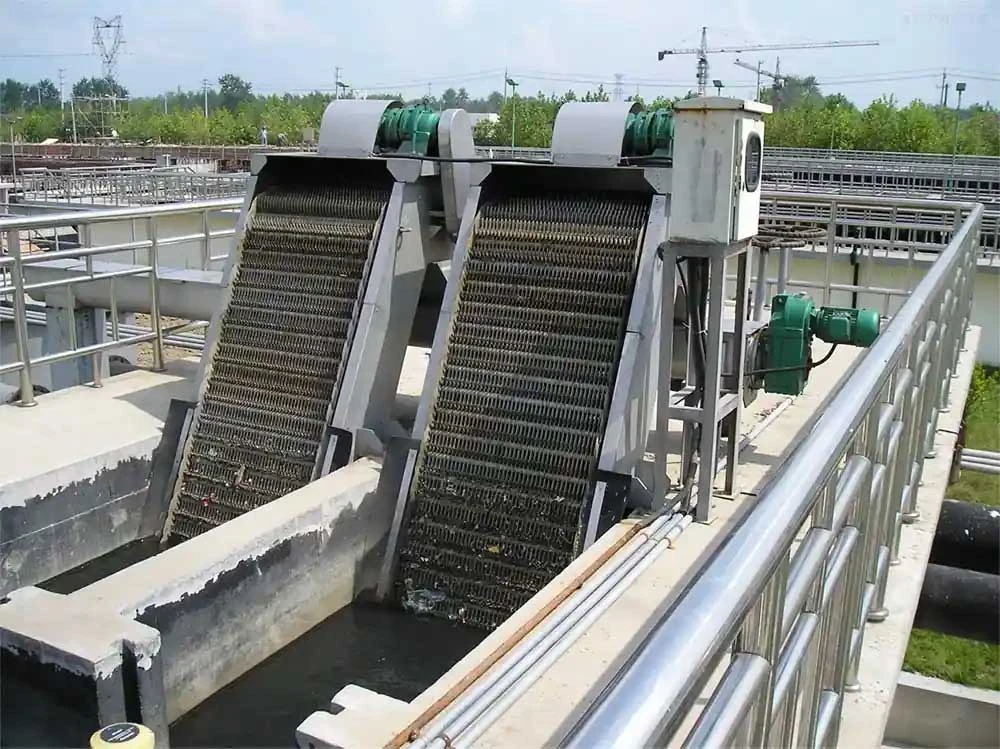
A rotary bar screen is an automated, continuous-duty mechanical filter designed to intercept and remove suspended solids from wastewater streams. According to the definition of the Environmental Protection Agency (EPA), screening is the main unit operation in any treatment plant, and its task is to eliminate debris, such as rags, plastics, fibers and gravel, in order to protect downstream pumps, pipelines and biological treatment processes.
GSHZ variant is a special type of rotating bar screen, which runs on a closed-loop chain drive system. Its core functionality revolves around a series of strategically spaced bars (the screen) and a continuously moving rake (tooth bar) assembly. Different from static or manual screen cleaning, the system runs around the clock without human intervention, making it an indispensable asset for high-flow municipal and industrial facilities.
Core Working Principle (Step-by-Step)
GSHZ rotating rod screen follows an accurate four-stage operation cycle.
- Interception Stage: The wastewater flows through the fixed grid frame. Solids larger than the selected bar screen wastewater treatment gap size are trapped on the upstream face of the bars.
- Lifting and conveying Stage: the motor drives the chain system to push the rake upward against the water flow. The rake is perfectly engaged with the gaps between the bars, scraping collected debris from the bottom of the channel to the top.
- Discharge & Self-Cleaning Stage: When the rakes reach the top, they reverse direction. Most debris falls into a collection hopper by gravity. The design enables a self-cleaning movement between rakes. The rubber brush ensures debris is fully removed.
- Return Stage: the cleaned rakes descend back into the wastewater channel, ready for the next cycle, ensuring uninterrupted operation.
GSHZ Rotary Bar Screen: Technical Specifications & Design Excellence
Major Performance Indicators
The GSHZ series is precision-engineered with measurable parameters, enabling it to address various scenarios in bar screen wastewater treatment.
| Performance Indicator | Specification |
| Equipment Width | Single Unit: 300mm – 1500mm; Parallel Installation: 1600mm – 3000mm |
| Effective Bar Gap (b) | 2mm, 3mm, 5mm, 10mm, 15mm, 20mm, 25mm (for coarse to fine filtration) |
| Rake Linear Speed | Approximately 2 m/min (low-speed, high-torque design) |
| Installation Angle (α) | 60°, 65°, 70°, 75°, 80° (flexible for varied civil engineering layouts) |
Material & Construction
The durability of a rotary bar screen is paramount in corrosive wastewater environments. The GSHZ is built with.
- Frame/Rack: Carbon steel with heavy-duty anti-corrosion coating; Full stainless steel (SS304/SS316) available for highly corrosive settings.
- Tooth Rakes: Constructed from ABS engineering plastic, nylon, or stainless steel. This combination provides excellent corrosion resistance, light handling and structural strength.
- Drive System: Enclosed gear motor with protection level of IP 55 or higher, suitable for a continuous humid environment.
- Safety Features: Equipped with mechanical overload protection devices (safety pins or torque limiters) to prevent damage from foreign objects.
Compliance & Certification
Adhering to strict international standards is the quality mark of wastewater pumps manufacturers and equipment suppliers. GSHZ rotating strip screen meets the requirements.
- CE Certification (2014/35/EU)
- ISO 9001 Quality Management System
- Environmental and safety standards related to sewage treatment equipment
3 Definitive Advantages of GSHZ Over Competitors
What makes GSHZ stand out from the crowded bar screen sewage treatment market? Three data-backed differentiators:
1. Unmatched Separation Efficiency & Anti-Clogging Performance
Traditional mechanical screens often suffer from “blockage” -debris (especially fiber materials) is stuck, which reduces efficiency. The patented tooth design of GSHZ and the integrated self-cleaning mechanism eliminate this problem.
- Data Source: Compared to standard screens, field tests show a 99% reduction in clogging-related downtime.
- Competitive advantage: Although many screens need to be cleaned manually every week, the GSHZ can run continuously for several months without maintenance, maintaining a solid removal efficiency of more than 95%.
2. Excellent Energy Efficiency And Cost Saving
One of the key issues that wastewater pumps manufacturers and factory managers pay attention to is operating expenditure.
- Low-speed Design: only 2m/min, the power consumption of GSHZ is much lower than that of high-speed alternatives.
- Labor cost Elimination: completely replacing manual cleaning. A typical factory saving is 100% of screen maintenance labor costs.
- Calculation of return on investment: For an investment of about US$11,000 (US$10,000), annual saved labor (US$18,750) and electricity (US$625) will only take 6-7 months to recover the investment.
3. Excellent Durability and Extended Service Life
Corrosion and wear are the main enemies of rotating rod screening equipment.
- Material Advantage: Compared with the all-metal design, the service life of nonmetallic harrow option in a corrosive environment is prolonged by more than 30%.
- Reduce wear and tear: Slow and smooth operation minimizes mechanical wear and tear of chain and sprockets, and increases mean time between failures (MTBF).
Main Application Scenarios (Industry Distribution)
The versatility of the GSHZ rotating rod screen makes it an ideal choice for various rod screen wastewater treatment applications.
- Urban wastewater and pumping stations (50%)
- The primary application: Installed at plant inlets and pump stations to protect wastewater pumps and manufacturers’ equipment from damage. Effectively filter the general municipal garbage and suspended solids.
- High-Contaminant Industrial Wastewater (35%)
- Textile and dyeing: Removes cotton wool and chemical fibers.
- Food processing and slaughterhouses: Filters fat, hair and meat particles.
- Paper and leather: separate pulp, hair and leather waste.
- Other Industrial Processes (15%)
- Any industrial water circuit requires continuous, automatic solids removal to protect process equipment.
Real World Case Study: Textile Mill Transformation
Customer Challenge: A large textile printing and dyeing factory is trying to deal with too much cotton and synthetic fibers in wastewater. Old-fashioned filter screens are often blocked and need to be cleaned manually (3 shifts/day). Frequent blockages lead to pump failures, overloading the biological treatment system and reducing efficiency.
Gigahertz Solution: install a GSHZ-1000 model in front of the primary treatment tank with a gap of 5mm.
Measurable Results:
- 24/7 unattended Operation: Eliminates special manual cleaning work.
- Process Stability: Downstream pumps and tanks remained clear.
- Efficiency improvement: due to consistent high-quality pretreatment, the overall processing performance of the factory has been improved by 20%.
FAQ: GSHZ Rotary Bar Screen
Q1: How much noise does GSHZ have during operation?
A1: It operates very quietly. Low speed design and smooth transmission make the noise levels lower than 65 dB (A), which is suitable for indoor and outdoor devices near residential areas.
Q2: How do I select the correct bar gap (2mm–25mm)?
A2: Selection depends on influent characteristics, flow rate, and downstream process needs. We provide a detailed hydraulic capacity table to match flow with channel width, the gap between bars and the precise size of water depth.
Q3: What will happen if a big and hard object gets stuck on the screen?
A3: The built-in mechanical overload protection (shear pin or torque limiter) is activated immediately. It cuts off the power, triggers an alarm and prevents damage. After removing obstacles, the system can be easily reset.
The Critical Link Between Rotary Bar Screen and Wastewater Pumps Manufacturers
For wastewater pumps manufacturers, the GSHZ rotating rod screen is not only an accessory, but also an important protection system. Pumps are a major capital investment; even small fragments can cause catastrophic damage, leading to expensive maintenance and shutdown.
- Market background: By 2033, the global wastewater pumps market is expected to reach US$ 24.5 billion (CAGR 6.3%). As wastewater pumps manufacturers produce more sophisticated, high-efficiency pumps, protecting them with equally advanced pretreatment, like the GSHZ, is essential.
- Synergistic Benefit: GSHZ filter with appropriate size reduces wear on pump impellers and seals, prolongs their service life by 2-3 years, and significantly reduces the maintenance costs of factory operators.
Conclusion: The Indispensable Choice for Modern Bar Screen Wastewater Treatment
In the field of strict bar screen wastewater treatment, the GSHZ rotary bar screen is a model of efficiency, reliability and cost-effectiveness. Its robust design, self-cleaning mechanism, and exceptional durability solve the most chronic problems plaguing conventional screens. For wastewater pumps manufacturers and wastewater treatment plants aiming at obtaining the best performance, minimum downtime and maximum return on investment, it is not only an upgrade, but also a strategic need to integrate GSHZ rotary bar screen .
Investing in a GSHZ system means investing in uninterrupted operations, reduced labor costs and prolonging the life of equipment. This is a reliable and future-proof solution, which can be used for stable and efficient initial wastewater treatment.