When selecting sewage pumps, horizontal and submersible models are the two primary types most frequently compared in engineering projects. While both have distinct advantages and disadvantages regarding pumping capacity, installation methods, and maintenance, they differ significantly in terms of failure causes and suitable applications. A well-chosen submersible pump can handle underwater drainage with lower investment; conversely, poor selection—even with a horizontal pump—can lead to frequent maintenance issues and leakage, driving up the system’s overall operating and maintenance costs.
Key Difference: Dry Surface Maintenance vs. Submerged Sealed Operation
Understanding the fundamental differences between these two pump types is the foundation for proper selection.
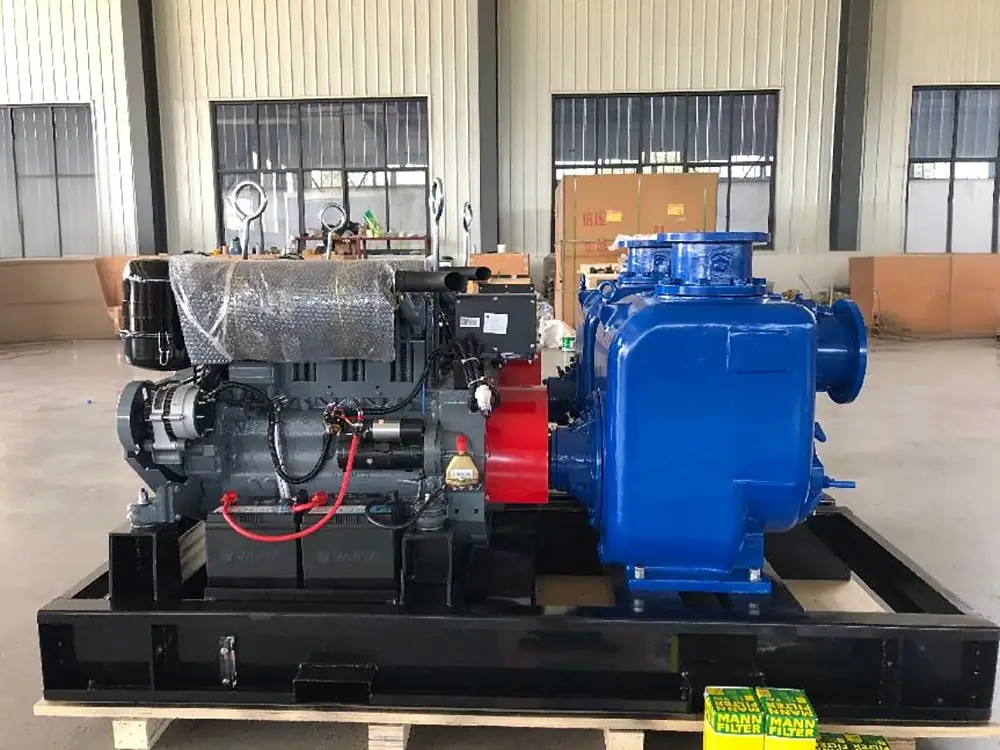
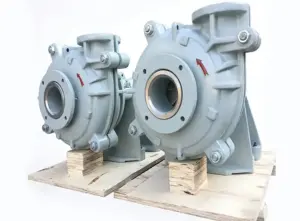
Horizontal sewage pumps are installed in a dry environment above ground; both the pump body and the motor are located on the pump room floor, isolated from the pumped medium. If seal wear or component irregularities occur, inspection and repairs can be performed directly on-site. Most horizontal sewage pumps on the market feature a “back pull-out” design, allowing for the removal and replacement of mechanical seals, impellers, and bearings without dismantling the inlet and outlet piping. However, they require a dedicated pump room and equipment foundation, occupy valuable ground space, and involve a more complex initial piping layout.
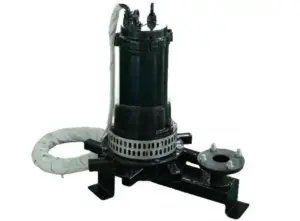
Submersible sewage pumps operate fully submerged in the liquid. They do not require a dedicated pump room, making on-site installation simpler and reducing civil engineering costs. However, the entire unit—pump and motor—remains immersed in sewage for extended periods, exposing cables, mechanical seals, and the motor housing directly to the medium. If a seal fails, sewage can easily penetrate the motor, causing it to burn out. Furthermore, if a malfunction occurs, the entire pump must be hoisted out of the sump for repair, making on-site maintenance more challenging.
In short, horizontal sewage pumps excel because they offer accessible surface maintenance and visible fault detection, whereas submersible pumps excel due to simplified installation and the elimination of pump room construction. The final choice depends on a comprehensive assessment of the pumped medium, available maintenance personnel, and site-specific civil engineering conditions.
Application Scope of Horizontal Sewage Pumps
Horizontal sewage pumps are well-established in the field of sewage transport; industry experience clearly defines the operating conditions best suited for them.
Suitable Operating Conditions: Fixed pumping stations, projects requiring frequent inspections, and long-term continuous operation.
They are ideal for applications such as municipal sewage treatment plants, pumping stations for combined sewer separation upgrades, wastewater lift stations in industrial parks, subway drainage systems, and routine industrial effluent discharge. The pumped media typically consist of domestic sewage or industrial wastewater containing small amounts of fibers and fine suspended solids. Flow rates range from 3 to 1,000 m³/h, and heads range from 7 to 70 meters; they can be paired with variable frequency drive (VFD) control cabinets to allow for on-site adjustment of flow and pressure.
Operational Limitations
The pump unit itself must not be submerged in water. If the pump room is at risk of flooding during the rainy season or sudden liquid level surges, contingency plans—such as flood barriers and emergency drainage systems—must be implemented to prevent water ingress and equipment damage.
Ther Limitations
Initial project requirements include pouring equipment foundations and constructing a pump room, resulting in higher civil engineering costs compared to submersible pumps.
Standard ductile iron models are suitable for conventional sewage; transporting corrosive industrial wastewater requires stainless steel flow-path components. For sewage containing large debris or long fibers, a non-clogging impeller should be selected. Cartridge-style mechanical seals supporting the Plan 11 flush scheme are available, allowing for a maximum operating temperature of 100°C.
> Details often overlooked on-site: A reliable horizontal sewage pump is not merely a simple assembly of a pump head and a motor. Impellers are categorized into vortex, cutter, and large-passage non-clogging types to suit different sewage characteristics. Large-passage non-clogging impellers are preferred for conditions with high sludge or fiber content, while cutter impellers are prioritized when sewage contains debris like rags or ropes; the same pump casing can accommodate different impeller types based on actual operating conditions.
Application Scope of Submersible Sewage Pumps
Submersible sewage pumps have a large market presence, but their advantages are contingent upon specific operating conditions. **Ideal Applications: Sites lacking pump room facilities, temporary drainage needs, and sumps with significant liquid level fluctuations**
These pumps are well-suited for short-term site dewatering, small residential sumps, and simple drainage points with limited space. The entire unit is submerged directly, eliminating the need for a pump room; the small footprint makes them an attractive, budget-friendly option for smaller sites.
Maintenance and Failure Risks
A major drawback of submersible sewage pumps is that faults occur underwater and are invisible. Issues such as mechanical seal wear, cable aging, and motor moisture ingress happen below the liquid surface, making early detection of potential problems difficult. If a malfunction occurs, the pump must be hoisted out for repair. For large-scale stations operating 24/7, frequent hoisting for maintenance places a heavy burden on on-site operations and maintenance teams.
Temperature and Medium Compatibility
Standard submersible sewage pumps are typically limited to operating temperatures of 40°C or lower, offering few motor options for high-temperature wastewater applications. In contrast, horizontal sewage pumps are not constrained by submersion, offering greater flexibility in handling high-temperature wastewater.
> Industry Technical Improvements: Modern submersible pumps often feature leakage sensors and temperature probes to provide early warning of faults, thereby reducing the risk of motor burnout to some extent. However, since the equipment remains submerged in sewage, these alarms serve only as warnings; they cannot fundamentally prevent equipment damage caused by seal failure. Large-scale, continuously operating stations cannot rely solely on alarm systems as a safeguard.
Practical Pump Selection Strategy: Matching Pump Type to Operating Conditions
Step 1: Assess On-Site Operations and Maintenance Conditions (Crucial)
For large, fixed pump stations requiring daily inspections and year-round continuous operation, prioritize horizontal sewage pumps. For dispersed locations, temporary drainage needs, or sites where building a pump room is not feasible, prioritize submersible sewage pumps.
Step 2: Consider Medium Temperature and Corrosiveness
If the medium temperature exceeds 40°C or involves corrosive chemical wastewater, horizontal sewage pumps offer a wider range of options for flow-path components and mechanical seal configurations. For standard domestic sewage at ambient temperatures, either pump type is suitable.
Step 3: Assess Civil Engineering Conditions
If space allows for a pump house and the pouring of equipment foundations, a horizontal sewage pump is a viable option; however, if the site is cramped and there is no budget for a pump house, a submersible pump is more suitable. Additionally, evaluate the pump house’s flood resilience; if the facility is prone to inundation by rainwater, horizontal pumps are not recommended.
Step 4: Evaluate Based on Impurities and Operating Duration
If the medium contains significant amounts of long fibers or solid particles, both pump types should be equipped with non-clogging impellers. For equipment running continuously year-round, the horizontal pump’s advantage of easy maintenance becomes even more significant; conversely, for intermittent emergency drainage, submersible pumps offer better cost-effectiveness.
Common Selection Pitfalls and Engineering Recommendations
Two extreme selection errors frequently occur in actual projects.
Pitfall 1: The “Submersible Pump is a Cure-All” Mentality
Some assume that because submersible pumps are easy to install and save on civil engineering costs, they are the right choice for every drainage project. However, in large-scale, continuously operating pumping stations, if a seal fails and the motor burns out, the losses incurred from lifting the pump and halting operations far outweigh the initial savings on civil engineering.
Pitfall 2: The “Horizontal Pumps Perform Better” Mentality
Insisting on horizontal pumps for small, simple sumps or temporary construction site drainage leads to unnecessary waste regarding pump house construction and foundation work.
Practical Engineering Recommendations
During the selection phase, provide the manufacturer with comprehensive operating conditions: flow rate, head, medium temperature, pH level, type of solid impurities, daily operating duration, and on-site civil engineering constraints.
If conditions are complex and no single pump type meets all requirements, consider a combined solution: use a horizontal sewage pump as the main unit to ensure continuous operation, and a submersible sewage pump as an emergency backup. Balancing stable operation with emergency drainage capability is a safer approach than choosing just one type.