In the complex ecosystem of wastewater management, the first line of defense is often the most crucial. wastewater trash rack system is an unsung hero to protect the whole treatment facility, among which PG flat screen (also known as PW flat screen) is the best choice for engineers, factory managers and wastewater pumps manufacturers. This comprehensive guide explores what makes this static flat screen technology indispensable, its unique advantages, technical specifications, real-world applications, and how it solves the most pressing challenges in preliminary wastewater treatment.
What Is a PG Flat Screen/PW Flat Filter Screen?
PG (PW) flat screen is a solid static grid screen system, which is used for primary filtration of wastewater. As a cornerstone of wastewater treatment plants, a grid screen is a non-mechanical vertically installed filtering device, which uses gravity and simple physical barriers to separate solid debris from liquid waste. Unlike complex mechanical filters, its design is based on simplicity and reliability, making it the basic equipment of any water treatment infrastructure.
Technical Definition: The PG(PW) Flat Screen is a static grille (bar screen) composed of a sturdy steel frame, vertical or horizontal bars (or mesh screen), and guide rails. It operates passively, without any motor or driving parts, and only relies on the natural flow of wastewater to push solids against the screen surface. Solids larger than the gap between the selected screen strips are retained on the screen surface, and the filtered water enters the downstream treatment process.
This design classifies it as a first-class wastewater bar screen, which is an ideal choice for coarse to medium filtration tasks. Its simplicity is its greatest strength, offering a low-cost, low-maintenance alternative to motorized screens for numerous applications.
Core Technical Specifications and Performance Indicators
The design of PG(PW) flat bar screen is multifunctional and durable, and its standard size can be completely customized to meet specific project requirements.
Key Performance Parameters
| Parameter | Specification Details |
| Channel Width (B) | Standard: 800mm – 2000mm (Customizable beyond range) |
| Bar/Filter Gap (b) | 10mm – 50mm (Selectable based on protection needs) |
| Installation Angle (α) | 90° (Vertical installation only) |
| Max. Channel Depth (H) | Up to 6000mm |
| Materials | Carbon Steel (Standard) / Stainless Steel (Corrosive environments) |
| Certifications | ISO 9001:2015, ISO 14001:2015, ISO 45001:2018 |
Structural Design
This equipment has simple modular steel structure. The screen surface consists of parallel rods (or perforated plates) fixed within a rigid frame. The assembly is designed to be directly installed in concrete pipes, providing a seamless and stable fit. The absence of moving parts eliminates the risk of mechanical failure, which is a common problem in more complex screening systems.
3 Definitive Competitive Advantages
What truly sets the PG(PW) Flat Screen apart from other wastewater treatment plant bar screens, especially mechanical alternatives, are three distinct competitive edges that directly impact operational costs and reliability.
1. Unparalleled Capital and Installation Cost Efficiency
Compared with the motorized mechanical bar screens (such as rotary screen or multi-rake screens), the upfront purchase cost of PG flat screen is reduced by 40% to 60%. Its manufacture does not require complicated components, such as motors, chains, gears or control panels. Installation speed is faster and simpler, because it only needs to place and fix the device in the passage, without electrical connection or complicated civil engineering.
2. Zero Energy Consumption and Minimal Maintenance
As a completely passive system, the running of the wastewater trash rack has zero energy. This eliminates ongoing cost of electricity, which is a major expense for automatic screens. Maintenance is limited to manual removal of accumulated debris (sieve debris) on a regular basis. No bearings need to be lubricated, no chains need to be adjusted, and no motors need repair. Compared to mechanical screens, this greatly reduces the workload and complexity of maintenance, and mechanical screens usually require frequent skilled maintenance.
3. Exceptional Flexibility for Wide/Non-Standard Channels
Many integrated mechanical screens come in fixed, standard sizes, limiting their adaptability. PG(PW) flat panel display can be easily installed in parallel units, thus solving this problem. This modular approach allows it to efficiently cover extremely wide channels or adapt to non-standard, project-specific dimensions, a flexibility highly valued by wastewater pumps manufacturers and engineers designing unique treatment layouts.
Main Application Scenarios (Industry Distribution)
PG(PW) flat screen is suitable for various industries, and its application mainly focuses on protecting key downstream equipment, especially pumps.
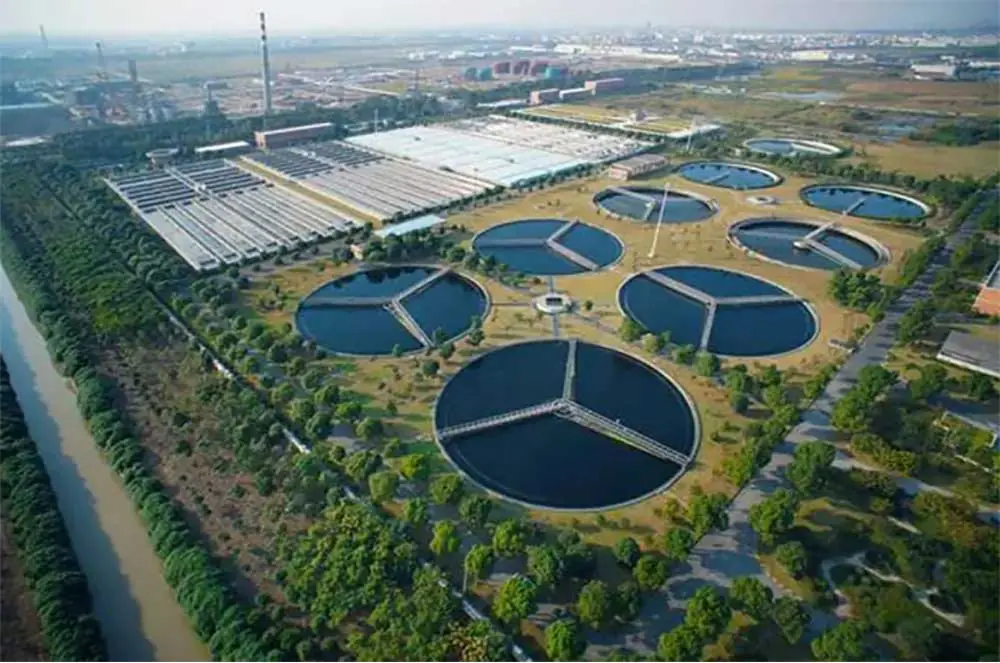
1. Urban Wastewater Treatment (60%)
The largest market segment. It is widely used as the main or temporary sewage treatment plant grille for the water inlet channels of urban sewage treatment plants. Its main function is to intercept large floating debris (rags, plastics, wood) to protect pumps, pipelines and subsequent processing.
2. Water Intake and Water Treatment Plants (25%)
The raw water intake points deployed in drinking water treatment facilities. It safeguards intake pumps and clarifies from debris, leaves, and aquatic vegetation, ensuring the quality and continuity of the water supply.
3. Industrial Wastewater Pretreatment (15%)
Critical for industries like food & beverage and pulp & paper. The wastewater rod screen can effectively intercept processing residues, vegetable skins, fiber and packaging wastes, and prevent industrial pumps and pipelines from being blocked frequently, thus maintaining production continuity.
Real-World Success Story: Food Processing Plant Case Study
Client Pain Point
A small-scale food processing facility was plagued by chronic operational issues. Their wastewater is full of vegetable residues and plastic packaging fragments, which repeatedly block the lift pumps and pipelines. This led to frequent and unplanned downtime for expensive repairs and maintenance, which seriously affects the production schedules and profits.
The PG Flat Screen Solution
The solution was the installation of a PG-1000 model flat screen at the inlet of the plant’s equalization tank. A rod gap of 20 mm was selected to effectively aim at the main debris size. The device is installed vertically, and directly enters the existing concrete channel, without electricity or complicated modifications.
Measurable Results
- Debris Removal: more than 95% suspended solids were successfully intercepted.
- System Protection: almost eliminated the blockage of pumps and pipes.
- Reduced maintenance: only manual cleaning is needed once per shift.
- Cost Savings: Annual maintenance costs were reduced by over 70%.
- ROI: the investment was paid back in only 0.35 years (about 4 months).
- Continuity of operation: uninterrupted production was fully restored.
Extraordinary Environmental Adaptability
Although PG(PW) flat screen is optimized for standard municipal wastewater conditions, it can also be used in harsh environments. For applications involving highly corrosive waste liquids (e.g., some chemical industry wastes), and the whole frame and rod assembly can be made of high-grade stainless steel. This modification obviously improves its corrosion resistance and service life under chemical attack conditions.
Financial Analysis: Investment Return Model
PG/PW flat screen is a kind of cost-effective screening item for wastewater treatment plant bar screens, and its economic benefits are remarkable, mainly from costs saving and zero energy consumption.
Sample ROI Calculation:
- Pre-installation Annual Maintenance Cost:
Frequent pump repairs (2 times/month at $2,000 per repair) = 48,000/year
- PG screen investment: $ 15,000.
- Post-installation Annual Maintenance Cost:
Minimum manual cleaning and inspection = 5,000/year USD/year.
- Annual net Savings: $48,000 – $5,000 = $43,000.
- Payback Period of investment: $15,000 / $43,000 ≈ 0.35 years (4.2 months).
Frequently asked Questions (FAQs)
Q1: How often do flat screen need cleaning?
A1: The frequency depends on solid load. For high debris flows (e.g., Municipal sewage, food processing), usually every eight hours. For clean water sources (e.g., Some river intakes), cleaning may only be required daily or every few days.
Q2: How to choose the correct size of rod gap?
A2:The gap is selected according to the equipment to be protected.
- Rough protection (pump): 20mm-50mm.
- Fine Protection (Membranes, Diffusers): 10mm – 20mm
Balance between capture efficiency and the amount of screen residue generated.
Q3: What is the maximum channel depth it can handle?
A3: The standard models can effectively handle depths of up to 6000 mm. For deeper pipelines or unique engineering conditions, the design can be customized according to detailed site drawings.
Conclusion
For engineers, plant operators, and wastewater pumps manufacturers, the PG Flat Screen/PW Flat Filter Screen represents the perfect convergence of simplicity, efficiency, and economy in wastewater treatment plant bar screens. It solves the core requirement of reliable primary filtration, without the complexity, cost and energy requirements of mechanical substitutes.
Backed by ISO quality certifications, it has been verified in thousands of installations. Its passive operation, modular design and excellent cost-effectiveness make it a durable and important component in modern water and wastewater treatment systems. When giving priority to long-term reliability, low operating costs and simple maintenance, the PG(PW) flat panel display is an absolute choice.