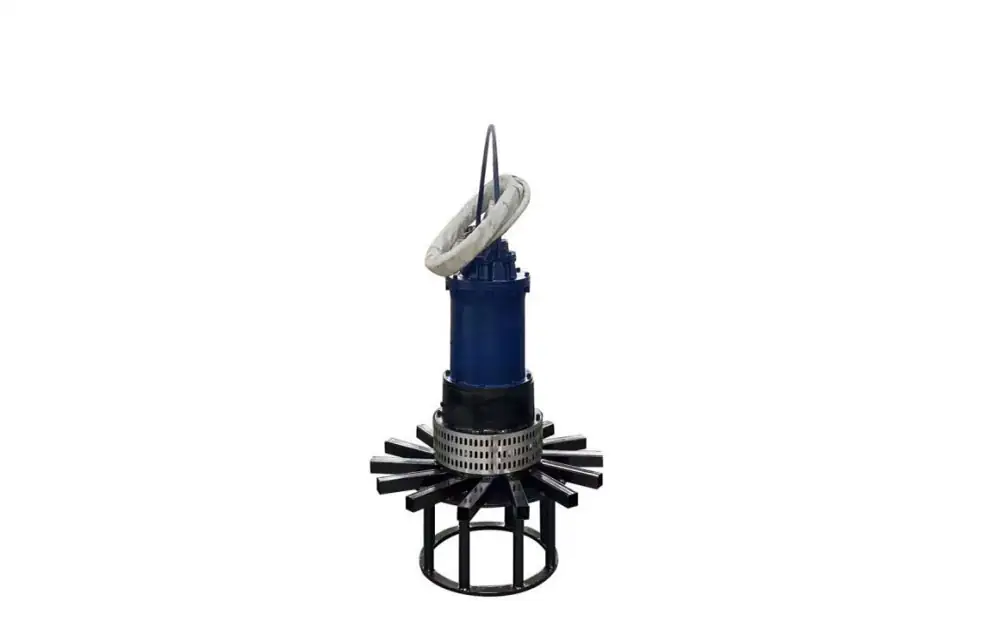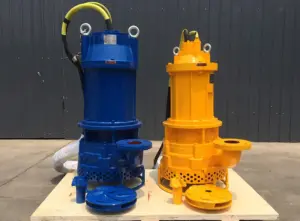
Submersible aerators, with their advantages of not requiring external blowers, low noise underwater operation, and integrated aeration and mixing, are widely used in various water treatment projects such as municipal sewage, industrial wastewater, river ecological restoration, and integrated sewage treatment equipment. Many projects only consider power parameters during the equipment procurement phase, ignoring tank conditions, water corrosivity, and installation and maintenance conditions. This leads to a series of problems such as insufficient dissolved oxygen, sludge deposition, and premature equipment failure, resulting in high later operation and maintenance costs. To fully utilize the performance of a submersible aerator, it is not possible to simply judge its quality based on power output; a comprehensive selection and matching based on actual operating conditions is necessary.
Common Mistakes in Submersible Aerator Selection
Many water treatment projects fail to operate satisfactorily because of errors in the initial selection process, which are mainly reflected in three aspects:
1. Judging aeration effect solely by power output, ignoring tank volume and oxygen demand.
Some procurement directly copied power configurations from other projects without calculating the effective tank volume, COD load, and actual oxygen demand. Insufficient power leads to insufficient dissolved oxygen in the tank, resulting in decreased activated sludge activity and sludge settling and accumulation. Blindly selecting high-power models wastes electricity and increases long-term operating costs.
2. Ignoring differences in water quality media, a one-size-fits-all approach to material selection is used.
While cast iron may suffice for ordinary domestic sewage, chemical, dyeing, and saline wastewater contains acidic and alkaline corrosive components. Using ordinary cast iron components will cause impellers and pump casings to corrode and perforate rapidly. In high-sludge wastewater conditions, the lack of wear-resistant protection accelerates the wear of hydraulic components, drastically shortening equipment maintenance cycles.
3. Installation methods are copied directly from templates without considering on-site maintenance conditions.
Some projects use floor-standing aerators with fixed bases even though the tanks lack drainage capabilities. Later equipment failures necessitate emptying the entire tank, directly interrupting the entire wastewater treatment process. Some deep-water tanks use shallow-water models, resulting in insufficient air bubble rising distance and a chronically oxygen-deficient bottom layer, creating numerous stagnant water zones.
Key Dimensions for Correct Model Selection
The selection of submersible aerators should be comprehensively evaluated based on five dimensions: process requirements, tank conditions, water quality, installation and maintenance, and long-term reliability, rather than solely relying on the nameplate power.
1. Calculate Actual Oxygen Demand and Match Power to Unit Coverage
Prioritize obtaining project process parameters: effective tank volume, designed treatment capacity, influent COD/ammonia nitrogen concentration, and target dissolved oxygen level. Match the equipment’s air intake and oxygenation efficiency based on the actual oxygen demand. For small-volume integrated equipment, 0.75-2.2kW low-power models can be selected; for large oxidation ditches and biological treatment tanks, 3-15kW high-power models should be selected. Simultaneously, plan the equipment layout to eliminate aeration dead zones, ensure the water flow velocity within the tank remains within a reasonable range, and prevent sludge settling.
2. Determine the permissible submersible depth of the equipment based on the pool’s water depth. Different models of submersible aerators have suitable water depth ranges. Excessive water depth will reduce gas-liquid mixing efficiency; insufficient water depth will cause excessive splashing. Simultaneously, a reasonable clearance must be maintained between the impeller and the pool bottom to agitate bottom sludge and prevent sedimentation, while avoiding contact with bottom sand and gravel that could damage the impeller. For pools with significant water level fluctuations, float-type submersible aerators are preferred, as the equipment can automatically float with the water level.
3. Determine the material of the equipment’s flow-through components based on the wastewater medium.
* Ordinary domestic wastewater: Cast iron offers high cost-effectiveness, with an anti-corrosion coating to ensure long-term operation.
* Chemical, dyeing, and salt-containing corrosive wastewater: Impellers, pump bodies, mixing chambers, and other flow-through components should be made of 304/316L stainless steel to resist acid and alkali corrosion.
* Wastewater with high silt content: Impellers should have a wear-resistant coating to reduce solid particle erosion and extend the service life of vulnerable parts.
4. Determine the installation method based on site maintenance conditions
Guide rail lifting type: The equipment can be lifted for maintenance while submerged, without needing to drain the sewage from the tank. Suitable for municipal wastewater treatment plants that operate continuously and cannot be shut down.
Fixed base type: Lower cost, suitable for small closed biological treatment tanks and integrated wastewater treatment equipment. Maintenance requires draining the tank water.
Floating type: No civil foundation required, suitable for soft-bottomed water areas such as rivers, landscape lakes, and oxidation ponds.
5. Focus on motor sealing and protection configuration to ensure long-term stable operation
Submersible aerators are constantly immersed in water, and the motor sealing structure directly determines the lifespan of the entire machine. IP68 protection level submersible motors with double-end mechanical seals and built-in overheat and overload protection are preferred. Under harsh operating conditions, silicon carbide mechanical seals are recommended to effectively resist sewage corrosion and reduce the risk of motor burnout due to water ingress.
| Wrong selection practice | Practical problems caused | Correct selection & processing effect |
| Only refer to power without calculating actual oxygen demand | Local insufficient dissolved oxygen, sludge deposition and fluctuation of effluent indicators | Calculate total oxygen demand according to tank volume and pollutant load; reasonably configure quantity and layout positions. Achieve uniform dissolved oxygen in the whole tank and keep sludge in suspension |
| Select cast iron material for corrosive wastewater | Corrosion of impeller and pump casing, equipment leakage & damage within 1 2 years | Replace wetted parts with stainless steel. Service life of equipment is greatly extended and the frequency of spare parts replacement is reduced |
| Adopt fixed base installation for non stop tank | Drainage of sewage is required for equipment maintenance, forcing sewage treatment to shut down | Adopt guide rail hoisting type. Maintenance can be completed with water in tank to ensure continuous sewage treatment operation |
| Adopt shallow water model for deep tank | Oxygen deficiency in bottom water and continuous accumulation of bottom sludge | Check the maximum allowable submergence depth of equipment and select matched model to eliminate bottom oxygen dead zones |
Engineering Application Case: Small Industrial Park Wastewater Treatment Plant Renovation Project
A small wastewater treatment plant in an industrial park treats domestic and lightly mixed industrial wastewater, with a biological treatment tank volume of 1200m³. Initially, the system configuration was directly copied from other projects, selecting two 2.2kW aerators. After operation, significant dead zones appeared at the corners of the tank, sludge accumulated at the bottom, and the effluent ammonia nitrogen levels were unstable. The equipment required shutdown for maintenance 2-3 times per year.
Project Pain Points
1. The existing equipment’s power configuration was insufficient, resulting in limited aeration coverage and low dissolved oxygen levels in many areas of the tank;
2. The medium contained a small amount of chemical wastewater, causing slight corrosion of the cast iron impeller;
3. The equipment was installed on a fixed base, requiring the tank to be emptied for each maintenance, affecting the company’s production and wastewater discharge.
Retrofit Plan
The existing equipment was removed and replaced with three 3kW submersible centrifugal aerators. The flow-through components are made of 304 stainless steel, and all are equipped with a guide rail lifting and installation structure, evenly arranged tangentially to construct a full-pool circulating aeration system.
Four Improvements After Retrofit
1. Stable effluent quality, uniform dissolved oxygen in the pool, no more sludge settling and accumulation, and stable compliance with ammonia nitrogen and COD standards;
2. The guide rail lifting structure eliminates the need to drain the pool for equipment maintenance, allowing the wastewater treatment system to operate uninterruptedly;
3. Improved corrosion resistance of stainless steel flow-through components significantly reduces equipment failure frequency;
4. Reasonable allocation of units, with no increase in overall energy consumption compared to before the retrofit, and a significant reduction in maintenance workload.
Frequently Asked Questions about Selection
Q1: Does a Higher Power Submersible Aerator Mean Better Aeration?
A: No. Aeration effect depends on oxygenation efficiency, air intake, and stirring thrust, not simply on motor power. Exceeding actual demand only wastes electricity; insufficient power, even with high-powered equipment providing intense aeration in certain areas, cannot cover the entire tank, resulting in oxygen-depleted dead zones.
Q2: How to Choose Between Float-Type and Base-Mounted Aerators?
A: Float-type aerators are preferred for rivers, landscape lakes, and oxidation ponds with large water level fluctuations; for biological treatment tanks with intact civil engineering and stable water levels, base-mounted aerators can be used if drainage for maintenance is permitted; for wastewater treatment plants operating continuously, rail-mounted aerators are preferred.
Q3: Is it Enough to Simply Replace the Impeller with Stainless Steel for Treating Corrosive Industrial Wastewater?
A: No. All flow-contact components, such as the pump casing, mixing chamber, and fasteners, require corrosion-resistant materials. Replacing only the impeller will not prevent the remaining components from being corroded by the medium, causing equipment damage.
Conclusion
Selecting a submersible aerator is not simply a matter of comparing parameter tables, but rather a system match based on the core on-site operating conditions. Tank volume, water depth, water corrosivity, maintenance conditions, and operating energy consumption all affect the long-term performance of the equipment. Whether it’s municipal sewage, industrial park wastewater, or river water restoration projects, it’s essential to fully collect on-site operating information, comprehensively calculate oxygen demand, and rationally determine power, materials, and installation methods. This will help avoid selection errors from the outset and achieve a balance between aeration and mixing effects, equipment lifespan, and operating energy consumption.