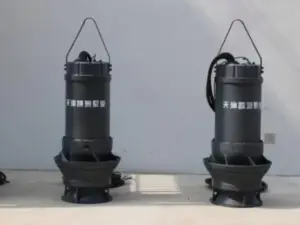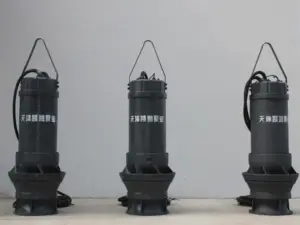
Plan submersible mixed flow pump installation around the exact model’s drawings, support arrangement, water-level requirements, and electrical documents. Confirm the lifting and removal route as well as the working position, then agree the installation checks and handover records with the responsible project team.
A pump may fit through an opening while its cable route, supports, or future removal path remain unresolved. Check those gaps on a shared drawing before equipment arrives. The installation review should therefore include the people responsible for civil works, equipment, electrical interfaces, and maintenance access.
This guide organizes that review into practical questions and records. For wider equipment selection, use the submersible mixed-flow pump guide. The instructions and approved drawings for the actual unit govern the work at site.
Key Takeaways
- Confirm the model, installation layout, and current document revisions before planning site work.
- Check inlet conditions, water levels, and structural interfaces together.
- Plan the complete lifting and removal route, including a place to receive the unit.
- Keep cable support, electrical protection, and controls within a defined supply scope.
- Retain installation checks, commissioning results, and as-built information for handover.
Confirm the Submersible Mixed Flow Pump Installation Layout
Match the model and document revision
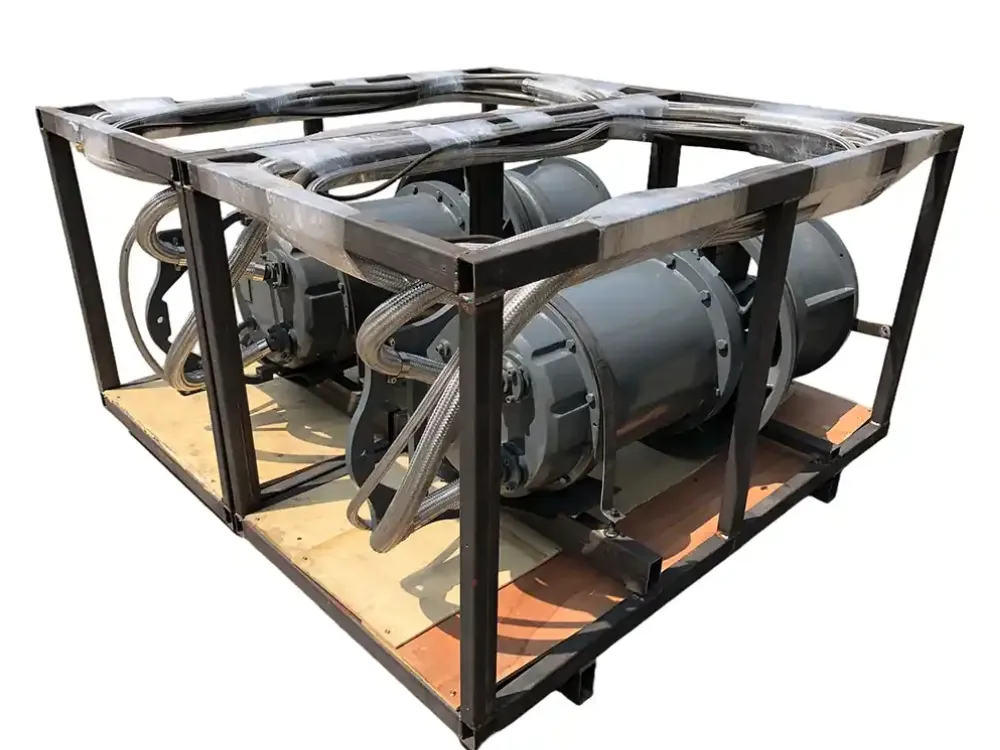
Start a submersible mixed flow pump installation file with the proposed model and the drawing that applies to it. Add the installation, operation, and maintenance instructions, often called the IOM. Keep the performance and electrical documents with the same equipment reference.
| Document | Question it should resolve |
|---|---|
| Installation drawing | Where does the unit sit, and what supports and connects it? |
| Model IOM | Which instructions and limits apply to this equipment? |
| Performance data | Which duties and operating conditions need checking? |
| Electrical documents | What supply, controls, cables, and protection are required? |
| Quotation scope | Which parts and services are included or excluded? |
Use Kairun’s QH product information to begin the enquiry. Request the current documents for the proposed unit rather than treating a family overview as an approved installation drawing.
Identify the support and discharge arrangement
Do not assume every submersible mixed flow pump installation uses sewage-pump guide rails. The KSB product catalogue, for example, describes Amacan S as a wet-installed mixed-flow pump for a discharge tube. That is a specific equipment arrangement, not a universal layout for every brand.
Illustrative scenario: A procurement list calls for guide rails, while the proposed model drawing shows a discharge-tube arrangement. The team asks which support and connection components the offer includes before releasing the interface details. This hypothetical check does not describe a completed customer project.
For a submersible mixed flow pump installation enquiry, discuss submersible mixed flow pump installation inputs with Kairun. Ask for the documents and supply details needed to review that arrangement.
Check the Intake, Water Levels and Civil Interfaces
Carry the duty schedule into the layout review
The required flow and head remain part of submersible mixed flow pump installation planning. Keep the duty schedule beside the layout so changes in the intake or discharge arrangement can be reviewed against the same project basis.
Use the design flow and TDH input guide to prepare those requirements. Total dynamic head, or TDH, describes the head needed between defined system boundaries. This installation guide uses those inputs rather than repeating the sizing calculation.
Record normal and relevant low-water conditions, together with the receiving levels that can occur at the same time. Mark the source of each value. If a level remains assumed, keep that uncertainty visible on the review sheet.
Confirm the model-specific water-level requirements
Minimum submergence, motor cooling, and inlet suction conditions are related questions, but one number does not automatically settle all of them. The Hydraulic Institute’s submergence guidance distinguishes the depth needed to limit air-core vortices from additional NPSH requirements.
Net positive suction head, or NPSH, concerns inlet head relative to the liquid’s vapour pressure. Ask the responsible designer and supplier which checks apply to the model and site. Do not turn a general reference formula into a universal installation depth.
For submersible mixed flow pump installation, put the applicable minimum water level on the reviewed drawing. Keep any cooling or operating conditions attached to it. A maximum immersion limit is not the same as a required minimum submergence.
Check structures and discharge connections
Identify screens, walls, supports, openings, and other features near the proposed intake. Record which dimensions the designer and supplier need to confirm. Keep those values tied to the current drawing revision.
Check the discharge connection, outlet position, and any required adapter against the actual site. If the proposal changes a support or connection, identify who supplies it and who reviews the interface. Submersible mixed flow pump installation should leave these responsibilities explicit.
Plan Lifting Access and the Full Removal Route
Review the equipment data and lifting plan
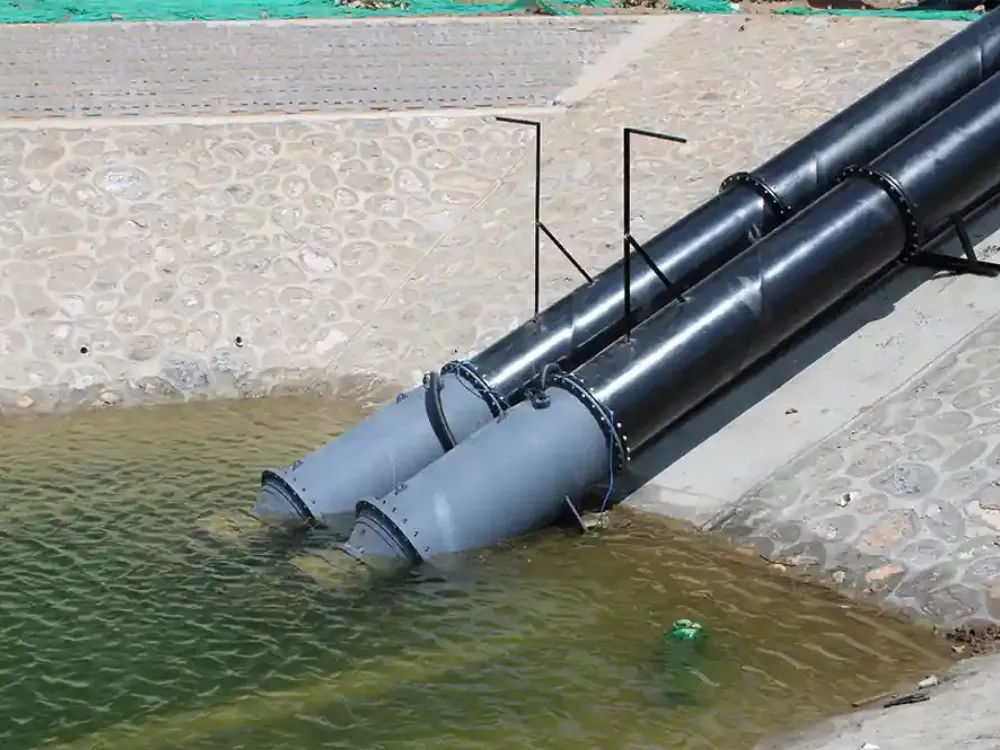
Request the weight, dimensions, and designated lifting information for the proposed equipment. The project team can then assess the lifting arrangement using the actual load, access, and site conditions. This article does not select lifting equipment or specify a rigging procedure.
Include the route from delivery to the working position in the submersible mixed flow pump installation review. Identify obstructions, openings, overhead space, and the location from which the lifting equipment will work. Record unresolved interfaces before the installation plan is accepted.
Use the equipment’s specified lifting points and applicable instructions as the planning basis. Do not treat a cable route or a component that looks convenient as an approved lifting attachment. Keep the relevant manufacturer information with the site plan.
Check the path out as well as the path in
A useful submersible mixed flow pump installation review follows the unit beyond its final working position. Ask where it will go when removed and what space is needed for inspection or service. Check access in the future operating layout, not only on an empty construction site.
Illustrative scenario: A retrofit drawing shows enough room to lower the pump. A later cover and overhead service line would obstruct the removal route. The team asks for those interfaces to be coordinated before accepting the layout. No retrieval time or cost saving is claimed.
Record whether any cover, connection, or other item must be addressed during removal. Assign responsibility for confirming the arrangement. Include the cable and lifting-equipment paths in that review so future access is not left to assumption.
For submersible mixed flow pump installation, a clear removal drawing is a useful maintenance planning document. It should identify the reviewed route and reference the applicable equipment instructions. It is not evidence that a future lift has already been approved.
Review Cable, Protection and Control Interfaces
Coordinate cable support and retrieval
Cable planning should cover routing, support, protection, and what happens when the unit is removed. Request the applicable cable details and installation instructions. Use the model’s requirements rather than copying a fixed cable-support spacing from another project.
The Sulzer PE7 installation manual illustrates AFLX/VUPX installations in a steel discharge pipe and a concrete sump. Its relevant section identifies coupling-ring, water-level, and cable-support interfaces. These are examples for those products, not Kairun installation instructions.
For your submersible mixed flow pump installation, ask how cable weight and movement will be managed. Check the cable entry, the route past structures, and the retrieval arrangement. Confirm which supports and connection items are included in the offer.
Match the electrical and control scope
State the available voltage, frequency, starting constraints, and existing control equipment. Ask the supplier to identify the proposed motor data, protection functions, monitoring, and cable configuration. Keep any options separate from items included as standard.
Submersible mixed flow pump installation also needs a clear boundary between supplied equipment and site electrical work. Name the parties responsible for connections, checks, and records. Qualified personnel should use the applicable equipment documents and project requirements for the actual work.
This planning guide provides no terminal assignments, test voltages, protection settings, or rotation-test procedure. Those details must come from the approved documents for the supplied model. If an electrical detail changes, ask whether the earlier interface review remains valid.
Use a Submersible Mixed Flow Pump Installation Readiness Checklist
Check delivery and site readiness
Match delivered equipment identification to the current offer and documents. Record any damage, missing items, or discrepancy through the agreed project process. An apparently similar unit should not be accepted as an exact match without confirmation.
Use a submersible mixed flow pump installation checklist to bring the different work packages together. It should show evidence and responsibility, not merely a row of unticked boxes.
| Interface | Evidence to retain | Responsibility to assign | If unresolved |
|---|---|---|---|
| Model and documents | Equipment identity and current drawings | Equipment reviewer | Request the matching revision |
| Structures and connections | Reviewed dimensions and supply scope | Civil and mechanical teams | Clarify required changes |
| Intake and water levels | Site inputs and model requirements | Designer and supplier | Keep the operating question open |
| Lifting and removal | Equipment data and site plan | Responsible lifting team | Complete the access review |
| Cable and controls | Routing and electrical documents | Electrical team and supplier | Resolve scope or document gaps |
| Checks and handover | Agreed plan and record forms | Commissioning and operations teams | Define the required evidence |
Keep the status beside the document reference. Useful labels include confirmed, proposed, assumed, and open. They describe the evidence available, not the quality or safety of the installation by themselves.
Agree review points before site work progresses
Decide which information must be confirmed before lowering, connection, and commissioning proceed. Record the responsible reviewers and the approved basis for their checks. Submersible mixed flow pump installation should follow that coordinated plan and the model instructions.
For example, a review entry can name the current drawing, the item awaiting confirmation, and the person who will respond. Keep the response beside that entry. Do not close it simply because a newer drawing has been issued; check whether that drawing answers the original question.
A submersible mixed flow pump installation record can also distinguish an agreed design from an as-built change. Ask which change requires a revised equipment document or another review. This gives the receiving team a clear route back to the information used for the decision.
When the drawing or supplied equipment changes, revisit affected entries. A signed earlier version does not settle a changed interface. Keep a record of the issue, the response, and the document that closes it.
Record Commissioning, Retrieval and Handover Evidence
Record the agreed checks and results
Before commissioning, agree the scope, acceptance basis, and records required for the supplied equipment. Keep the applicable instructions and project documents together. Do not choose operating thresholds from a general installation article.
For submersible mixed flow pump installation, a completed check should reference what was checked and where its result is recorded. Identify who reviewed the result. If an issue remains open, record the required action and the party responsible.
Separate a test result from a general statement that the unit ran. Relevant operating conditions and the agreed measurement boundary should remain with the record. This makes later comparisons more useful when the duty or site conditions change.
Keep as-built information with the equipment file
The handover file should describe the supplied model and the installation as built. Include current drawings, equipment instructions, electrical records, agreed test results, and the reviewed access information. Keep changes traceable to the document they replace.
Illustrative scenario: Near handover, an operations team finds that the cable-routing drawing still shows the tender arrangement. The installation has been changed, and the revised removal information is missing. The team requests the updated records and clarification of the open items before closing the documentation package. This is a hypothetical example, not a customer incident.
Submersible mixed flow pump installation records should remain useful to the people who will inspect and remove the equipment. Identify where the files are stored and which version applies. Retain the contact and supply information needed to request model-specific support.
Installation Questions Before Final Approval
Does every pump use guide rails?
No. Confirm the model’s support and discharge arrangement from its installation drawing. Discharge-tube and coupling-ring examples cannot be treated as identical to every sewage-pump guide-rail layout.
Can I use a general immersion depth?
No. Submersible mixed flow pump installation needs the applicable water-level, inlet, and cooling requirements. Minimum submergence and maximum immersion describe different limits. Ask for the documents that apply to your unit and site.
Does fitting the opening prove the installation is suitable?
No. Check the working position, supports, outlet, cable route, and full removal path. Keep the hydraulic and electrical reviews alongside those layout checks. Physical fit is one part of the decision.
Which documents should I request?
Request the current installation drawing and IOM, performance data, dimensions and lifting information, electrical details, and supply scope. Add the agreed commissioning and handover requirements. Identify any site information the supplier still needs.
Complete submersible mixed flow pump installation planning by linking each open question to a document, responsible party, and next action. Request submersible mixed flow pump installation information from Kairun to request the information needed for a coordinated project review.