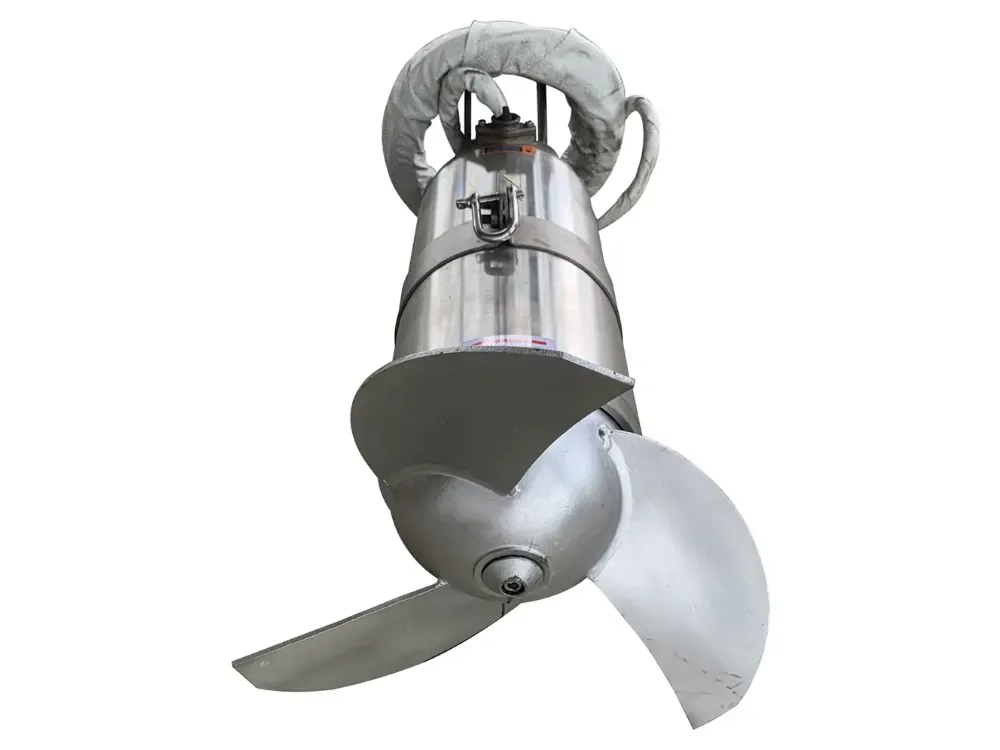
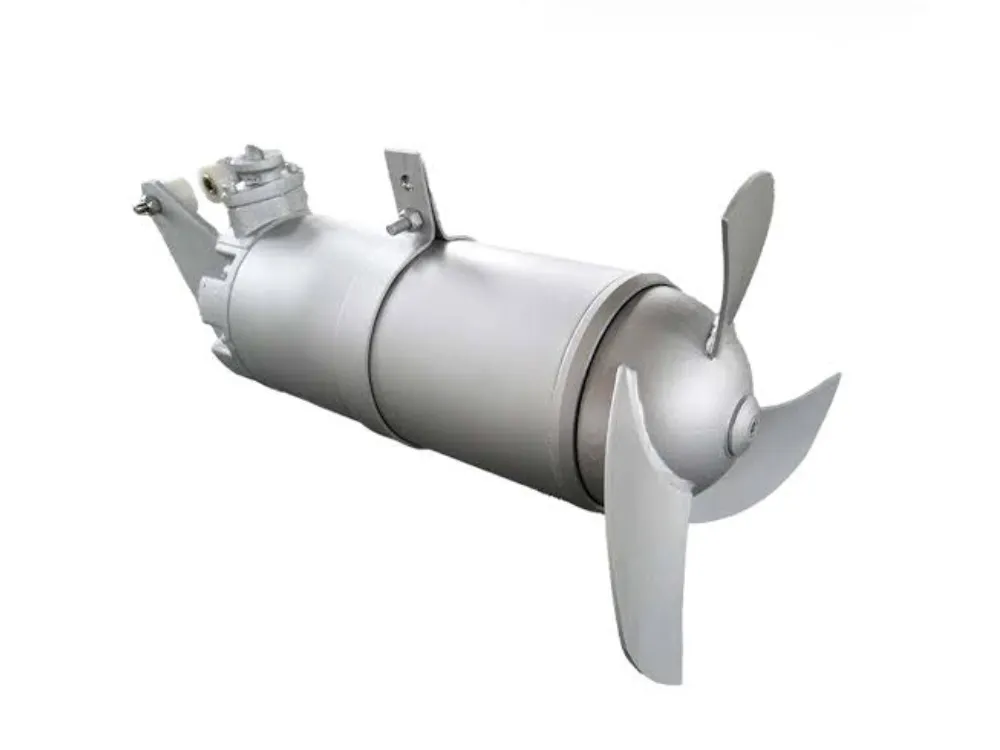
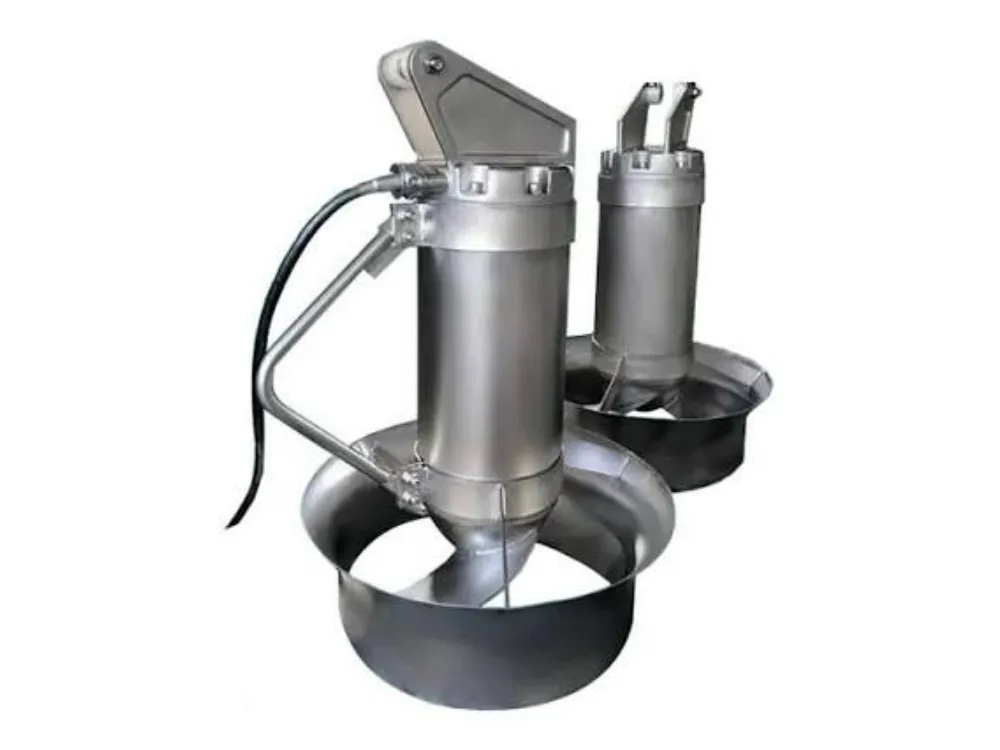
A submersible mixer for anoxic tank service keeps mixed liquor moving and helps solids remain suspended while the process operates under low-oxygen conditions. Its job is to support contact between incoming streams and the tank contents. The mixer alone does not establish the conditions needed for nitrogen removal.
You may see a moving surface and still have questions about what happens near a partition or a recycle inlet. Start with those questions. This guide helps you prepare the tank data, separate mixing observations from process concerns, and request equipment against a clear duty.
Key takeaways
- Define the anoxic process duty before comparing mixer models.
- Review solids suspension, incoming streams, and oxygen-entry risks together.
- Use a current tank drawing and actual operating records.
- Agree how performance will be checked before changing equipment.
Preparing an enquiry? Send Kairun the tank drawing and operating conditions, including liquid levels, inlet and recycle locations, and the problem you want to review.
What Mixing Must Achieve in an Anoxic Tank
Understand the process boundary
In conventional biological nitrogen removal, denitrification uses nitrate or nitrite under anoxic conditions. Free dissolved oxygen must be absent or low enough for the intended process. The intended anaerobic zone also excludes nitrate and nitrite. An aerobic zone has a different oxygen duty.
The EPA Nutrient Control Design Manual, Chapter 4, explains these distinctions. Treat it as process background, not a source of one universal operating setpoint. The plant’s design and operating plan must define the required conditions.
Selecting a submersible mixer for anoxic tank duty starts with that boundary. A mixer can circulate liquid; it cannot supply missing process inputs or prove that the biological system is performing as intended. Ask the process team to define the duty in writing.
| Zone in a conventional nutrient-removal process | Main distinction for this review | Question for the mixer enquiry |
|---|---|---|
| Aerobic | Oxygen is supplied for the intended biological duty | How does mixing interact with aeration? |
| Anoxic | Nitrate or nitrite is available under the intended low-oxygen conditions | How will the contents and incoming streams be mixed? |
| Anaerobic | Free oxygen and nitrate/nitrite are excluded from the intended duty | What restrictions apply to oxygen and recycle entry? |
Separate suspension from blending
A submersible mixer for anoxic tank service must be considered against both the solids duty and the incoming streams. Keeping solids off the floor is one concern. Distributing new liquid through the tank is another. Neither can be judged from motor power alone.
Xylem’s discussion of anoxic and anaerobic mixing identifies suspension, solids distribution, and blending as distinct mixing tasks. That distinction is useful when deciding what to observe and measure.
Illustrative scenario: the moving surface. An operator sees surface movement but asks whether flow reaches behind a partition. The enquiry includes a marked plan and observations from that area. The example identifies a question to investigate; it is not a Kairun project or proof of a dead zone.
Choosing a Submersible Mixer for Anoxic Tank Duty
Describe the duty before the equipment
Begin with a short statement of the tank’s role in the treatment process. Name the incoming streams, the intended operating mode, and any recent changes. If this is a replacement, explain why the existing unit is being reviewed.
A request for a submersible mixer for anoxic tank use should distinguish a failed unit from a changed process duty. Replacing damaged equipment and investigating uneven tank conditions are different tasks. The same model may appear on both purchase requests, but the review needs different evidence.
Build one agreed input sheet
Start with one agreed drawing. Use the same liquid levels for every proposal, label estimates, and leave unknown values open. When those inputs differ, you can’t compare the offers fairly.
| Input group | Information to provide | Document or record |
|---|---|---|
| Tank geometry | Internal dimensions, floor shape, partitions, columns | Current plan and section |
| Liquid levels | Minimum, normal, maximum, and changing-level operation | Level trend or process schedule |
| Incoming streams | Inlet, outlet, internal recycle, and sludge-return locations | Process flow diagram and marked tank plan |
| Medium | Available solids concentration, temperature, and relevant material properties | Dated process or laboratory records |
| Existing mixer | Model, propeller, speed settings, mounting, and condition | Nameplate, manual, service record |
| Operating problem | What changed, where it occurs, and when it is observed | Log, photos, sample records |
When comparing a submersible mixer for anoxic tank service, ask each supplier to work from this same sheet. Request a list of assumptions and exclusions. A missing input should be visible in the proposal rather than hidden in a selected motor rating.
Review the proposal as a system
The Wilo introduction to submersible mixing describes the equipment mechanism and factors used in selection. Use the model data alongside the tank arrangement and medium information. A catalog row is a starting point, not the complete design basis.
For a submersible mixer for anoxic tank application, ask the supplier to provide:
- The exact model and supporting performance documents.
- A drawing that marks the proposed location and flow direction.
- The liquid levels and process conditions covered by the proposal.
- Any limits, missing inputs, and checks needed before approval.
Keep the answers with the equipment schedule. That gives future reviewers a clear basis for comparison.
Use Kairun’s submersible mixer selection guide for the broader comparison process. Questions about tank inputs and thrust belong with the separate mixer sizing guide, rather than a guessed power-per-volume rule.
Layout and Oxygen-Entry Questions to Review
Mark the streams and their routes
A layout review for a submersible mixer for anoxic tank duty should show where each stream enters and leaves. Include the internal recycle and any return sludge connection that actually applies to the plant. Do not assume that all nutrient-removal systems use the same arrangement.
Trace the proposed circulation path on the plan. Ask how liquid reaches the space behind a wall or around a column. If a stream can take a short route to the outlet, ask what evidence will be used to assess that concern.
For discussions about a submersible mixer for anoxic tank use, keep plant circulation separate from the recycle pumping duty. Moving liquid around the basin and transporting it between process zones need their own equipment and design checks. The drawing should identify both.
Review oxygen entry without guessing its cause
Do not treat a submerged mechanical mixer as an aerator. Equally, do not assume that selecting submerged equipment guarantees zero oxygen entry. Review the actual streams, surface conditions, and equipment arrangement with the process designer.
Oxygen-entry questions for a submersible mixer for anoxic tank service should include the conditions of incoming recycle flows. They should also ask whether the observed surface behavior needs investigation. A visual observation is a prompt to collect evidence, not a measurement of oxygen transfer.
Avoid a universal installation height, angle, or clearance. The approved layout and model documents must cover the tank’s operating range. Ask who will confirm the final arrangement before changing an existing installation.
Keep access in the layout review
Access also matters when choosing a submersible mixer for anoxic tank duty. Show the retrieval route, lifting position, and nearby equipment. A proposal should explain how the selected unit can be serviced under the site’s approved procedures.
The installation and positioning guide provides a separate checklist for those questions. Keep the specific mounting and lifting instructions with the selected equipment; a general article cannot approve them.
For a visual example, this Sulzer video illustrates its ABS XRW mixer. It is another manufacturer’s equipment, not Kairun footage or evidence of performance in your tank.
Operating Observations Before Changing the Mixer
Separate the observation from the diagnosis
Before changing a submersible mixer for anoxic tank use, write down what you have observed. A deposit, a dissolved oxygen reading, and a nitrate result answer different questions. None should automatically become a recommendation for more installed power.
Dissolved oxygen, or DO, is oxygen dissolved in the liquid. Oxidation-reduction potential, or ORP, is another process reading that needs context. Neither reading explains the whole tank on its own.
Mixed liquor suspended solids, or MLSS, is the suspended solids concentration in the mixed liquor. Use the plant’s approved methods to collect and compare these records.
| Observation | Questions to review | Records needed | Review lead |
|---|---|---|---|
| Deposits in one area | Does the proposed flow reach it? Has the medium changed? | Location map, levels, solids data, inspection notes | Equipment and process teams |
| A DO result differs from the usual pattern | Where and when was it measured? What streams were entering? | Instrument check, sampling location, recycle and level records | Process team |
| Nitrate performance changes | Did load, available carbon, recycle, or other process conditions change? | Dated process and laboratory records | Process team |
| Conditions differ after a stop | What actually ran, and what entered during the stop? | Run log, alarms, feed history | Operations and process teams |
The table organizes a review of a submersible mixer for anoxic tank service. It does not establish causes or acceptance limits. If the question is mainly unwanted deposits across several tank types, use the separate guide to diagnosing sludge settling.
Record the conditions behind each result
Keep sample locations, times, liquid levels, equipment settings, and instrument checks with the result. Note maintenance or cleaning that could affect the comparison. If records were taken under different conditions, identify the difference before treating the readings as a trend.
For a submersible mixer for anoxic tank review, include actual run status rather than only the intended control schedule. Ask qualified personnel to investigate alarms, fouling, or mechanical faults. Follow the site’s procedures for inspection and sampling around operating equipment.
Illustrative scenario: a changed recycle stream. A process team reviews different readings after a recycle change. It compares the sampling locations and operating records before deciding whether mixing needs to change. No cause, removal improvement, or energy saving is assumed in this example.
How to Assess a Submersible Mixer for Anoxic Tank Performance
Agree the review before the change
Assess a submersible mixer for anoxic tank duty against an agreed process and equipment brief. Define what will be observed, where records will be taken, and which operating conditions will be covered. Have the responsible team approve the methods and criteria.
Build a baseline first. Record recent cleaning, load changes, and any equipment that was out of service. Those details help explain differences between the tests.
Use this review sequence for a submersible mixer for anoxic tank application:
- Confirm the process duty and current drawing.
- Record the baseline and the conditions behind it.
- Define the proposed change and its approved limits.
- Compare observations under the agreed operating conditions.
- Document what was demonstrated and what remains open.
Review intermittent operation as a process decision
Do not assign a generic on/off cycle to a submersible mixer for anoxic tank service. Review inflow timing, stops, and the intended process with the responsible team. A record taken only while the mixer is running may leave questions about the rest of the cycle.
If specialist testing is proposed, ask what it is intended to show and which operating conditions it represents. Keep the report with the final settings. Do not present a single observation as proof that the whole operating range has been checked.
Compare energy while meeting the duty
For a submersible mixer for anoxic tank energy review, compare actual electrical input over a stated period. Use meter records where available, and state the operating hours and conditions. Rated motor power alone does not establish annual energy use or savings.
The comparison must also show whether the agreed mixing duty was met. Lower energy use with unassessed process conditions is not evidence of an equivalent result. Keep the equipment observations and energy records together.
Illustrative scenario: two different tests. One record was taken after tank cleaning; another followed a long operating period. The reviewer notes the mismatch rather than crediting the mixer with a change that has not been isolated. The example shows a comparison problem, not a reported field result.
FAQs and Information for a Technical Enquiry
Why use mixing instead of aeration in an anoxic tank?
Mixing and oxygen supply have different duties. The anoxic process needs the intended low-oxygen conditions as well as contact between the contents and incoming streams. A submersible mixer for anoxic tank use should be reviewed within that process design, rather than selected as an oxygen-supply device.
Is an anoxic tank the same as an anaerobic tank?
They have different roles in conventional nutrient-removal treatment. Nitrate or nitrite can support anoxic denitrification; the intended anaerobic zone excludes those electron acceptors as well as free oxygen. Use the plant’s defined process duty when describing either zone to a supplier.
Can a larger motor fix poor denitrification?
A larger motor is not a diagnosis. Review the process records and the tank’s mixing conditions separately, then consider how they interact. A submersible mixer for anoxic tank application cannot be selected on an assumption that power alone will resolve a nitrogen-removal problem.
Can the mixer run intermittently?
The operating cycle must be agreed for the process and equipment. Provide inflow, recycle, level, and actual run records before asking for a schedule change. Do not copy an operating interval from a different tank or application.
What information is needed before selecting equipment?
Provide the process duty, tank plan, liquid levels, medium information, stream locations, and existing equipment records. Mark what is known and what still needs checking. Include observations of the problem so the enquiry has a clear purpose.
Review Kairun’s submersible mixer product information for equipment options. Then send the anoxic tank drawing and duty details for discussion. Selecting a submersible mixer for anoxic tank service starts with a shared description of the job, followed by a documented equipment and layout review.