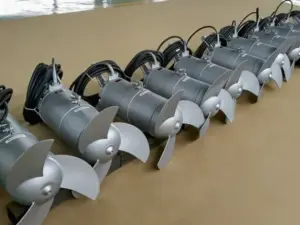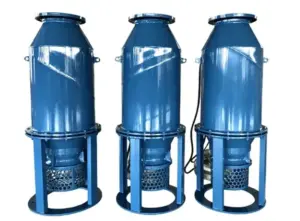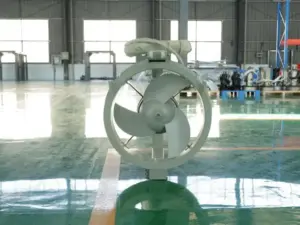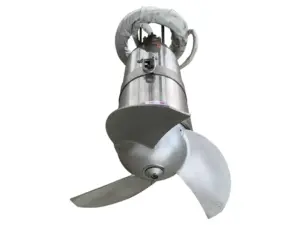
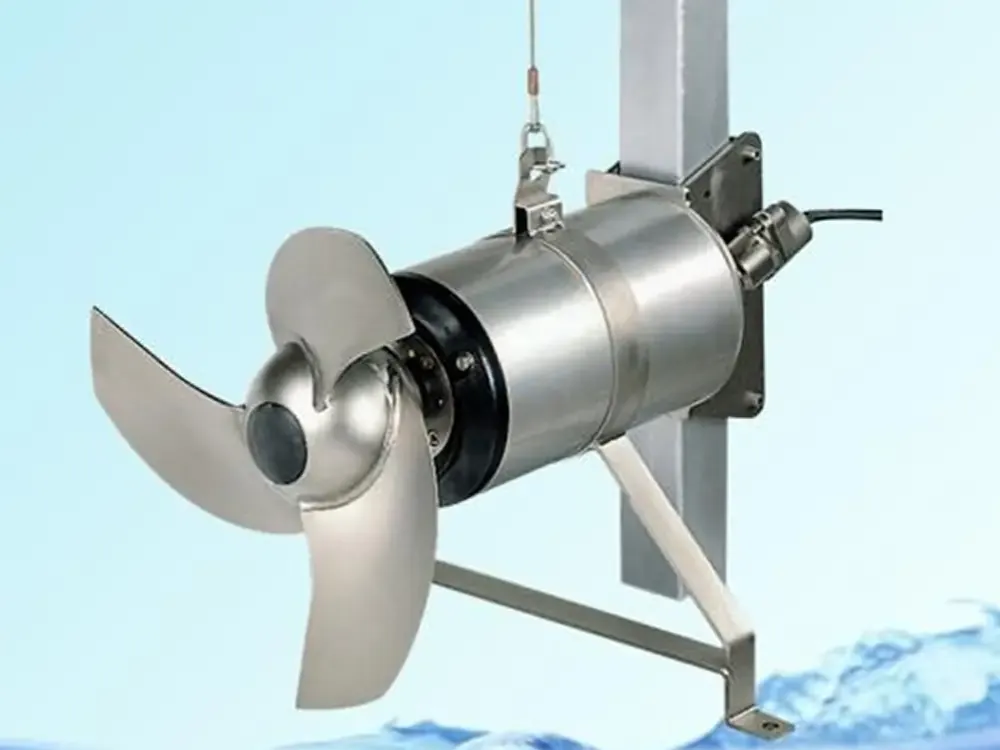
Submersible mixers prevent sludge settling by creating circulation that helps keep solids suspended in tanks designed for mixing. Their effectiveness depends on the tank layout, liquid level, sludge properties, equipment condition, and operating schedule. A running motor alone does not show that the whole tank is being mixed.
If deposits keep returning, start with where and when they form. That evidence helps distinguish a circulation problem from changed solids, a blocked flow path, or a long stop in mixing. It also makes a supplier review more useful than a request for a larger motor.
Key takeaways
- Confirm that suspension is the process goal; clarifiers need settling.
- Record deposit locations and operating conditions before changing equipment.
- Review tank circulation, solids properties, and mixer condition together.
- Compare results under similar conditions using an agreed test plan.
Where Sludge Settling Is a Problem
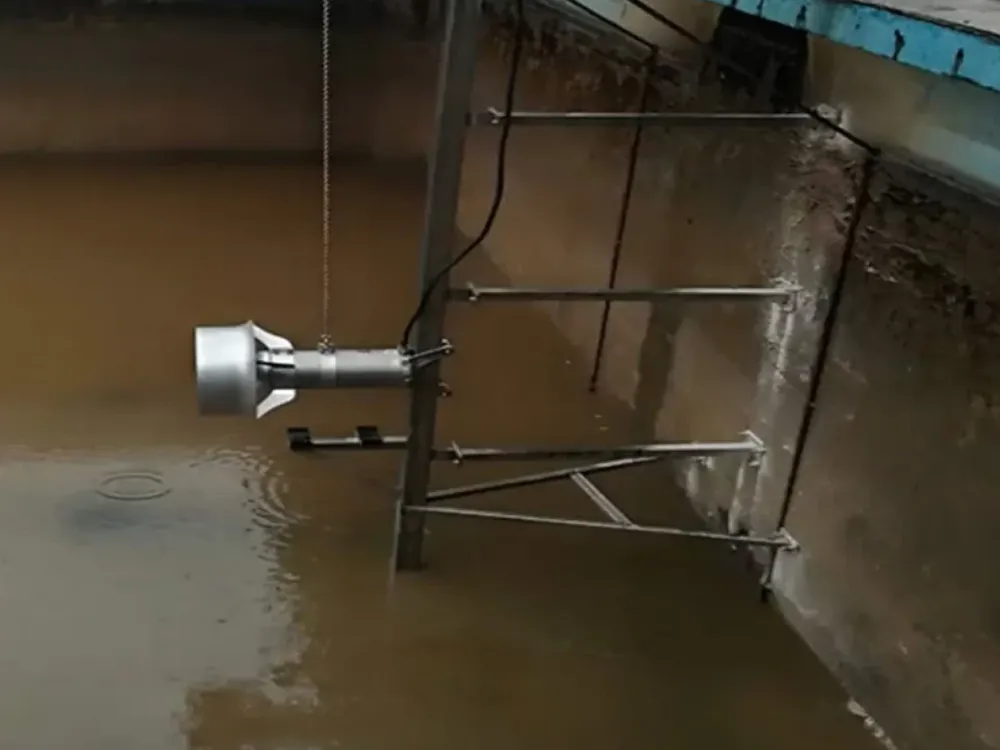
Unwanted deposits matter in tanks intended to keep solids moving. Examples can include mixed equalization tanks, biological mixing zones, and sludge holding tanks where the process requires suspension. Define the duty for the specific tank before applying general advice.
Submersible mixers prevent sludge settling only within the limits of the proposed mixing arrangement and operating conditions. They cannot make every solid behave alike. A plant may contain biological floc, mineral grit, fibers, and other material with different behavior. Ask what the deposit contains before treating it as a single sludge problem.
Clarifiers have a different purpose. They separate solids by allowing them to settle under controlled conditions. The EPA’s primary clarifier operator training explains this separation function. A recommendation to maintain suspension in a mixing tank should not be transferred to a clarifier.
Also distinguish settled material on a tank floor from poor sludge settleability in the treatment process. Those observations can require different investigations. A deposit map helps assess whether submersible mixers prevent sludge settling in the tank; it does not diagnose biological performance by itself.
For a wider equipment overview, see Kairun’s wastewater treatment equipment. For complete treatment arrangements, see the wastewater treatment plant overview. For complete treatment arrangements, see the wastewater treatment plant overview. Keep the process objective attached to any equipment enquiry so the proposed solution addresses the correct tank duty.
How Submersible Mixers Prevent Sludge Settling
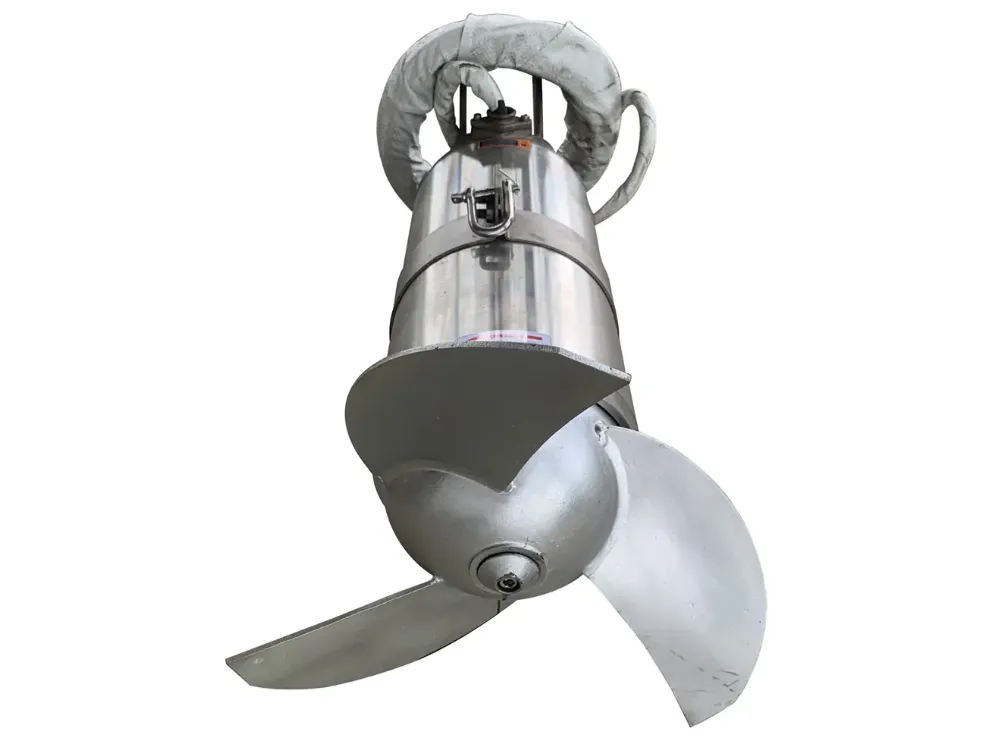
A submerged impeller transfers energy to the surrounding liquid. The resulting flow moves beyond the immediate propeller area and interacts with the tank boundaries. The design task is to establish useful circulation through the required mixing zone.
In practical terms, submersible mixers prevent sludge settling when that circulation provides enough movement where suspension is needed. A strong local jet is not proof of good coverage. Flow may return quickly to the mixer while leaving a corner, recess, or area behind a wall poorly served.
Submersible mixers prevent sludge settling through the combined effect of equipment and layout. Tank geometry, obstructions, mixer direction, and liquid depth all belong in the review. This is why selecting a unit from tank volume alone leaves important questions unanswered.
The Wilo introduction to wastewater mixing describes mixing duties such as keeping solids in suspension and circulating liquid. Those functions help explain the mechanism; they do not establish a universal operating limit for your tank.
Avoid assuming that a mechanical mixer adds oxygen. Circulating liquid and supplying oxygen are separate process functions. In an aerated tank, review the interaction with the aeration system, but do not equate a more even dissolved oxygen reading with extra oxygen transfer from the mixer.
The useful question is therefore how submersible mixers prevent sludge settling in the actual tank, across its operating range. Answer it with a layout and a verification plan, rather than one motor rating or a single measurement beside the impeller.
For a visual illustration, the following video is from Sulzer and shows its ABS XRW equipment. It is a manufacturer example, not footage of Kairun equipment or evidence of performance in your tank.
Why Deposits Remain Despite Mixing
Submersible mixers prevent sludge settling most effectively when the proposed circulation route matches the tank and duty. When deposits remain, organize the investigation around observable changes. The following table gives starting questions, not confirmed diagnoses.
| Observation | Questions to investigate | Evidence to collect |
|---|---|---|
| Deposits recur in one corner | Does flow reach the corner? Is a wall or pipe obstructing it? | Marked plan, deposit photos, available flow observations |
| Deposits appear after shutdowns | How long was mixing stopped, and what entered the tank? | Actual run logs, inflow history, restart records |
| Problems occur at low liquid level | Is the unit within its approved operating conditions? | Level trend, installation drawing, model manual |
| Deposits began after a process change | Have solids content or feed characteristics changed? | Dated samples and process change records |
| Performance changed without a process change | Is there fouling, damage, or an operating fault? | Inspection and maintenance records |
Flow coverage and obstructions
A dividing wall can alter the return path. Added pipework or a changed inlet can also make an old layout less suitable. Mark these features on the current drawing; an outdated construction plan can hide the reason for a new problem.
Although submersible mixers prevent sludge settling by moving liquid, visible surface movement does not establish conditions throughout the depth. Look for evidence from the areas where deposits actually form. Treat a dead zone as a location to investigate rather than a label applied to the whole tank.
Liquid level and solids changes
Check minimum, normal, and maximum levels against the proposed arrangement. Ask the supplier which operating conditions the layout covers. Do not use a fixed fraction of water depth or a generic floor clearance as a substitute for the model manual and approved drawing.
Submersible mixers prevent sludge settling under a defined solids duty. If the feed changes, the original basis may no longer describe the tank. Record whether the material is mainly biological sludge, grit, fibrous waste, or a mixture, and provide available concentration data without guessing missing values.
Equipment and schedule
Check actual operation against the intended schedule. A control command is not the same as a confirmed running record. Review alarms, maintenance findings, and permitted speed settings with the responsible personnel before deciding that the mixer is undersized.
Submersible mixers prevent sludge settling while providing the required mixing action; a long inactive period changes that condition. Review stop periods with the process team rather than assuming either continuous operation or intermittent operation is suitable for every tank.
Illustrative scenario: a corner deposit. An operator notices deposits behind a partition after pipework is added. The review starts with the revised plan and a map of the deposits. It compares the present flow path with the original layout before considering more power. This is a diagnostic example, not a reported Kairun project or a measured result.
Checks Before Changing Mixer Size or Position
Before asking whether submersible mixers prevent sludge settling in a difficult application, assemble one agreed description of the duty. Separate measured facts from assumptions. Mark missing information so a supplier can request it rather than design around an unrecognized guess.
1. Define the process and the problem
Name the tank, its function, and the area that must remain mixed. State whether the issue is a persistent floor deposit, uneven solids distribution, or material that appears after shutdown. Include when the problem began and what changed around that time.
Submersible mixers prevent sludge settling as part of a tank mixing arrangement. A request asking how submersible mixers prevent sludge settling still needs criteria for judging the arrangement. Agree what acceptable operation should look like with the plant designer or process team.
2. Prepare a current tank plan
Provide internal dimensions, floor shape, liquid levels, inlets, outlets, partitions, columns, and installed equipment. Show the existing mixer position and direction. Include the access and retrieval route so a proposed change can be maintained.
Use the submersible mixer installation and positioning guide to organize the layout questions. Final clearances, submergence, mounting details, and lifting arrangements must match the selected equipment documents and project design.
3. Record the medium and existing equipment
Attach the model plate, propeller details if known, operating speed, run hours, and maintenance history. Provide available solids concentration, temperature, and relevant medium characteristics. Keep old catalog data clearly separate from the installed configuration.
Submersible mixers prevent sludge settling through a combination of hydraulic action and coverage. Motor power alone cannot establish that combination. For the separate task of comparing thrust and tank inputs, use the submersible mixer sizing guide.
4. Map deposits without disturbing the evidence
Sketch where material collects and note the conditions at each observation. Use photos from repeatable viewpoints when available. Keep the same location names across the drawing, sample log, and maintenance notes so different people can compare records.
Have qualified personnel plan inspections and sampling under the site’s procedures. Do not reach toward moving equipment or enter a tank to make an informal check. Changing position, inspecting the impeller, and taking samples are different tasks with their own approved methods.
5. Request a reviewable proposal
Ask for the proposed equipment, marked layout, operating range, assumptions, and method for checking performance. Require any exclusions to be written down. A supplier should explain how submersible mixers prevent sludge settling in the proposed mixing zones and what evidence will be used to assess the result.
Use the submersible mixer selection guide for a broader comparison of duty, equipment, and documentation. If you are preparing an enquiry now, send Kairun the tank plan and operating records with the deposit locations marked.
Illustrative scenario: deposits after a weekend stop. A tank looks well mixed during the weekday shift, but deposits are reported after a long stop. The team compares actual run logs, incoming loads, and observation times before requesting a replacement. No energy saving or operating outcome is assumed in this example.
How to Verify That Submersible Mixers Prevent Sludge Settling
Verification should test the stated duty under representative conditions. Define how you will check whether submersible mixers prevent sludge settling before comparing arrangements. Otherwise, a cleaner tank after maintenance or a lighter incoming load may be mistaken for a mixer improvement.
To assess whether submersible mixers prevent sludge settling, agree the locations, observations, operating conditions, and review period in advance. Include the areas where deposits previously occurred. Where measurements require specialist equipment, have the designer or qualified testing team define the method.
Build a baseline
Record the current liquid level, feed conditions, operating schedule, equipment status, and deposit pattern. Note recent cleaning or process changes. Where solids samples are used, document the locations, depths, times, and methods so the comparison can be repeated.
Do not select a universal minimum velocity from an unrelated project. The appropriate performance criteria depend on the process and medium. One reading close to the mixer cannot establish coverage across the tank, and one clean inspection cannot prove that deposits will never return.
Compare similar operating conditions
Submersible mixers prevent sludge settling within an operating envelope, so include relevant variations in the agreed assessment. Identify which levels and process conditions were actually tested and which remain unverified. Record settings and equipment availability with each observation.
Xylem’s overview of wastewater mixing challenges treats equipment choice, positioning, energy, and monitoring as connected issues. Use that systems perspective when planning a review, rather than attributing every deposit to insufficient installed power.
Calculate energy from measured inputs
If energy is part of the comparison, use electrical input energy over a defined period. For steady input power, energy in kWh equals average electrical input in kW multiplied by operating hours. For variable operation, use meter records or a documented calculation across the operating periods.
Submersible mixers prevent sludge settling only if the required mixing duty is met; reducing electricity while allowing deposits is not a successful like-for-like comparison. Record both the mixing observations and energy data. Do not infer annual savings from rated motor power or transfer another facility’s savings to your tank.
Close the review with a record
Keep the final layout, settings, measurements, inspection notes, and unresolved conditions together. State what was demonstrated and what was not assessed. That record helps future staff distinguish a changed process from an equipment problem without repeating the entire investigation.
Questions About Sludge Suspension and Next Steps
Can one mixer keep every tank free of deposits?
No single arrangement suits every tank. Submersible mixers prevent sludge settling where the chosen layout and operating conditions provide the required suspension. Tank geometry, obstructions, solids properties, and process changes all affect the assessment. Request a documented layout rather than a guarantee based only on volume.
Does increasing mixer power solve a dead zone?
More installed power does not establish better coverage. First check the flow route, position, operating range, and equipment condition. Review whether the proposed change reaches the affected area. Keep the decision tied to the observed problem and an agreed method of verifying improvement.
Do mixers replace aeration equipment?
A mechanical mixer provides liquid movement; oxygen supply needs its own process assessment. Do not select a mixer on an assumption that circulation alone will meet an oxygen demand. In combined mixing and aeration applications, ask the process designer to review how the systems operate together.
What installation height should I use?
Use the approved model manual and tank layout. A generic floor distance or fraction of liquid depth cannot establish a suitable installation for every propeller, tank, and liquid level. Include retrieval access and the full operating range in the design review before moving an existing unit.
What should I send for an equipment review?
Send the tank plan, process duty, operating levels, medium information, existing equipment details, actual schedule, and deposit map. Add records of recent changes. Ask which missing inputs must be confirmed before a model or layout can be proposed.
For equipment options, review Kairun’s submersible mixer product information. To discuss how submersible mixers prevent sludge settling in your application, submit the tank drawing and operating conditions. Start with the evidence from the tank, then evaluate the equipment and layout against that duty.