Thanks to their ability to operate fully submerged and transport highly abrasive solid-liquid mixtures, submersible slurry pumps are widely used in applications such as mineral processing tailings ponds, sediment removal from settling tanks, river dredging, power plant ash transport, and sand removal from construction site excavations. During the selection process, many projects focus solely on flow rate and head parameters while overlooking factors such as bottom sediment conditions, solids concentration, and particle settling characteristics. Failing to install an agitator when one is needed can lead to low intake concentration, inlet clogging, frequent dry running, and rapid wear of flow-path components. These problems can result in significantly higher long-term maintenance costs. To achieve stable pumping performance, the actual operating conditions should be assessed rather than relying only on nameplate specifications.
Common Pitfalls in Submersible Slurry Pump Selection
Many slurry transport projects fail to meet performance expectations because of errors made during the initial selection phase. These errors generally fall into three categories:
1. Focusing solely on flow and head parameters while ignoring the state of bottom sediments
Some projects simply replicate pump models used elsewhere without analyzing whether the pond bottom contains compacted sludge or settled mineral sand. Standard pumps without agitators can only extract particles already suspended in the water or pump away the turbid surface layer. Heavy sediments remain at the bottom, resulting in incomplete dredging. Forced suction can also cause intermittent cavitation and excessive vibration, accelerating wear on the impeller and casing.
2. Failing to consider settling characteristics and omitting agitators across the board
Standard pumps are adequate for media with fine particles, slow settling speeds, and inherent suspension. However, when dealing with high-density mineral sand, tailings, or ash that settle rapidly, the absence of an agitation impeller allows solids to quickly accumulate around the suction inlet. This can bury and clog the inlet, triggering frequent alarms and equipment shutdowns.
Conversely, some applications involve the indiscriminate addition of agitators. If the medium does not settle, the agitator may run unnecessarily, causing additional component wear and energy consumption.
3. Blindly following standard installation templates while ignoring sediment hardness and maintenance conditions
When dealing with hardened mud or compacted mineral sand, a standard coaxial bottom-mounted mixing impeller may provide insufficient torque to break up the hardened layer. As a result, only the surface water is pumped.
In some excavation pits or sedimentation tanks where draining the water for maintenance is not feasible, a simple fixed pump unit also creates difficulties. If the mixing impeller wears out or is damaged, the entire unit must be hoisted out for repair, directly interrupting production operations.
Five Key Criteria for Correct Pump Selection
The decision to install an agitator requires a comprehensive evaluation based on five dimensions: sediment condition, solids concentration, particle characteristics, on-site installation and maintenance conditions, and long-term operational reliability. It cannot be determined solely by pump power.
1. Assess sediment and solids settling characteristics to determine if agitation is required
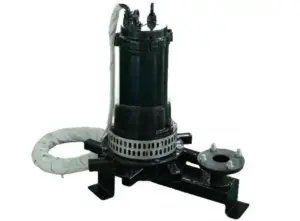
If the tank bottom contains thick layers of silt, mineral sand, or tailings sediment, and solids rapidly settle and accumulate after the pump stops, an agitator is required. The mixing impeller rotates synchronously with the main shaft. It breaks up and agitates the settled solids to form a uniform slurry for the main impeller to intake. This helps increase the actual solids concentration being pumped.
If the medium consists of lightweight particles with slow settling speeds, allowing them to remain suspended throughout the process without forming an accumulation layer at the bottom, a standard unit without an agitator may be selected.
Application Reference:
Agitators are prioritized for desilting tailings ponds, grit chambers, and slurry sedimentation tanks. They are not necessary when transporting pre-mixed, homogeneous slurry through a pipeline.
2. Assess sediment hardness to match the agitator’s structural design
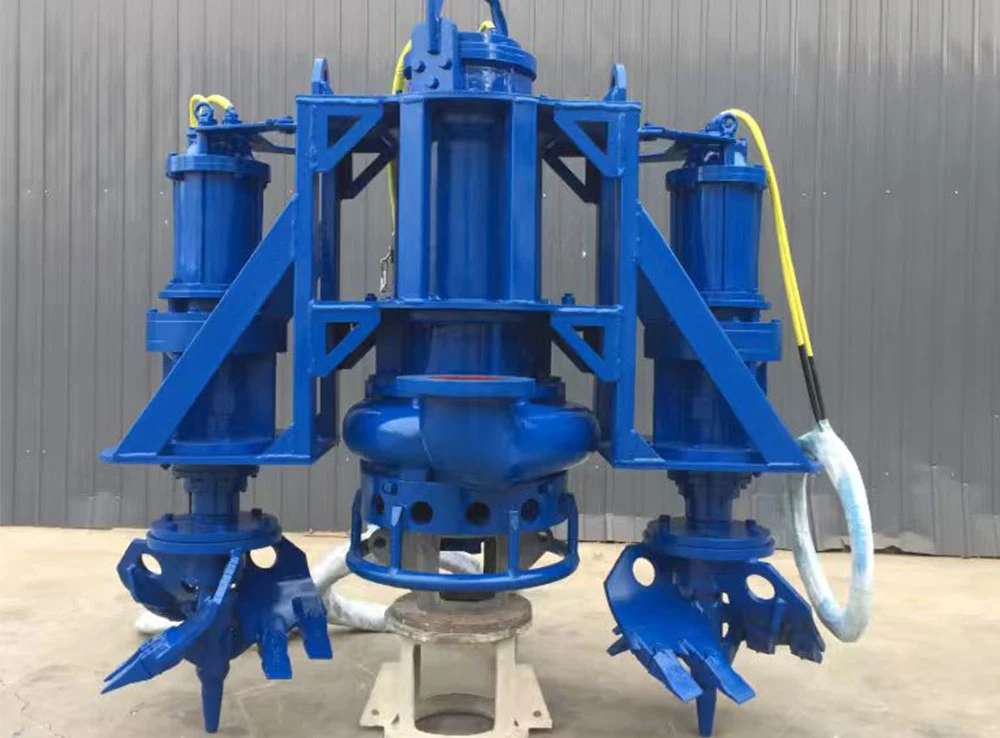
For loose silt or fine sand deposits, a pump with a coaxial, integrated bottom mixing impeller can be selected. This design is simple, easy to maintain, and suitable for standard agitation requirements.
For hardened clay, compacted slag, or hard sediment layers, standard bottom agitation torque may be insufficient. A reinforced design featuring a side-mounted agitator reamer is required to break up hardened material and prevent the mixing impeller from jamming. Sufficient clearance must also be maintained to prevent the mixing components from directly grinding against the concrete tank bottom, which could cause component breakage.
3. Select materials for agitation components based on slurry particle characteristics and abrasiveness
- Standard silt/sand conditions: High-chrome cast iron agitator impellers offer a favorable cost-performance ratio and sufficient wear resistance for routine desilting operations.
- High-abrasion conditions, such as mineral tailings and quartz sand: An abrasive slurry pump requires high-chrome alloy components to withstand particle erosion and reduce wear.
- Acidic or alkaline corrosive slurries: All wetted parts, including agitator impellers and fasteners, should be made of 304 or 316L stainless steel. Simply replacing the main pump impeller while ignoring corrosion-related wear on agitation components is not sufficient.
4. Determine the installation method based on on-site maintenance conditions
- Guide-rail hoisting system: The entire unit can be lifted out for maintenance without draining the tank. This is ideal for continuous-operation facilities such as tailings ponds or power plant ash ponds, where the agitator impeller can be lifted for maintenance without interrupting the process.
- Floor-mounted base: This option has a lower procurement cost and is suitable for small sedimentation tanks with intermittent operation. The drawback is that the tank must be drained to repair or replace agitation components.
5. Prioritize motor sealing and overall unit protection to ensure long-term operation
These pumps operate while submerged in abrasive slurries, making the mechanical seal a critical factor in service life. Submersible motors should be equipped with dual cartridge-style mechanical seals and built-in overheating and leakage protection.
For high-abrasion conditions, mechanical seals with silicon carbide friction faces are recommended to reduce the risk of motor damage caused by abrasive particles entering the motor.
| Wrong Selection Practice | Practical Problems Caused | Correct Selection & Treatment Effect |
| No agitator equipped for tank with heavy layer sediment | Only surface turbid water can be pumped out; large volumes of silt remain at tank bottom. The pump suffers frequent dry running, heavy vibration and rapid wear of wetted parts. | Install an appropriate agitator according to sediment thickness. Stir up settled solids to form homogeneous slurry, increase actual conveying solid content and reduce dry running faults. |
| Adopt ordinary small coaxial agitator impeller for hardened sludge condition | Insufficient stirring torque to break hardened sludge layer; only surface water can be extracted. Agitator impeller is prone to jamming and damage. | Replace with reinforced side mounted cutter type stirring structure. Break compacted deposits and realize effective disturbance & extraction of bottom materials. |
| Cast iron agitator impeller applied in corrosive slurry service | Rapid corrosion and wear of agitator impeller, requiring frequent spare part replacement within short cycles. | Replace agitator impeller and fasteners with corrosion resistant stainless steel material. Extend service life of wearing parts and reduce spare part replacement frequency. |
| Floor mounted fixed installation adopted for continuous production working condition | Once agitator impeller is damaged, the whole tank must be drained for maintenance, resulting in full line production shutdown. | Adopt guide rail hoisting structure. The pump can be lifted for overhaul without draining tank water to guarantee continuous production. |
Engineering Application Case: Mineral Processing Plant Tailings Settling Tank Retrofit
A mineral processing plant operated a tailings settling tank with a capacity of 1,500 m³ to collect tailings slurry. Fine mineral sand accumulated at the bottom over time. The initial selection was a standard unit without an agitator. Once operational, the pump could only extract clear water from the upper layer, while mineral sand continued to accumulate at the bottom. This resulted in very low solids content in the pumped output.
Over six months of operation, the suction inlet was repeatedly buried and clogged by sand. The unit had to be hoisted out for cleaning every quarter, severely disrupting tailings recovery operations.
Project Pain Points
- Tailings particles have high specific gravity and settle rapidly during shutdowns, forming a thick layer of sand at the bottom of the tank. Without an agitation mechanism, the bottom sediment cannot be disturbed.
- The mineral sand is highly abrasive, causing rapid wear on standard cast-iron components.
- The production line operates continuously, meaning the sedimentation tank cannot be frequently drained. Lifting the unit for maintenance disrupts the mineral processing workflow.
Retrofit Solution
The existing unit was removed and replaced with two submersible slurry pumps with agitator assemblies featuring bottom-mounted, reinforced agitation impellers. All agitation components are made of high-chrome wear-resistant alloy. The units are installed using a guide-rail lifting system and positioned tangentially to the tank wall to create a circulating flow, helping prevent sediment accumulation in dead zones.
Four Improvements After Retrofit
- The solids content of the pumped slurry increased significantly, and bottom sand was effectively cleared, eliminating large residual deposits.
- Thanks to the guide-rail lifting system, maintenance can be performed without draining the tailings slurry, allowing the mineral processing line to operate without interruption.
- The use of high-chrome alloy for agitation impellers and flow-path components greatly extended the service life of parts and reduced the frequency of spare-part replacement.
- The pumps no longer suffer from vibration caused by frequent dry running or air locking. Overall operation is stable, total energy consumption has not increased, and the maintenance workload has been significantly reduced.
Pump Selection FAQs
Q1: Does a high-power submersible slurry pump eliminate the need for an agitator?
A: No. The ability to agitate sediment does not depend on motor power. Higher power provides greater transport capacity, but without an agitation mechanism, the pump can only extract solids that are already suspended. Bottom sediment remains undisturbed and may cause suction inlet clogging.
Q2: Is an agitator necessary for loose, fine silt or sand?
A: No. If the slurry remains suspended and does not form thick sediment layers during shutdowns, a standard unit is sufficient. Adding an agitator in this case would introduce unnecessary wear and increase spare-part costs.
Q3: The medium is corrosive. Can I replace only the main pump impeller with stainless steel while keeping the agitator made of cast iron?
A: No. The agitator impeller and its mounting bolts also come into direct contact with the slurry. All wetted components should use compatible, corrosion-resistant materials to avoid premature corrosion and equipment failure.
Conclusion
Deciding whether to equip a pump with an agitator is not simply a matter of comparing catalog specifications. The selection should be based on actual site conditions, including the consistency and thickness of bottom sediment, solid settling characteristics, slurry abrasiveness and corrosiveness, installation method, and maintenance requirements.
For desilting tailings ponds and settling tanks or dredging foundation pits and river channels, comprehensive data should be collected beforehand. Sediment status, particle characteristics, solids concentration, and maintenance conditions should all be considered when selecting the appropriate agitation structure.
A well-matched submersible pump with agitator can help maintain solids suspension, improve pumping consistency, reduce clogging risks, and support more reliable long-term operation.