Key Takeaways
- Calculate the water-level difference across the opening instead of using the total water depth.
- Measure the opening at the top, middle and bottom. Use the smallest clear width to check the required dimensions.
- Inspect the guide slots, concrete walls, bottom sill and lifting space before confirming the installation arrangement.
- Specify the pressure direction, material, sealing performance and lifting method before ordering.
Introduction
A stop log consists of removable beams stacked in guide slots to block water through a channel or opening. It is commonly used to isolate an area for inspection, cleaning or repair. However, incorrect dimensions, uneven guide surfaces and excessive water pressure can make installation difficult or cause leakage.
Choosing the right arrangement starts with understanding the water pressure, measuring the opening and checking the site conditions. These steps also help buyers prepare clear technical requirements for suppliers.
How Should You Calculate the Required Water Head?
The first step is to determine the pressure difference that the gate must resist. Total water depth alone does not show the actual pressure acting across the opening.
Measure the Water Levels on Both Sides
Record the highest expected upstream water level and the lowest expected downstream water level. Measure both from the same reference point, then subtract the downstream level from the upstream level.
For example, if the upstream level is 4 m above the channel bottom and the downstream level is 1 m above the same point, the differential head is 3 m. The gate should therefore be checked against a 3 m water head, not simply the 4 m upstream depth.
If the downstream side may become empty, use the upstream water depth as the differential head. Also consider drainage and maintenance conditions that could change the water levels.
Confirm Whether Water Pressure Can Reverse
Identify which side normally holds water and whether the flow direction may change. A gate designed for pressure from one side should not automatically be considered suitable for pressure from both sides.
If either side may become the higher-pressure side, provide the design head for each direction. The structure, guide arrangement and seals must all be suitable for the specified loading.
Once the design head is established, check whether the existing opening can accommodate the gate.
How Should You Measure the Opening and Inspect the Site?
Old drawings may not reflect the current condition of a concrete channel. Measure the actual opening before confirming the required dimensions.
Measure the Clear Width at Three Positions
Measure the distance between the two guide surfaces at the top, middle and bottom. Record all three results and use the smallest measurement as the starting point for confirming the gate width.
For example, if the opening measures 1,000 mm at the top, 990 mm in the middle and 995 mm at the bottom, the 990 mm section is the critical measurement. A gate sized only against the 1,000 mm width may become stuck at the narrower section.
Next, measure the height from the bottom sill to the required stopping level. If the opening is irregular, provide a dimensioned drawing rather than relying on one width and one height.
Inspect the Guide Slots, Walls and Bottom Sill
Check both guide slots for corrosion, deposits, cracks and inward deformation. The guides should be parallel and vertical. A laser level or plumb line can help identify alignment problems.
Inspect the concrete around the guides and their fixing points. Repair loose concrete or damaged anchor areas before installation. The bottom sill should also be checked for uneven surfaces and sediment. A gap beneath the lowest beam can become a direct leakage path.
If the existing structure is uneven, send the supplier measurements and site photographs. Do not assume that a rubber seal can compensate for every defect in the concrete or guide frame.
Check Lifting Clearance and Access
Measure the available vertical space above the opening. The lifting equipment needs enough clearance to raise each beam above the guide frame before moving it away.
Also check whether workers can access the operating area safely and where the removed beams will be stored. If manual handling is unsuitable because of beam weight or access restrictions, specify a mechanical lifting method before ordering.
Which Materials and Sealing Details Should Buyers Specify?
Material selection depends on water chemistry, temperature and exposure conditions. Sealing requirements depend on the pressure direction and the condition of the contact surfaces.
Match the Material to the Water Conditions
| Water condition | Material to consider | Main checks |
| Fresh water with relatively low corrosivity | Coated carbon steel or stainless steel | Coating condition, water chemistry and maintenance access |
| Chloride-bearing water or wastewater | 316 stainless steel may be considered | Chloride level, temperature and exposure conditions |
| Seawater or more aggressive chemical exposure | Duplex or higher-alloy materials may be required | Chemical composition and engineering review |
Do not select stainless steel based on its grade name alone. Chloride concentration, temperature, stagnant water and crevices can affect corrosion performance. 316 stainless steel is not corrosion-proof in every seawater condition, so the actual environment should be reviewed before material approval.
For coated carbon steel, confirm the coating type, surface preparation and repair method for damaged areas. These details should be included in the material specification rather than left for confirmation after delivery.
Identify Every Required Sealing Position
Check the side seals, bottom seal and joints between adjacent beams. These are separate potential leakage paths and should be identified on the supplier’s drawing.
Ask for the seal material, replacement method and specified compression range. The guide surfaces and bottom sill must be even enough to allow consistent contact.
If the gate must retain water from either direction, state this in the inquiry. A one-way sealing arrangement may need a different seal design to provide bidirectional performance.
Set a Measurable Leakage Requirement
“Low leakage” is not a complete acceptance criterion. Specify the test water head, test duration and allowable leakage rate in the purchase documents.
For example, require the assembled gate to be tested under the agreed design head. The supplier should record leakage at the side seals, bottom seal and beam joints. Set the acceptance limit before production so both parties understand the required result.
Why Choose KR Pumps’ Stop Log Gates for Water Control?
For buyers comparing stop log gate options, the important questions are whether the structure fits the opening, withstands the required water head and can be handled safely during maintenance. Based on the technical information provided for KR Pumps’ gates, the following specifications and configurations can be discussed.
| Item | Available specification or option |
| Stated water-head range | 0–30 m; higher-pressure applications require separate engineering confirmation |
| Channel width | 150–3,500 mm; non-standard dimensions can be discussed |
| Operating temperature | -40°C to 120°C, subject to the selected material and seal |
| Main materials | Aluminum alloy, 304/316 stainless steel and coated carbon steel |
| Sealing arrangement | Side and bottom seals; bidirectional sealing requires a confirmed design |
| Installation tolerance | Up to ±12 mm is stated in the supplied information; the reference and site suitability must be confirmed |
Modular Beams for Adjustable Isolation Heights
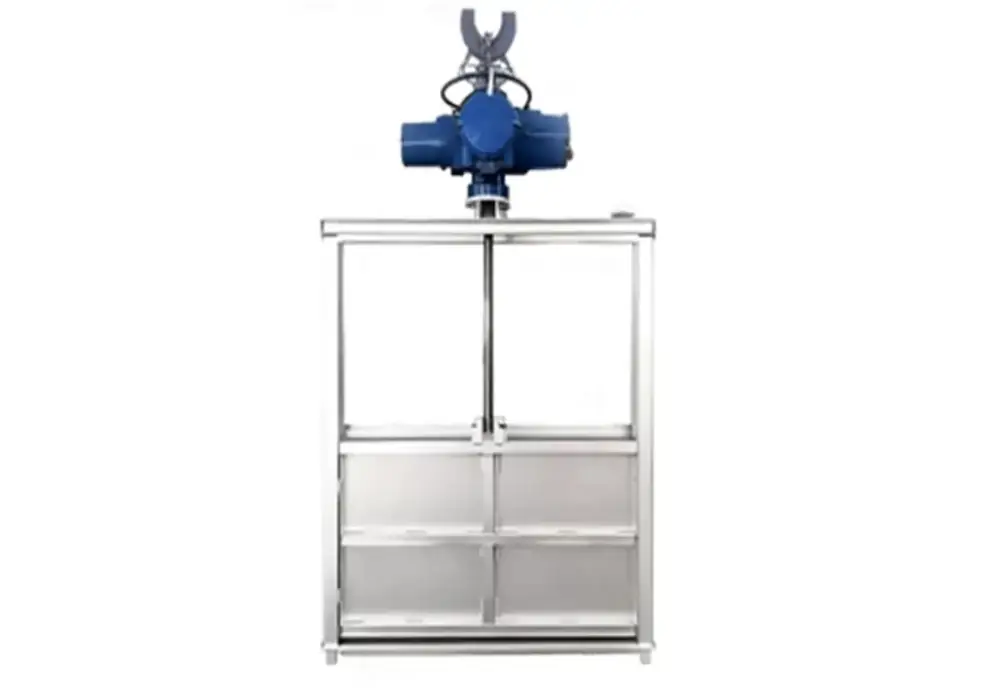
The modular arrangement uses separate beams stacked to the required height. Operators can adjust the number of sections to suit the isolation level instead of handling one full-height panel.
Individual beams can also be removed when access is needed for inspection or repair. Before confirming the configuration, check each beam’s height, total quantity, lifting points and maximum individual weight. These details determine whether manual handling is practical or mechanical lifting is required.
Sealing Arrangements for Different Pressure Directions
Side and bottom seals close the contact gaps between the gate and its supporting structure. The supplied technical information gives a seal compression range of 3–12 mm. Actual performance still depends on guide alignment, sill condition and the specified water head.
For bidirectional applications, KR Pumps should confirm a double-sided sealing arrangement against the design head on both sides. Buyers should include this requirement in the technical inquiry rather than assume it is included in every standard configuration.
Guide Frame Options for Existing and New Channels
Embedded and wall-mounted guide frame arrangements can be considered for different construction conditions.
For a new concrete channel, confirm the frame dimensions and anchoring details during the civil design stage. This allows the opening and fixing points to be prepared before the concrete is poured.
For an existing channel, first check wall thickness, concrete condition and available fixing space. A wall-mounted arrangement should only be selected when the structure can support the required loads and the guides can be aligned correctly.
Material Options for Different Water Conditions
The available material choices include aluminum alloy, 304/316 stainless steel and coated carbon steel. Each option should be reviewed against the water chemistry, temperature, structural loading and maintenance plan.
For chloride-bearing water, 316 stainless steel may be considered, but it should not automatically be treated as suitable for every seawater application. More aggressive conditions may require duplex or higher-alloy materials. The final choice should be based on the actual water composition.
Lifting Options for Routine Maintenance
The beams can be lifted individually or in groups, depending on their dimensions and weight. Manual handling may be suitable for smaller sections when safe handling limits are met. Larger or frequently operated gates may need a lifting beam or electric hoist.
Confirm the lifting method together with beam weight, lifting points, available headroom and operating frequency. This avoids choosing a gate that fits the opening but cannot be removed safely when maintenance is required.
Applications in Water and Wastewater Facilities
These gates can be considered for channel isolation, sedimentation tank maintenance, water treatment facilities and drainage works. They are also suitable for stop logs for water control where operators need to isolate a section temporarily.
For reservoir and dam maintenance, dam stop logs may be used to isolate designated intake openings or other structures when the engineering design allows for their use. They should not be treated as emergency closure devices unless specifically designed and approved for that purpose.
What Should Be Checked During Installation and Maintenance?
Before installation, remove sediment from the guide slots and check the alignment of the guide frame. Inspect the beams and sealing surfaces for damage. Test the lifting arrangement without water pressure to confirm that the beams can be raised and lowered safely.
During installation, lower each beam carefully and check that it moves freely and seats evenly. Where operating conditions allow, balance the water levels across the opening and avoid installing or removing sections under strong flow. The approved engineering procedure should determine the safe installation conditions.
After commissioning, record the leakage observations, guide alignment and condition of the seals. Keep the beams in a designated storage area when they are removed. Protecting the sealing surfaces from impact, dirt and deformation can reduce problems during the next installation.
Frequently Asked Questions
Can a Stop Log Gate Seal Water in Both Directions?
Not automatically. A standard arrangement may be designed for pressure from one side. If the water level can reverse, provide the design head for both directions and request confirmation of a double-sided sealing arrangement.
What Should Be Done if Mud or Debris Collects in the Guide Slots?
Remove mud, stones and other debris before lowering the beams. Deposits can prevent the beams from seating fully and may damage the seals. Where sediment builds up frequently, discuss a bottom cleaning chamfer or a suitable cleaning procedure with the supplier.
Can the Gate Be Customized for Higher Water Pressure?
A higher-pressure design may require changes to beam thickness, stiffening ribs, guide structure and sealing details. Provide the maximum differential head and pressure direction so the supplier can review the structural requirements. Do not assume that adding more beams makes a standard design suitable for higher pressure.
What Is the Difference Between a Stop Log and a Sluice Gate?
A stop log uses removable sections stacked in guide slots. It is commonly used for temporary isolation and can be removed when access is needed. A sluice gate generally uses a single movable gate leaf operated by a lifting mechanism. The choice depends on how often the opening needs adjustment and whether the gate must remain installed during normal operation.
Can a Stop Log Flood Barrier Be Installed While Water Is Flowing?
Installation under flowing conditions depends on flow velocity, differential head, access and the gate design. Strong flow can make beam placement unsafe or prevent proper seating. Where possible, stop or reduce the flow and balance the water levels before installation. Follow the approved method statement and site safety procedures.
Conclusion
Long-term performance also depends on how easily the beams can be inspected, stored and maintained. Buyers should confirm whether each beam can be identified by its installation position and whether removed sections can be stored without damaging their sealing surfaces.
Ask how seals are inspected and replaced, and consider keeping spare sealing components available if the facility cannot tolerate extended downtime. Maintenance records should include beam condition, guide alignment, corrosion checks and leakage observations. These records help maintenance teams identify wear early and plan repairs before the next isolation operation.
If you are looking for a reliable stop log gate supplier, feel free to contact KR Pumps for suitable configurations, technical specifications and quotations based on your required water head, channel dimensions, water conditions and installation requirements.