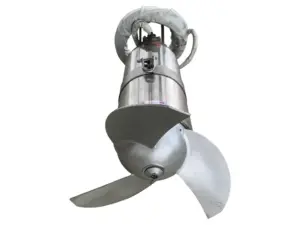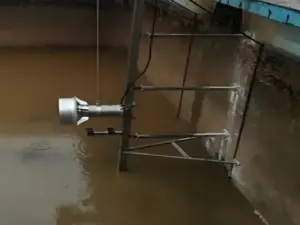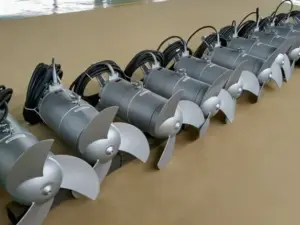
Submersible mixer drives can describe the mechanical connection that turns the propeller or the electrical controls that manage motor operation. Direct drive and geared drive describe the mechanical arrangement. A variable frequency drive, or VFD, is an electronic control device, not a third type of gearbox.
Two quotations may both mention a drive while describing different parts of the equipment. That makes comparison harder than it needs to be. This guide separates the mechanical path, motor, and controls, then shows which documents to request before selecting or replacing equipment.
Key takeaways
- Separate mechanical transmission, motor technology, and speed control.
- Confirm the exact configuration instead of inferring it from rpm or a photograph.
- Treat VFD compatibility as a model-specific review.
- Compare power values only when their definitions and conditions match.
Preparing a drive enquiry? Send Kairun the existing model and duty details, together with the available motor, supply, and tank information. Mark any missing documents so the scope of the review is clear.
What Submersible Mixer Drives Actually Describe
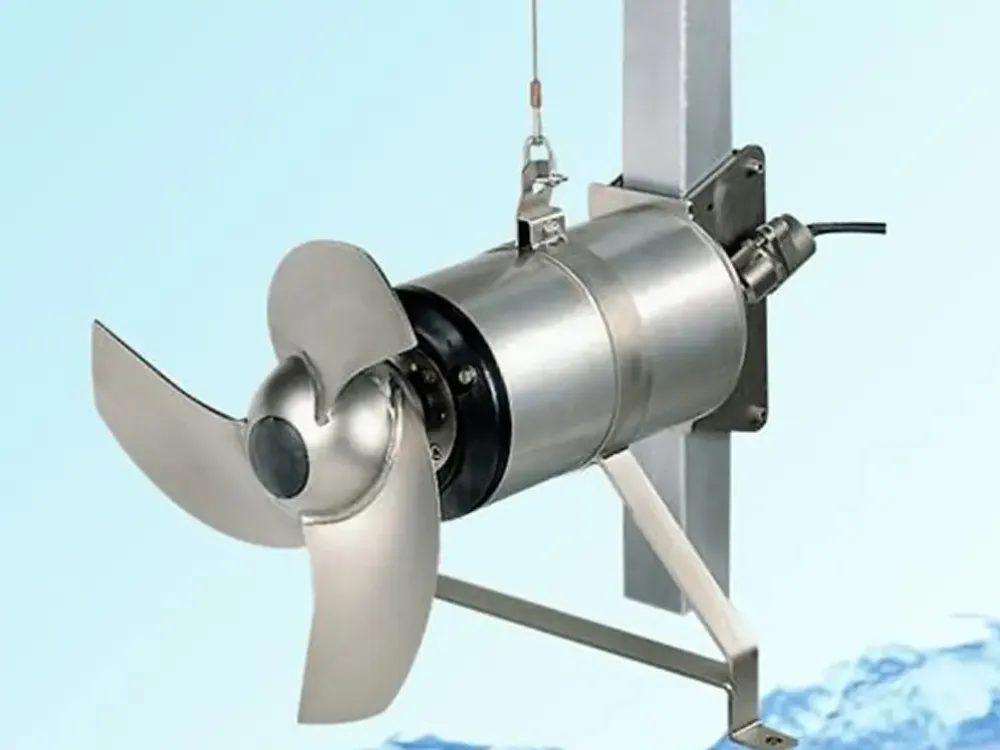
Separate the mechanical, motor, and control layers
A useful review of submersible mixer drives starts with three separate questions. How does rotation reach the propeller? Which motor produces it? What equipment starts or controls that motor?
Keep three lines in the equipment list. One describes the mechanical path, one names the motor, and one names the controls. A permanent-magnet motor label tells you about the motor. You still need to confirm the other two lines.
| Layer | What it describes | Evidence to request |
|---|---|---|
| Mechanical transmission | The path from motor shaft to propeller, with or without reduction gearing | Model drawing or transmission description |
| Motor | The specified motor and its electrical data | Motor data sheet and nameplate |
| Control | Starting, speed control, monitoring, and protection arrangements | Approved control description and interface list |
For submersible mixer drives, match all three layers to the same model and drawing version. Start with the exact unit. A brochure for a different motor won’t close a gap in the offer, and a product photo won’t show every internal part.
Follow the connection, not the label
In direct drive, the motor turns the propeller without a reduction gearbox in the mechanical path. A geared arrangement includes a speed-reduction stage. The Wilo factsheet on mixer drives describes direct and planetary arrangements, although some terms in its comparison table are inconsistent.
When comparing submersible mixer drives, use the stated mechanism rather than an ambiguous phrase such as direct gear drive. Ask the supplier to identify whether a gearbox is present. Record motor speed and propeller speed separately where they differ.
For the wider equipment decision, use the submersible mixer selection guide. Here, the task is to make the drive configuration and its supporting documents clear.
Direct Drive and Geared Submersible Mixer Drives
Read speed and torque in context
Direct drive does not automatically mean high speed. The absence of a reduction gearbox describes the connection; the motor and approved operating conditions determine the speed. A low propeller speed alone does not prove that a gearbox is installed.
For geared submersible mixer drives, ask for the transmission description and the stated output speed. Do not treat the motor speed as the propeller speed without checking the arrangement. If a gear ratio is supplied, confirm which input and output it relates to.
Torque describes turning effort; thrust describes the force the propeller imparts to the liquid. Keep those quantities separate. A torque figure without the corresponding configuration does not establish whether the mixer will meet the tank’s mixing duty.
Compare the evidence each arrangement needs
| Review point | Direct-drive arrangement | Geared arrangement |
|---|---|---|
| Mechanical path | Confirm there is no reduction gearbox | Identify the reduction stage and output |
| Speed data | Match motor and propeller data | Distinguish motor speed from propeller speed |
| Service scope | Request the exact unit’s service instructions | Include the gearbox service requirements |
| Control options | Check approval for the specified motor | Check approval for the complete motor and transmission configuration |
The table organizes questions about submersible mixer drives; it does not rank one arrangement as best. The correct comparison still includes the propeller, medium, tank geometry, and operating duty. A simpler mechanical description is not a complete selection argument.
Keep maintenance claims model-specific
Ask which inspections, parts, and documents apply to the quoted unit. Do not promise lower maintenance solely because one arrangement has fewer components. Access, service conditions, and the actual equipment design also belong in that discussion.
For replacement submersible mixer drives, identify what will be reused and what will change. List the motor, transmission, propeller, mounting parts, cable, and controls separately. That makes a partial replacement easier to review than a quotation that simply says replacement drive.
Illustrative scenario: equal power, different information. Two proposals show the same motor rating, but only one identifies the mechanical path and propeller speed. The buyer requests the missing configuration data before comparing them. No preferred design or field result is implied by this example.
Where VFD Control Fits
Variable speed is a control feature
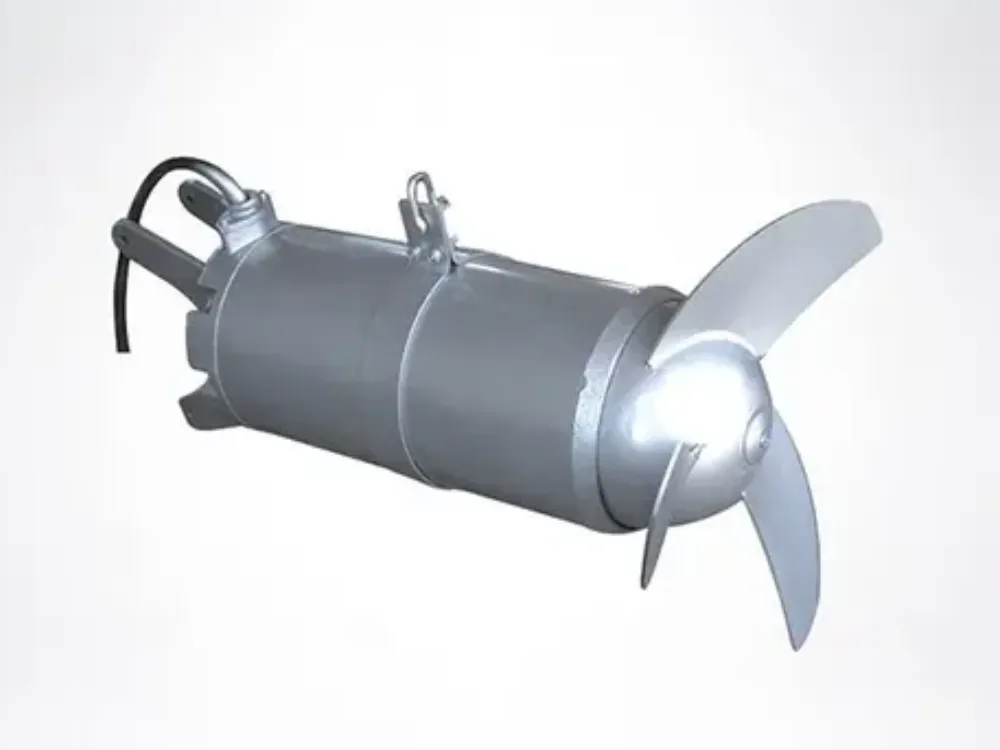
A VFD controls a suitable motor by varying its electrical supply frequency and related control output. It does not create a mechanical reduction stage. Whether it can be used with a particular mixer depends on the approved motor and equipment configuration.
Mechanical structure and adjustable speed are separate attributes of submersible mixer drives. For example, Xylem’s adjustable-speed direct-drive specification describes both in one specified product. That example shows the terms can coexist; it does not approve a VFD retrofit on another manufacturer’s unit.
Clarify the control package
When reviewing submersible mixer drives, ask whether the proposed controls are part of the equipment package or supplied separately. Identify who provides the controller, panel, sensors, and required interfaces. Do not assume that the word integrated includes every item needed at the site.
Request a written list of the permitted operating range and required protection functions. Ask which documents apply to the exact motor and controller combination. Keep unfamiliar features open for clarification rather than crediting them to the quotation automatically.
For variable-speed submersible mixer drives, do not adopt another unit’s frequency range or control settings. The supplier and responsible electrical designer must assess the proposed combination. A general article cannot supply commissioning parameters.
Read power and efficiency at the correct boundary
The Sulzer XRW 480 technical data sheet, 50 Hz edition dated July 2025, separates motor, VFD, and system data. In its PM 75/24 column, motor rated power and VFD B rated power are both 7.5 kW. Motor efficiency is listed as 93.3%, while total system efficiency is 90.9%.
These figures apply to that catalog example. They are not Kairun test results or measured savings. When reviewing submersible mixer drives, copy the label with the number so its meaning stays clear.
| Label on a proposal | What to confirm before comparison |
|---|---|
| Motor rated power | Which motor and rating the value belongs to |
| Controller rated power | Which controller and stated duty it covers |
| Actual electrical input | Where, when, and under what conditions it was measured |
| Efficiency | Whether it describes the motor or a wider system |
The same number can appear on two rows without meaning the same thing. Ask for definitions before using those numbers in a cost comparison.
For a visual example of mixing equipment, the following video is from Sulzer and illustrates its ABS XRW mixer. It is not Kairun footage, an electrical guide, or proof of the internal transmission in another unit.
Compatibility Questions Before a Retrofit
Gather the existing documents first
A retrofit review of submersible mixer drives starts with the equipment already installed. Record its exact model, motor information, operating method, and known changes. Include the reason for the review, whether that is a failed component, changed duty, or a proposed control upgrade.
Use the following sheet to separate available evidence from questions still open. Document owners may vary by project, so agree responsibilities before procurement.
| Information | What to record | Who should confirm it |
|---|---|---|
| Existing unit | Mixer model, motor plate, propeller, and available drawings | Operator and equipment supplier |
| Supply and panel | Available supply data, panel identification, and control drawings | Responsible electrical designer |
| Speed control | Existing controller and proposed operating range | Equipment and control suppliers |
| Protection | Sensor information, required signals, and interlocks | Electrical designer and suppliers |
| Installation | Cable route, mounting, retrieval access, and space constraints | Site team and responsible designer |
| Duty | Tank data, medium, actual schedule, and reason for change | Operator and process team |
For submersible mixer drives, an unknown entry is a request for information, not proof of a defect. Mark it openly. Keep assumptions out of the confirmed-data column so they do not become an accidental design basis.
Request written compatibility limits
Ask the equipment supplier to name the approved motor and control combination. Have the electrical designer review the site supply, panel, cable, and protection needs. Record what must be resolved before an order or site work proceeds.
Keep a simple file register for submersible mixer drives. Give each drawing or data sheet a title, model reference, date, and revision. Then link each open question to the document that should answer it.
- If the model differs between files, ask which one is being offered.
- If a value has no definition, leave it open for clarification.
- If a limit is stated, record the operating conditions attached to it.
- If a part will be reused, identify who will confirm that reuse.
Close the question when a written answer matches the agreed equipment list. Don’t treat a verbal assurance as an updated drawing.
Compatibility of submersible mixer drives is not established by a photograph, matching kW values, or an enclosure rating. Nor does a familiar controller name establish suitability for every motor. The review needs the documents for the proposed combination.
Do not change wiring, settings, or protective functions from a general comparison guide. Have qualified personnel follow the equipment documentation and the site’s procedures. The purpose of this checklist is to identify the questions, not to prescribe the electrical work.
Include the mechanical interfaces
A replacement can affect the mounting and service route as well as the controls. Show the proposed unit and its retrieval path on the current drawing. Use the installation and positioning checklist to organize those questions.
Illustrative scenario: reusing a panel. A team wants to retain an existing panel while replacing a mixer. It collects the panel and motor documents, then asks the relevant suppliers and designer to review the combination. The example does not imply that reuse is possible or that an installation has been approved.
Compare Proposals Against the Mixing Duty
Keep the configuration together
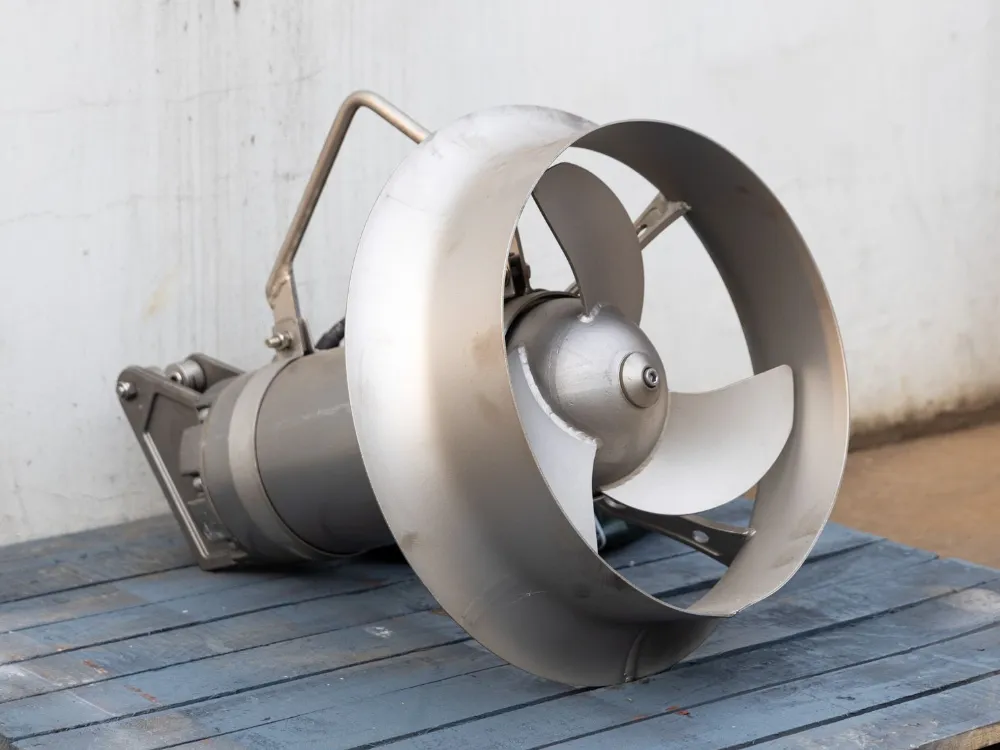
Compare submersible mixer drives against the same tank and medium information. Link each motor and control proposal to its specified propeller, operating speeds, and supporting performance data. A change in one item should appear as a clearly identified alternative.
For tank geometry and thrust inputs, use the separate submersible mixer sizing guide. A drive comparison should not become a shortcut around that process. Neither the largest motor rating nor the lowest listed speed proves suitability for the required duty.
Make the quotation reviewable
Use three status labels when comparing submersible mixer drives: documented, unknown, and alternative. Apply them to the equipment, limits, supplied items, and checks. If an offer changes, mark the changed rows. Keep the earlier basis for submersible mixer drives available so the reviewer can see the difference.
Ask each supplier to confirm:
- The exact model and configuration covered by the offer.
- The motor, controller, protection, and mounting items included.
- The operating conditions and exclusions used in the proposal.
- The performance documents and proposed verification method.
- The documents and responsibilities needed at handover.
Define what the comparison can establish
The outcome of a review of submersible mixer drives should be a clear equipment schedule and a list of remaining decisions. It should not be a blanket claim that direct, geared, or variable-speed equipment is always better.
If energy use is part of the enquiry, ask for the measurement basis and operating conditions. A motor efficiency figure is not a site energy-saving percentage. Keep any detailed energy comparison separate from the question of which components and controls are being supplied.
Illustrative scenario: different efficiency labels. One offer lists motor efficiency; another lists a system value. The reviewer asks for comparable definitions and conditions before drawing a conclusion. No energy saving or preferred product is assumed.
FAQs and Information for a Technical Enquiry
Does direct drive always mean high speed?
No. Direct drive describes the absence of a reduction gearbox in the mechanical path. Confirm the actual motor and propeller speeds from the specified configuration. Do not infer the transmission from an rpm value alone.
Is a VFD the same as a gearbox?
No. A VFD is an electronic motor-control device, while a gearbox is part of the mechanical transmission. These are separate attributes when describing submersible mixer drives. The equipment documents should identify both the mechanical arrangement and the approved control method.
Can every existing mixer use a VFD?
Do not assume universal compatibility. The mixer, motor, controls, protection, and site conditions need a model-specific review. Request written confirmation for the proposed combination before treating a control retrofit as an available option.
Are motor kW and mixer input power the same?
They are not interchangeable labels. Check whether a value describes motor rating, mixer power, controller rating, or actual electrical input. Use only comparable definitions and conditions when assessing power data.
What documents should accompany a drive proposal?
Request the exact configuration, motor data, control scope, operating limits, protection interfaces, installation requirements, and supporting performance documents. Include a list of assumptions and unresolved items. That makes the proposal easier to review and maintain as the project develops.
Explore Kairun’s submersible mixer product information, then send the model, tank duty, and available control documents for discussion. Comparing submersible mixer drives starts with a shared description of the equipment and the job it must do. Resolve the missing documents before treating different quotations as equivalent.