Wastewater treatment is a complex system engineering project integrating physical, chemical, biological, and automatic control methods. From collection through urban pipe networks to achieving compliant discharge or reuse, each process relies on the functional matching and parameter optimization of specific equipment. This article takes the typical process of a municipal wastewater treatment plant (pretreatment → primary treatment → secondary biological treatment → advanced treatment → sludge treatment) as the main line, systematically outlining the technical key points of each stage, and focusing on the selection criteria and operating parameters of key equipment such as pumps, screens, gates, submersible mixers, and aerators.
Pretreatment Unit
Pretreatment aims to remove suspended solids, sand, and large floating objects from wastewater, protecting subsequent pumps and biological treatment systems.
Bar Screen
Coarse Bar Screen: Bar spacing 16~25 mm, installed before the inlet pump station to intercept branches, plastic bottles, rags, etc. Rotary rake-tooth bar screens or stepped bar screens are used. The flow velocity through the screen should be controlled at 0.6~1.0 m/s to prevent screenings from penetrating due to excessive flow velocity.
Fine Bar Screen: Bar spacing 3~10 mm, placed before the grit chamber to remove fibers, hair, etc.
Wastewater Lift Pump
The lift pump raises wastewater from the collection well to the subsequent treatment structures, ensuring gravity flow operation.
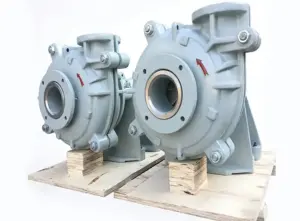
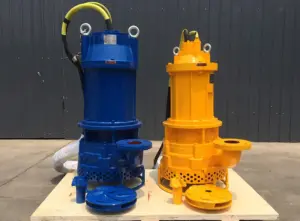
Common Pump Type: Submersible sewage pump, using a dual-flow or cutting impeller, to handle particles ≥ 80 mm in diameter to prevent clogging.
Key parameters: The pump’s Q-H curve must cover both the design flow rate and the maximum flow rate; efficiency should ideally exceed 70%; variable frequency speed control is used to adapt to fluctuations in water flow.
Gates
Gates are used to cut off or regulate water flow and are commonly found in inlet channels, grit chamber inlets and outlets, and bypass pipes. Common types: cast iron gates with copper inlays, stainless steel flat gates, and electric/manual dual-purpose gate openers.
Grit Chambers
Swirl grit chambers or aerated grit chambers are commonly used. The former relies on centrifugal force to separate sand particles, while the latter forms a spiral water flow through aeration and also has a pre-aeration function. Sand removal equipment must be equipped with a sand-water separator.
Primary Treatment
Generally refers to the primary sedimentation tank, which uses gravity sedimentation to remove settleable suspended solids (SS) and some organic matter (BOD₅). Surface loading rate should be 1.5~2.5 m³/(m²·h), with SS removal rate of approximately 50~60% and BOD₅ removal rate of approximately 25~40%. If enhanced primary treatment (chemical coagulation) is used, the removal rate can be further improved.
Secondary Biological Treatment
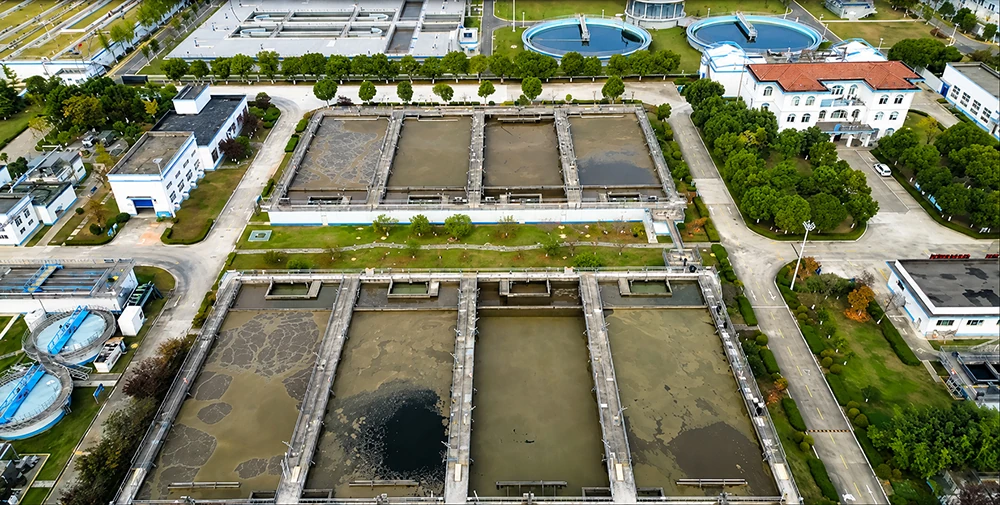
This is the core of wastewater treatment, commonly using activated sludge processes and their variants (such as A²/O, oxidation ditch, SBR, MBR, etc.). The following uses the A²/O (anaerobic/anoxic/aerobic) process as an example to illustrate the role of the equipment.
Biological Tank Zoning and Equipment
Anaerobic Zone: DO < 0.2 mg/L, mainly for phosphorus release. A submersible mixer is needed to maintain the mixed liquor in suspension to prevent sludge deposition and promote phosphorus release by polyphosphate-accumulating bacteria. The power density of the mixer should be adjusted according to the tank volume and solids concentration. The impeller diameter and speed must ensure a bottom flow velocity ≥ 0.3 m/s to avoid dead zones.
Anoxic Zone: DO < 0.5 mg/L, denitrification is performed. Submersible mixers are required to provide low-shear mixing, ensuring sufficient contact between sludge and the returned nitrified liquor. The mixer selection must be based on CFD flow field simulation according to the tank size to ensure no sedimentation areas.
Aerobic Zone: DO is maintained at 2.0~3.0 mg/L, organic matter oxidation and nitrification are performed. The core equipment in this zone is the aerator, commonly including microporous aeration discs/pipes and various types of submersible aerators.
Secondary Settling Tank
Radial or horizontal flow settling tanks are used. Activated sludge settles and concentrates here. Part of the bottom sludge is returned to the anaerobic zone, and the remaining sludge is discharged. A sludge scraper and a return sludge pump are required.
Advanced Treatment
This stage typically comprises four sequential steps: chemical coagulation, flocculation, clarification/sedimentation, filtration, and terminal disinfection.
In the coagulation step, chemical agents such as PAC (polyaluminum chloride) or PAM (polyacrylamide) are dosed via precision metering pumps into a rapid mixing tank. Here, submersible mixers or mechanical agitators generate turbulence, ensuring instantaneous and uniform dispersion of the coagulant.
Subsequently, the flow enters a flocculation tank, where gentle stirring is applied—typically using slow-speed submersible mixers with large-diameter impellers—to promote the collision and agglomeration of fine particles into large, dense flocs without shearing them apart. This step is critical for maximizing TP and colloidal SS removal.
The flocculated wastewater then flows into a high-rate inclined-plate sedimentation tank, where the flocs are effectively separated by gravity. Under optimal conditions, effluent TP can be reduced to below 0.3 mg/L, and SS to below 15 mg/L.
The clarified effluent next passes through a deep-bed filter, such as a V-type sand filter or a denitrification filter, with a typical filtration rate of 6–10 m/h. Dual-media layers capture residual fine particulates.
Finally, disinfection inactivates pathogenic microorganisms. UV systems operating at a dose of ≥25 mJ/cm² are highly effective, provided the UV transmittance (UVT) exceeds 65%. Alternatively, sodium hypochlorite dosing (effective chlorine concentration 5–10 mg/L) offers residual protection throughout the distribution system;
Our product line includes robust submersible mixers and chemical dosing coordination systems perfectly suited for coagulation and flocculation applications, all engineered for continuous duty in corrosive chemical environments.
Sludge Treatment
Excess sludge has a high moisture content and requires thickening, dewatering, and stabilization. Belt filter presses or centrifugal dewatering machines are commonly used to reduce the moisture content of the dewatered sludge.
Performance Targets & Auxiliary Systems
To evaluate the effectiveness of the entire treatment train, it is essential to reference typical design influent characteristics and effluent limits. For a municipal plant complying with the China GB 18918-2002 Grade 1A standard (or equivalent international norms), the following performance benchmarks are commonly adopted:
- COD: influent 300–450 mg/L → effluent ≤50 mg/L (overall removal ≥85%);
- BOD₅: influent 150–250 mg/L → effluent ≤10 mg/L (removal ≥93%);
- SS: influent 200–350 mg/L → effluent ≤10 mg/L (removal ≥96%);
- TN: influent 35–55 mg/L → effluent ≤15 mg/L (removal ≥65%);
- NH₃-N: influent 25–40 mg/L → effluent ≤5 mg/L (removal ≥85% at >12°C);
- TP: influent 4–8 mg/L → effluent ≤0.5 mg/L (removal ≥90%).
These removal rates are distributed across stages: primary sedimentation removes 40–60% of SS and 25–40% of BOD₅; biological treatment achieves the majority of organic and nutrient removal; and advanced chemical coagulation further reduces TP to below 0.5 mg/L. Such data are critical for proper equipment sizing – for instance, the aerator’s oxygen supply must be calculated based on the BOD₅ and NH₃-N load to ensure complete nitrification.
In parallel with liquid treatment, odor control has become a mandatory auxiliary system in modern facilities. Noxious gases (H₂S, NH₃, VOCs) are mainly released from the inlet channel, grit chamber, and sludge dewatering area. A biological biofilter is widely used, where contaminated air passes through a moist packed bed containing microorganisms that degrade odor compounds. The empty bed residence time is typically ≥15 seconds, and H₂S removal efficiency can exceed 99%. All odorous units must be covered and kept under negative pressure to prevent fugitive emissions, with the extraction fan interlocked with the main process PLC.
Finally, equipment durability is paramount in corrosive wastewater environments. Our submersible mixers, aerators, and pumps are manufactured with high-grade stainless steel (SS304/SS316L) or with specialized anti-corrosion coatings, and are equipped with double mechanical seals and moisture sensors for early fault detection. Regular maintenance schedules are provided to ensure long-term reliability and minimal downtime.
Equipment Interconnection and Automation
The entire process system relies on a PLC automatic control system, which adjusts in real time through online instruments (pH, DO, ORP, MLSS, flow rate, etc.):
Water pumps are linked to the screen, controlling start and stop based on the liquid level;
Aerators adjust oxygen supply based on DO value using frequency conversion;
Agitators typically run continuously, but can also operate intermittently based on influent load to save energy;
Gates are used for switching flow channels or bypassing; seals and limit switches need to be checked regularly.
Conclusion
Wastewater treatment is a rigorous multiphase reaction process. The selection of equipment, parameter settings, and maintenance at each stage directly impact effluent quality and operating costs. Our company provides high-quality submersible mixers, aerators, submersible pumps, bar screens, and gate systems covering the entire process. All products undergo hydraulic model optimization and rigorous durability testing, meeting ISO 9001 and CE certifications. We not only provide equipment but also solutions to ensure your wastewater treatment plant operates stably, efficiently, and with low carbon emissions.