Assess submersible mixer energy efficiency with equipment test data and site energy records. Check that the tank still meets its mixing duty. A lower power reading alone does not show that the tank is being mixed effectively.
An energy report can show a reduction while leaving a basic question open: did the equipment do the same job? This guide separates the main metrics, explains how to build a useful comparison, and shows how to read published savings without turning them into project guarantees.
Key takeaways
- Keep motor efficiency, thrust per input power, and site energy use separate.
- Compare equipment data with the test conditions attached.
- Define the required mixing result before changing the operating basis.
- Match baseline and comparison records before calculating savings.
- Treat published case results as project-specific manufacturer reports.
Preparing an equipment enquiry? Send Kairun your tank details and available operating records. Include the mixing task, proposed equipment, and questions about the supporting data.
What Submersible Mixer Energy Efficiency Measures
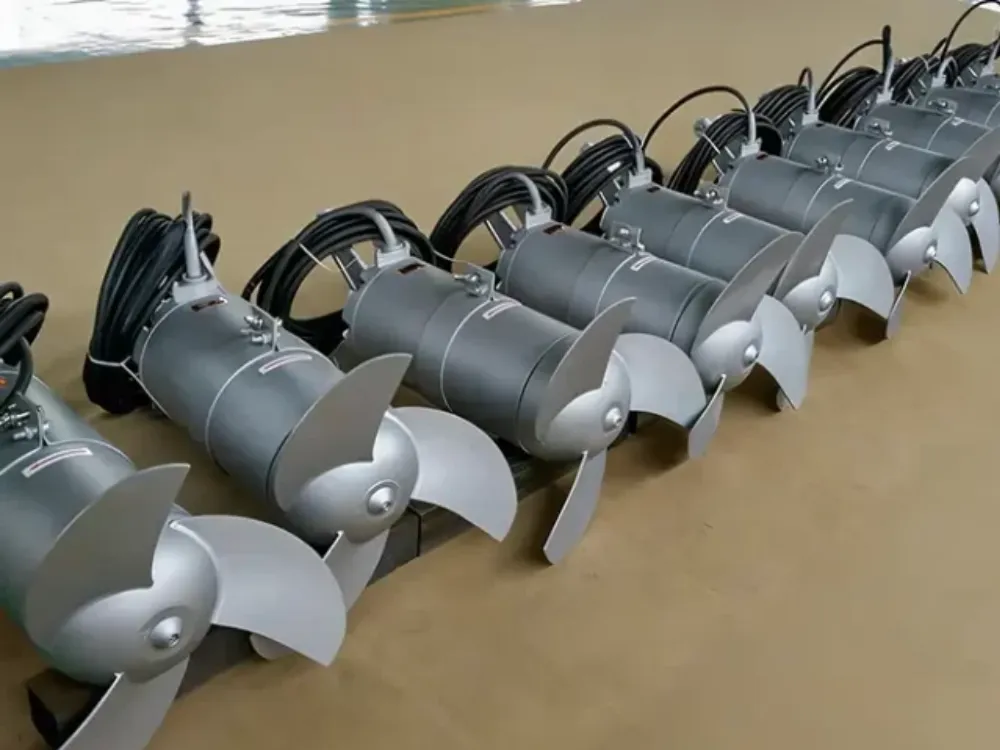
Separate motor, equipment, and site metrics
Submersible mixer energy efficiency is not one interchangeable number. Motor efficiency describes electrical-to-mechanical conversion at a stated condition. A thrust-to-power ratio relates mixer thrust to the electrical input used to produce it under the stated test conditions.
Wilo’s energy-efficiency guide distinguishes motor efficiency from the thrust-to-power ratio and discusses ISO 21630 testing. Use that distinction when requesting data. A motor efficiency class alone does not establish how the complete mixer performs in a particular tank.
| Metric | Unit or form | What to check |
|---|---|---|
| Rated motor output | kW | The nameplate definition and rating conditions |
| Electrical input | kW | Measurement point and operating state |
| Thrust | N | Model, speed, and test method |
| Thrust-to-input-power ratio | N/kW | The thrust and input values used |
| Energy consumed | kWh | Equipment boundary and time period |
| Motor efficiency | Percentage | The stated conversion basis and conditions |
N/kW is not a percentage. Nor is a higher test ratio, by itself, proof that a proposed layout covers the whole tank. Keep the equipment comparison and the site process assessment connected, but distinct.
Before comparing submersible mixer energy efficiency figures, check:
- Is the exact model named?
- Are thrust and electrical input from the same test condition?
- Is the power measurement point stated?
- Does the file identify the supporting report?
If an answer is missing, ask for it. Don’t turn an unclear value into a confirmed comparison.
Read the conditions behind the result
For submersible mixer energy efficiency comparisons, request the exact model, speed, thrust, electrical input, and applicable test information. Ask where the input was measured and which equipment it includes. Avoid comparing two ratios whose power boundaries are unclear.
The manufacturer’s test report should travel with the data sheet. If the proposal refers to a standard, ask which document supports the claim for that model. A reference to ISO 21630 in an article does not establish that a quoted Kairun unit has been tested to it.
Illustrative scenario: Two proposals show the same rated motor output. One includes electrical-input data at a defined condition; the other does not. The buyer leaves the efficiency comparison open and requests the missing information.
Define the Mixing Duty Before Comparing Power
Keep the required process result visible
Begin a submersible mixer energy efficiency review with the tank’s job. State whether the objective is solids suspension, blending, or circulation. Explain the observations that prompted the review, including where and when deposits or uneven conditions occur.
Attach the tank drawing, working liquid levels, and available liquid data. Identify partitions, inlets, outlets, and installed equipment that may affect the proposed flow route. Mark assumptions so that reviewers do not mistake them for measured conditions.
The guide to tank geometry and thrust helps organize these inputs. Use it to frame a model and layout discussion rather than assigning a universal power-per-volume value. The selected arrangement must be reviewed against the actual duty.
Agree how the result will be assessed
Ask the process team what evidence will show that the required mixing task remains satisfied. Record the agreed observations, measurements, and operating conditions. Do not substitute a running motor or a lower electricity reading for that process evidence.
Submersible mixer energy efficiency work needs this acceptance basis before a comparison starts. Otherwise, a change in duty can look like an improvement in efficiency. Keep the basis in the same file as the energy records.
Give the submersible mixer energy efficiency review a named project owner. The owner should know which process evidence is required and who can assess it. Record the decision, its date, and any open questions. A blank acceptance field means the review is incomplete, even when the energy log is available.
If a proposed operating change leads to a lower input reading but the process evidence is incomplete, report both findings. The power change may be recorded while the mixing result remains unresolved. It is too early to call that a verified improvement.
Where Efficiency Improvements May Come From
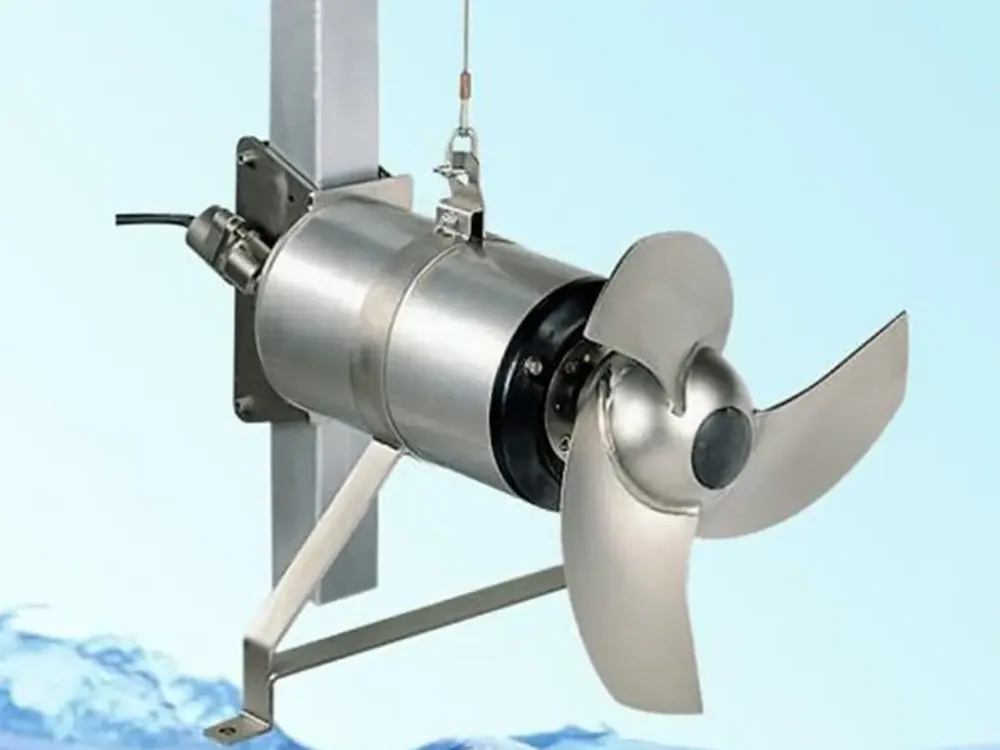
Review the propeller and drive together
Submersible mixer energy efficiency involves the proposed motor, drive, propeller, and operating point. Request the complete model data rather than deciding from one component description. A broad label such as geared, direct drive, or premium motor is not a project performance result.
Ask the supplier to explain the proposed equipment and the documents supporting it. Keep model-specific limits attached to the proposal. Do not assume one propeller material or drive arrangement is the most efficient choice for every liquid and tank.
Check layout and equipment condition
The installation and flow-path planning guide identifies positioning and access questions to review with the actual layout. Use the current drawing, including obstructions and changes since the original installation. A catalogue test does not describe every site’s flow paths.
For a submersible mixer energy efficiency review, also collect relevant condition and maintenance records. Report known damage, fouling observations, or abnormal operation without assigning an unconfirmed cause. Any required inspection or work should follow the exact equipment instructions and the site’s approved process.
Treat speed control as a proposal to verify
Variable speed may allow a suitable system to respond to changes in duty, but compatibility and operating limits need confirmation. See the mixer drives and speed-control guide for the distinction between drive arrangements and control. Do not assume that adding a variable frequency drive makes every installation suitable for speed reduction.
Submersible mixer energy efficiency cannot be verified by applying a generic speed rule to every tank. Keep any proposed speed or schedule change subject to the responsible technical review. No universal minimum frequency or intermittent-running period is supplied here.
Illustrative scenario: A plant records lower power after an operating change. Staff also report deposits in an area that was not included in the observations. The team records the lower power but keeps the mixing assessment open until that area is reviewed.
Verify Submersible Mixer Energy Efficiency at the Site
Build a baseline with a clear boundary
Define the equipment included in the measurement. Does the record cover one mixer, several mixers, their drives, or a wider electrical circuit? Use the same boundary for the baseline and comparison, or explain why the figures cannot be compared directly.
For submersible mixer energy efficiency records, identify the instrument or data source and who supplied it. Keep timestamps, running hours, operating state, and relevant process conditions together. A controller command is not a substitute for a confirmed operating record.
Record failures and downtime as well. A period with equipment out of service may show low energy consumption while failing to represent the intended duty. Do not quietly treat that period as normal operation.
| Record field | Baseline period | Comparison period |
|---|---|---|
| Equipment and measurement boundary | Identify units and circuit | Confirm the same basis |
| Dates and duration | State start and end | State start and end |
| Energy and running time | Attach records | Attach records |
| Liquid level and process conditions | Attach available evidence | Note changes |
| Mixing assessment | State evidence and open issues | State evidence and open issues |
| Faults or downtime | Identify affected periods | Identify affected periods |
Compare like-for-like conditions
A submersible mixer energy efficiency comparison should show what changed alongside the equipment. Differences in duty, operating hours, liquid conditions, or measurement scope may explain part of a recorded energy change. Identify these differences before calculating a percentage.
Where conditions are not comparable, ask the responsible reviewer how they should be addressed. Do not invent an adjustment factor to make the results fit. It is useful to conclude that more evidence is needed.
Keep measured values, supplier data, estimates, and unknowns visibly separate. If a value is estimated, state the method and its limits. An estimate should not become a measured result when copied into a summary.
Use clear labels in the submersible mixer energy efficiency file:
| Status | Meaning |
|---|---|
| Measured | A dated meter or test record is attached |
| Supplied | The supplier’s document and conditions are attached |
| Estimated | The inputs and calculation are shown |
| Unknown | The value has not been established |
Keep these labels when sharing the summary. They help the next reviewer ask the right question; they are not equipment ratings.
Calculate energy with the right inputs
For a stated average electrical input over a defined operating period:
Energy in kWh = average electrical input in kW × operating hours.
For changing operating states, use suitable metered energy or calculate separate periods on their stated basis. Rated shaft output is not measured electrical input. Keep any calculation assumptions beside the result.
For valid, comparable energy periods with a nonzero baseline:
Energy reduction (%) = (baseline kWh − comparison kWh) ÷ baseline kWh × 100.
This arithmetic does not prove that the equipment change caused the reduction. Confirm the duty and comparison conditions first. In submersible mixer energy efficiency reporting, distinguish the measured energy difference from the explanation for it.
Energy cost is a separate calculation using the applicable tariff and period. A tariff change can alter the bill without changing kWh. Do not label a cost reduction as the same percentage energy saving.
Close the submersible mixer energy efficiency review with a short finding: what was measured, whether the periods were comparable, and whether the mixing duty was met. If any part is open, say so. Attach the records that support the finding and name the person responsible for the next step.
When a later report changes an input, retain the earlier version. A traceable submersible mixer energy efficiency record lets the team see why the conclusion changed without losing the original evidence.
What Published Energy-Saving Cases Can Tell You
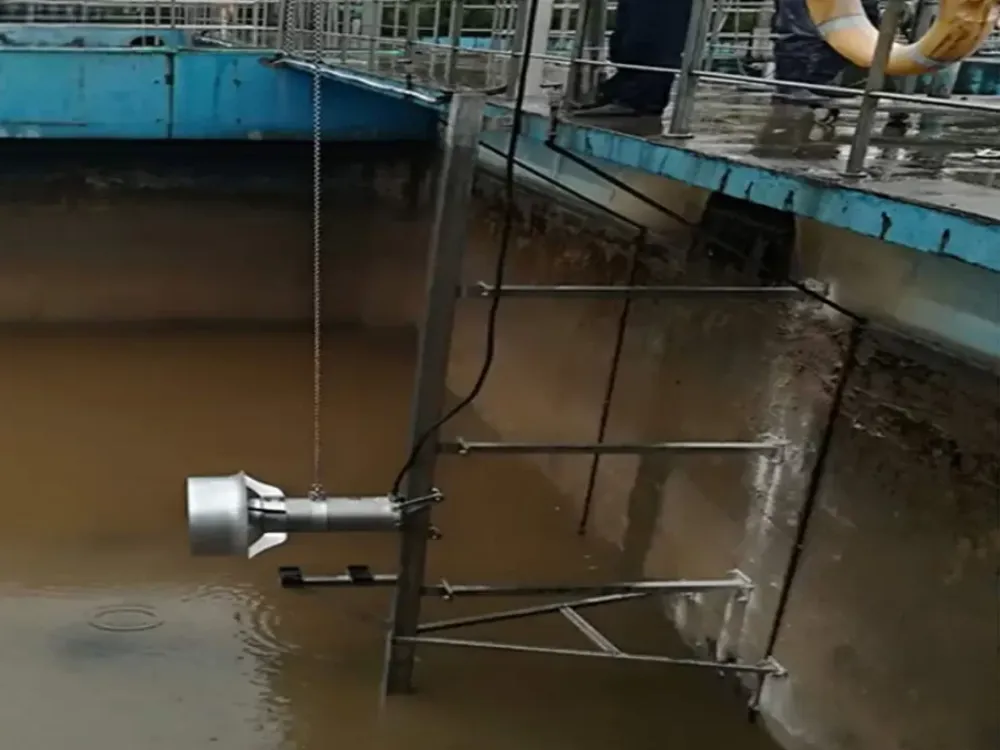
Read the Cotton Valley result with its background
In its Cotton Valley case study, Sulzer reports a 38% energy-consumption reduction following a trial and analysis. The document describes an earlier installation with 12 fixed-speed mixers operating 22–23 hours per day. It also notes installation problems and mixer failures in that earlier system.
Those details belong with the reported result. They are not recommended operating hours or evidence that every replacement project will achieve the same saving. The document is a manufacturer presentation, not a Kairun result or an independently reproduced study in this article.
Keep the New Plymouth trial distinct
Xylem’s New Plymouth case study reports a 49.58% energy reduction in a three-month trial replacing two existing mixers in a bioreactor’s anoxic zone. This is a specific manufacturer-reported trial. It is not a general annual savings rate for all adaptive mixers.
For submersible mixer energy efficiency decisions, use such cases to identify questions worth asking about your own installation. Do not average the two percentages or rank the brands from these different projects. This article has not independently audited their raw operating logs or comparison methods.
Review Checklist and FAQs
Request a reviewable equipment proposal
Bring the submersible mixer energy efficiency review back to the required duty and the evidence available. Ask for the model, applicable performance documents, proposed layout, and operating limits. Provide site records with their source and known gaps.
Include:
- Tank drawings, liquid levels, and the required mixing task.
- Available liquid, solids, and operating-condition data.
- Equipment model, drive arrangement, and control proposal.
- Thrust, electrical-input, and test information for the proposed model.
- Baseline and comparison dates, boundaries, energy, and running hours.
- Mixing assessment, condition records, and unresolved questions.
Illustrative scenario: An owner finds that the baseline contains a period of mixer failure. The reviewer flags it and requests a valid comparison basis. The team does not issue a savings claim from the incomplete record.
Is motor efficiency enough to choose a mixer?
No. Submersible mixer energy efficiency also requires equipment performance information and review of the actual tank duty. Keep the motor rating as one part of the proposal, not proof of the whole system’s result.
Does a VFD always save energy?
No universal saving is established by adding a VFD. Confirm the model’s compatibility, approved operating range, controls, and process requirements. Verify any energy change against comparable records and the required mixing result.
Can I estimate kWh from the nameplate?
A rated output value is not measured electrical consumption. Use suitable electrical-input and running-time data with stated assumptions, or metered energy for the defined equipment boundary. Label a calculated estimate clearly.
What should I send with an enquiry?
Review Kairun’s submersible mixer options with your tank brief and available records. Include the task, drawings, equipment details, and questions about supporting documents. Don’t fill missing measurements with convenient defaults.
For a submersible mixer energy efficiency enquiry, contact Kairun with your mixing duty and records. Ask which model information and supply scope are available for the project, and keep any remaining performance questions in the written discussion.